The Rhodium Group reports that US greenhouse gas emissions rose 2.4% in 2025, reversing a two‑year decline. Harsh winters and stronger electricity demand—especially from data centers—drove fossil‑fuel emissions up, with coal generation rising 13% from 2024. Solar grew 34%, its fastest pace since 2017, while expanding EV use helped keep transport emissions broadly flat. Analysts warn emissions could remain elevated if grid reliance on existing fossil resources continues.
US Greenhouse Gas Emissions Rise 2.4% in 2025 as Coal Use and Data Center Demand Surge
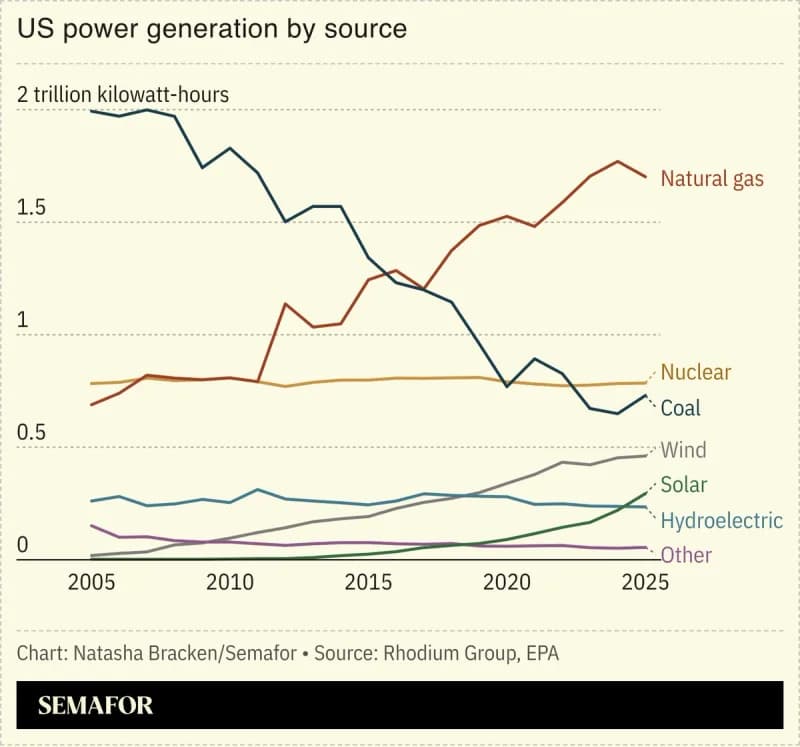
US greenhouse gas emissions increased 2.4% in 2025, reversing a two-year decline and ending a period in which economic growth had outpaced emissions growth, according to estimates from the Rhodium Group.
Key Drivers
The primary contributors to the uptick were commercial buildings and the power sector. Harsh winter weather raised heating demand and pushed fossil‑fuel emissions up 6.8%. Large electricity consumers—particularly data centers and other heavy-load customers—drove higher power use. Coupled with higher natural gas prices, that shift made coal more economical for some utilities: power plants burned about 13% more coal than in 2024.
Policy And Near-Term Outlook
Rhodium found that fossil‑fuel–friendly policies from the Trump administration played a limited role in the 2025 increase, largely through Department of Energy orders that kept a small number of coal plants operating. The research firm cautioned, however, that as data center demand grows and the grid leans on existing fossil resources, emissions could remain elevated or rise further in the coming years unless policy or grid investments change that mix.
Bright Spots
There were important clean‑energy gains in 2025: solar was the fastest‑growing power source, surging 34%—its strongest expansion since 2017. Transportation emissions held roughly flat despite record travel levels, a result largely attributed to accelerating adoption of electric vehicles.
Bottom line: Short‑term weather and demand shifts, especially from heating and large electricity users, pushed emissions up in 2025, while rapid solar growth and EV uptake helped limit increases in other sectors.
Help us improve.