
Donald Trump held a campaign event at his Bedminster golf club displaying grocery items whose prices rose under President Biden, but he offered little concrete plan to lower costs. A review of nearly 170 BLS-tracked items shows about seven in ten are more expensive since January; beef, tax preparation, jewelry and coffee saw some of the biggest increases. Transportation is the lone broad category to decline, helped by cheaper fuel, and some price spikes trace back to tariffs imposed under the prior administration. Overall, most voters seeking immediate relief have not seen the promised broad reductions.
Trump Promised Lower Prices — For Most Goods, That Promise Hasn't Materialized

An analysis of data from the Bureau of Labor Statistics.Philip Bump/MS NOW
During the 2024 campaign, former President Donald Trump staged a widely shared event at his Bedminster, New Jersey, golf club, arranging grocery items on tables with placards showing how their prices rose under President Joe Biden. He delivered brief remarks — including, 'I haven’t seen Cheerios in a long time' — but offered few concrete explanations for how he would bring prices down. For many Americans who expected rapid relief, those declines have not appeared.
An analysis of data from the Bureau of Labor Statistics.Philip Bump/MS NOW
What the Data Shows
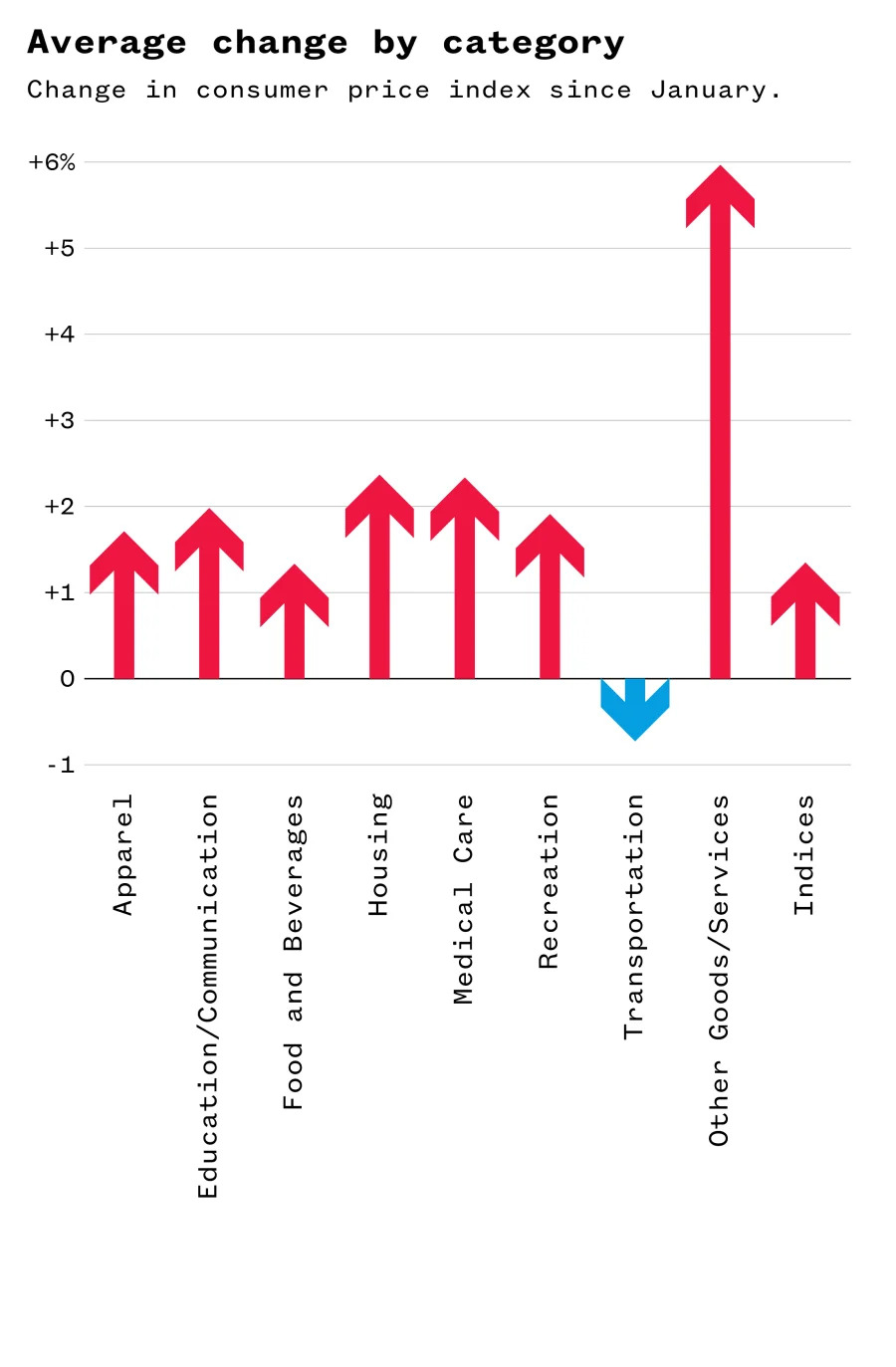
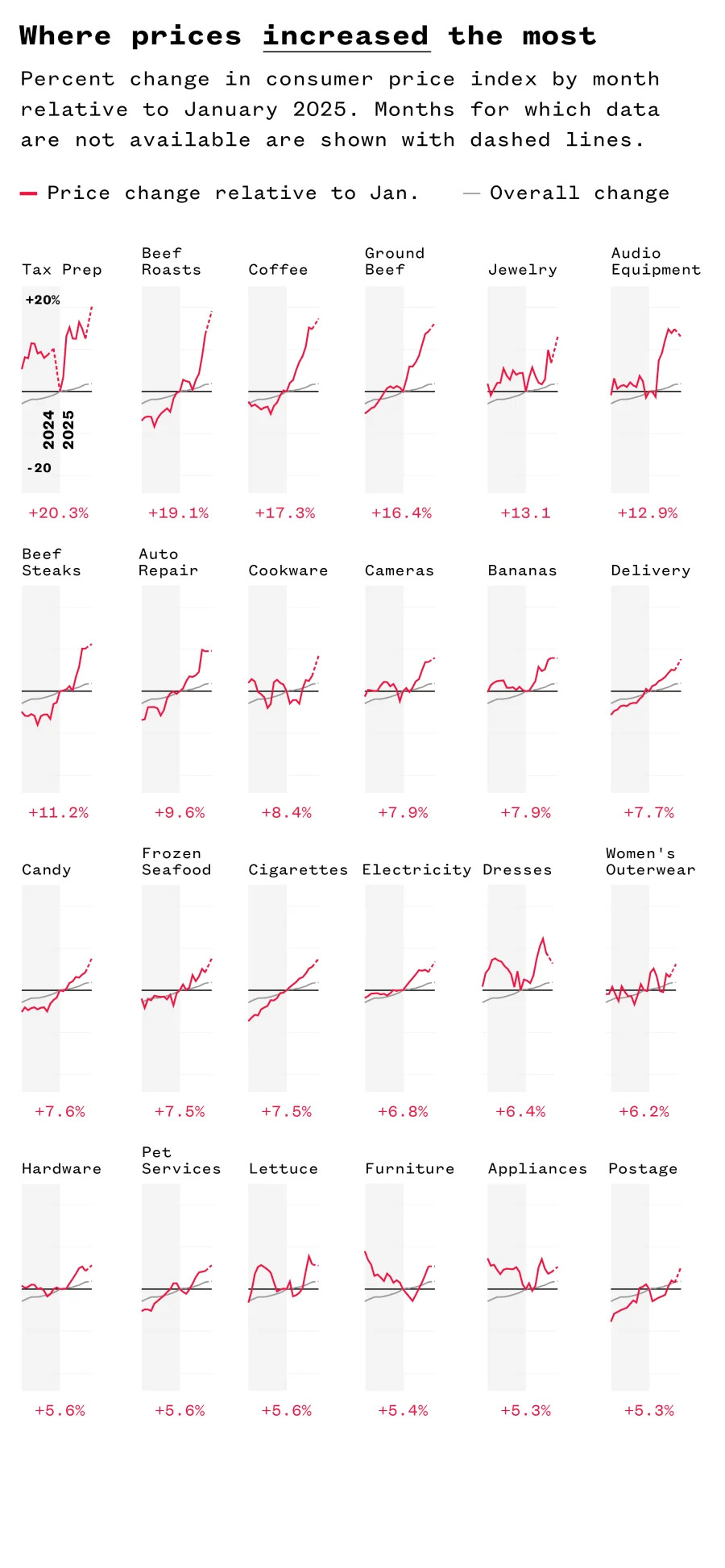
A review of nearly 170 consumer items tracked by the Bureau of Labor Statistics (BLS) finds that roughly seven in ten are more expensive since January. Categories with the largest increases through November include beef, tax-preparation services, jewelry, audio equipment and coffee. Transportation is the only broad category to register an average decline, driven mainly by lower fuel costs.
An analysis of data from the Bureau of Labor Statistics.Philip Bump/MS NOW
Policy Links And Notable Drivers
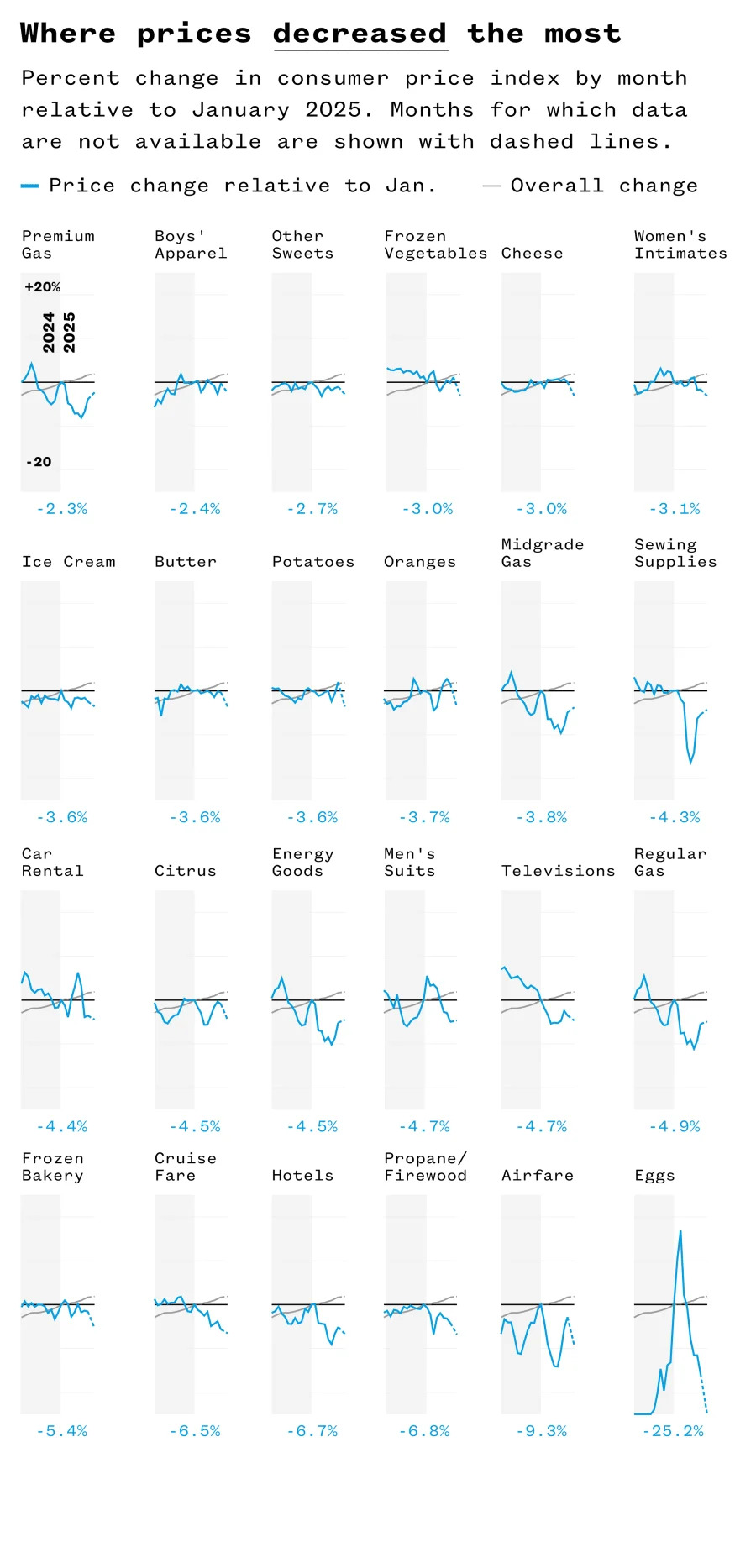
Some of the recent price pressures trace back to trade policy: several spikes are directly downstream from tariffs imposed during the previous administration, which raised costs for certain imported goods. Other cost movements reflect supply shocks or industry-specific issues — for example, egg prices have fallen sharply since January largely because a 2024 avian flu outbreak had earlier pushed them up.
An analysis of data from the Bureau of Labor Statistics.Philip Bump/MS NOW
Fact: As of December 23, the president visited his private clubs and resorts on 123 of 340 days in his second term — a detail many critics point to as symbolic of priorities amid rising grocery costs.
Why Prices Still Rise
Inflation is driven by many forces — supply chain disruptions, labor costs, commodity prices, fiscal and trade policy — and no president can instantaneously reverse all those pressures. Still, repeated campaign promises to halt or reverse price increases left many voters expecting faster relief than the data now shows.
The BLS charts for 2025 reveal a mix: some items with the steepest 2025 gains were already climbing in 2024, while others began spiking only after Trump returned to office. Similarly, items that fell show varied timing: some started declining this year and others, like gasoline, began easing last year.
In short, while a minority of goods have seen price declines, most tracked items have become costlier since January. That reality undercuts the simple narrative of immediate, across-the-board savings that was a central promise of the campaign event at Bedminster.
Data notes: The analysis referenced BLS Consumer Price Index figures for urban areas through November (the most recent month available at the time of reporting) and covered nearly 170 individual items and several broader categories.


