2025 delivered a spectacular year of sky events: Mars’ rare occultation by the Wolf Moon, the bright southern 'great comet' 2024 G3 (ATLAS), and Firefly Aerospace’s Blue Ghost soft landing in Mare Crisium. Two total lunar eclipses, vivid auroras driven by G4 storms during solar maximum, and the discovery of interstellar Comet 3I/ATLAS rounded out a memorable year for astronomers and skywatchers.
Ten Times the Sky Stunned Us in 2025 — Comets, Eclipses, Auroras and a Private Moon Landing

A bevy of comets, a "blood moon" total lunar eclipse and impressive northern lights were just three of the skywatching highlights in 2025. Here's how they unfolded. | Credit: Credit: L-R, J. Winsky & M. Zamani (NSF NOIRLab), NASA AWESOME Mission, NASA/Don Pettit and Babak Tafreshi via X, Josh Dury
Which moment in 2025 left you breathless — a naked-eye comet, Mars slipping behind the Moon, a dramatic 'blood moon' eclipse, or finally seeing the northern lights? From rare planetary alignments to interstellar visitors and private lunar touchdowns, 2025 served up a year of unforgettable skywatching.
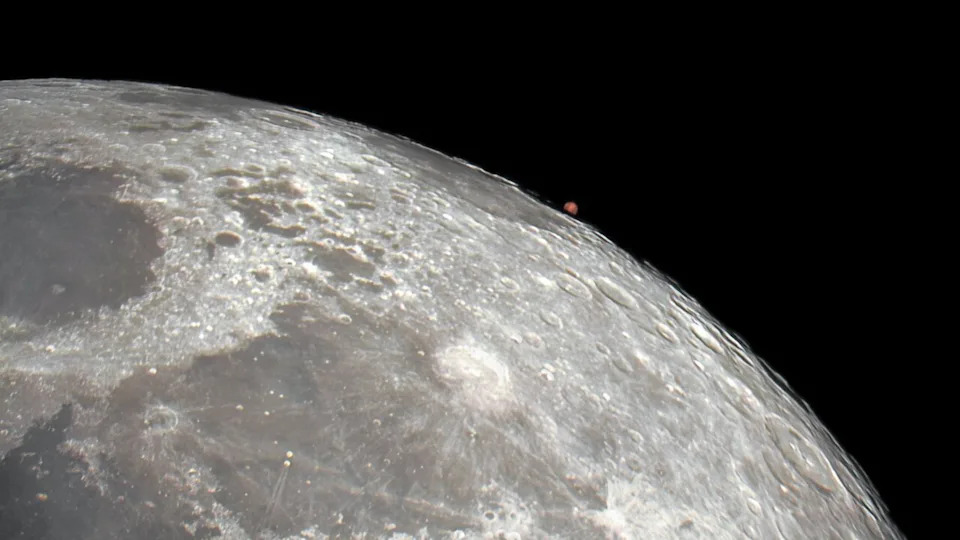
Mars rises out of a lunar occultation from Kitt Peak National Observatory in Arizona on Jan. 13, 2025. (Image credit: KPNO/NOIRLab/NSF/AURA/J. Winsky & A. Sorensen | Credit: J. Winsky & M. Zamani (NSF NOIRLab)
Mars Occults Under the Full Wolf Moon
Mars reached a bright opposition on Jan. 15, 2025, but the show began slightly earlier when the Red Planet was occulted by the full Wolf Moon. Observers across North America witnessed the rare event — an alignment that repeats from the same spot on Earth only about once every 14 years — as Mars briefly disappeared behind the lunar disk.
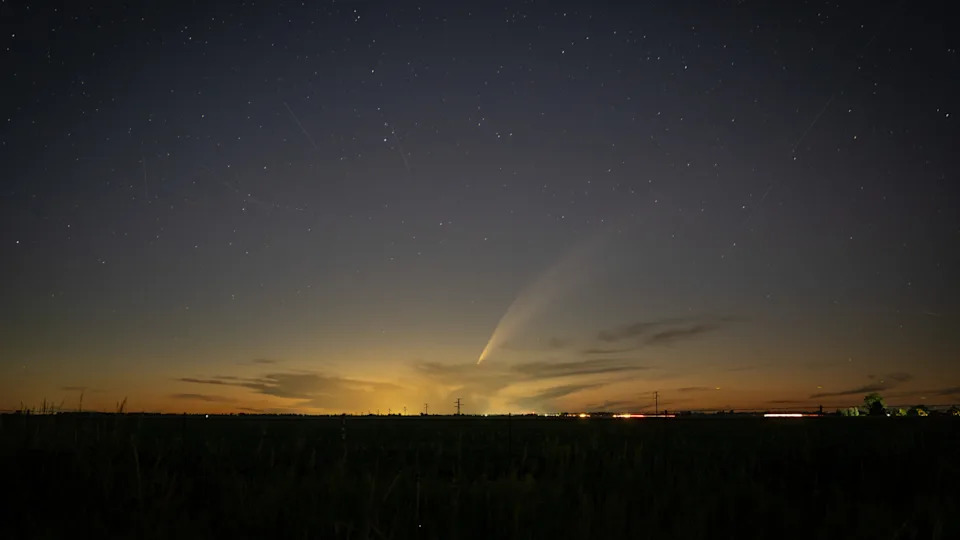
Comet C/2024 G3 (Atlas) appears in the sky over a rural area near Firmat, Argentina, on Jan. 20, 2025. | Credit: Patricio Murphy/SOPA Images/LightRocket via Getty Images)
The Great Comet of 2025: Comet 2024 G3 (ATLAS)
In mid- to late January, Comet 2024 G3 (ATLAS) made a close approach to the Sun and then developed a bright, structured tail that thrilled observers south of the equator. At its peak the comet was even visible in daylight to experienced observers and produced spectacular photos for southern-hemisphere astrophotographers.
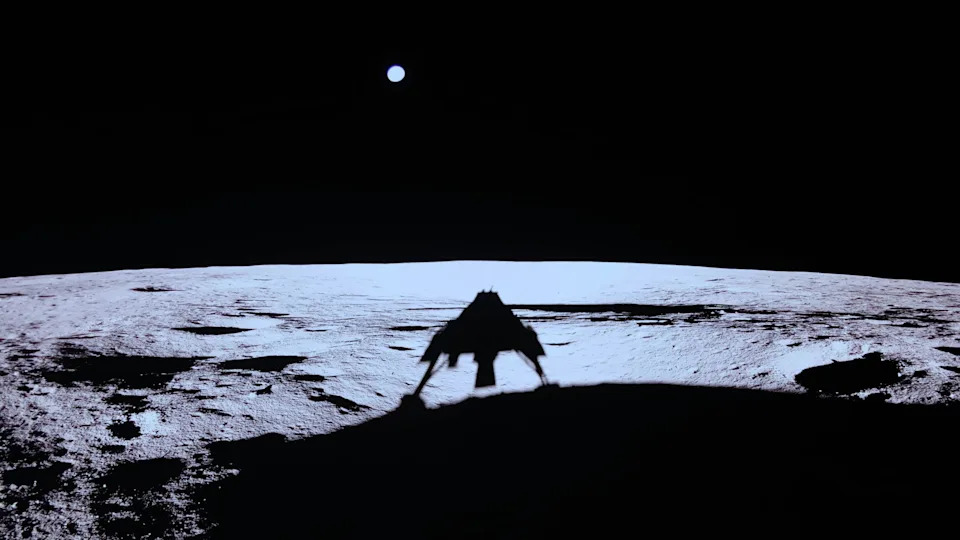
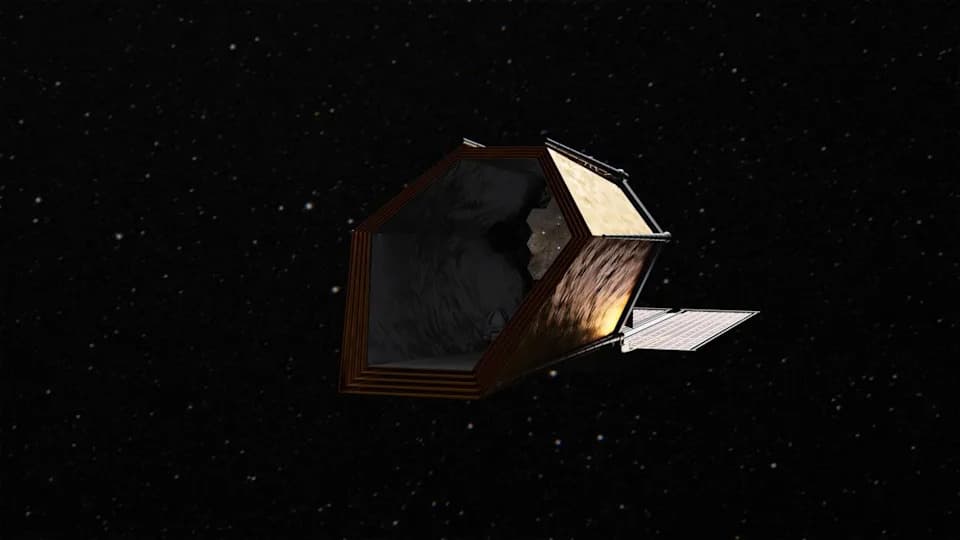
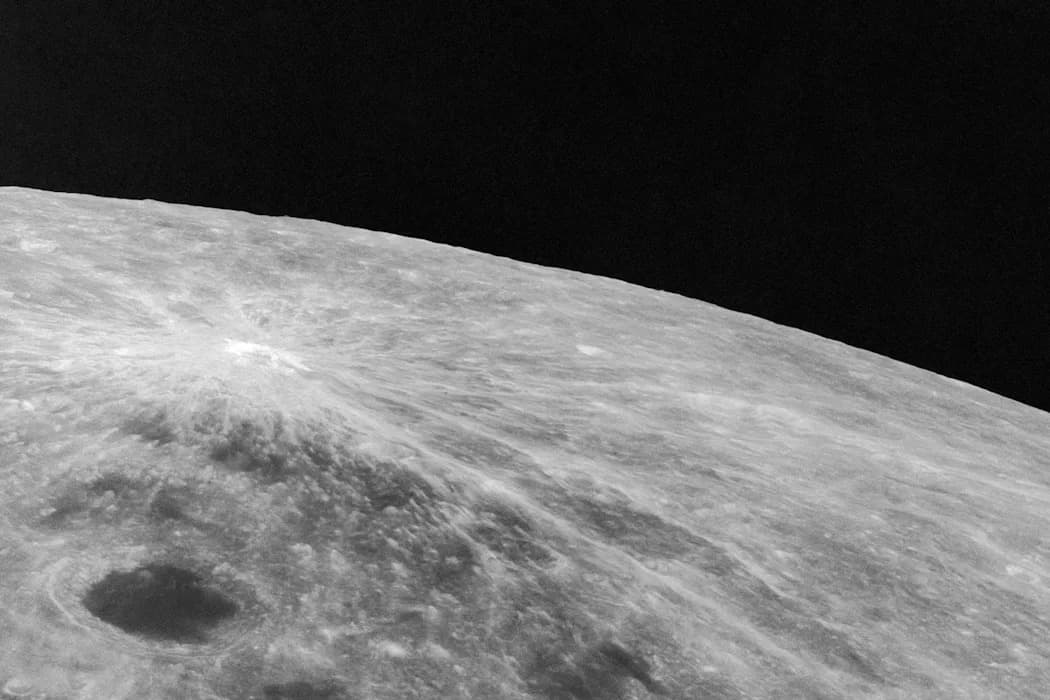
Firefly Aerospace's Blue Ghost Mission 1 landed on the moon on March 2, 2025. | Credit: Firefly Aerospace
Blue Ghost: A Private Soft Landing on the Moon
After a January launch on a SpaceX Falcon 9, Firefly Aerospace's Blue Ghost probe achieved a soft landing in Mare Crisium in early March, marking only the second private soft lunar touchdown. The company released dramatic descent footage showing the lander, its long lunar shadow and the surrounding basin about ~300 miles (≈500 km) across.
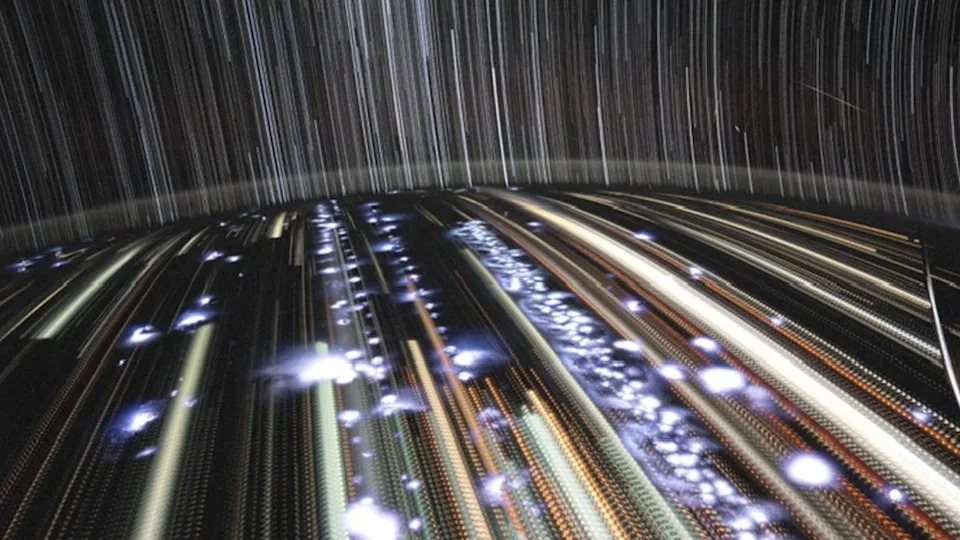
NASA astronaut Don Pettit captured this long-exposure view showing Earth and stars as intense streaks over time, as seen from the International Space Station. | Credit: NASA/Don Pettit and Babak Tafreshi via X
Don Pettit’s Orbital Star-Trail Masterpieces
Between September 2024 and April 2025, astronaut Don Pettit returned to astrophotography excellence on the International Space Station. In collaboration with ground-based astrophotographer Babak Tafreshi (The World At Night), Pettit captured dozens of mesmerizing star-trail images that pushed the craft of photographing Earth from orbit to new heights.
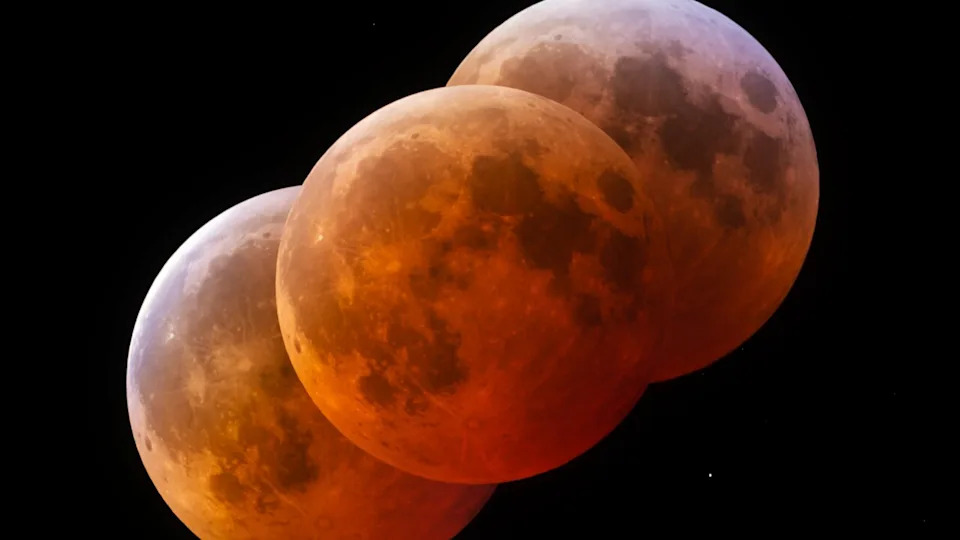
Petr Horálek, NOIRLab's photo ambassador, captured a total lunar eclipse from the Cerro Tololo Inter-American Observatory in Chile. | Credit: CTIO/NOIRLab/NSF/AURA/P. Horálek (Institute of Physics in Opava)
Two Total Lunar Eclipses and Stunning Photos
The first total lunar eclipse in three years occurred on March 13–14, 2025, when the full Worm Moon spent about 65 minutes crosswise in Earth's central shadow, tinting the lunar surface a coppery red. Photographers framed the eclipse with diverse backdrops — from a moonbow in Kentucky to the Milky Way in Chile. A second total eclipse on Sept. 7–8 produced equally striking imagery, including memorable shots over Egypt's White Desert.
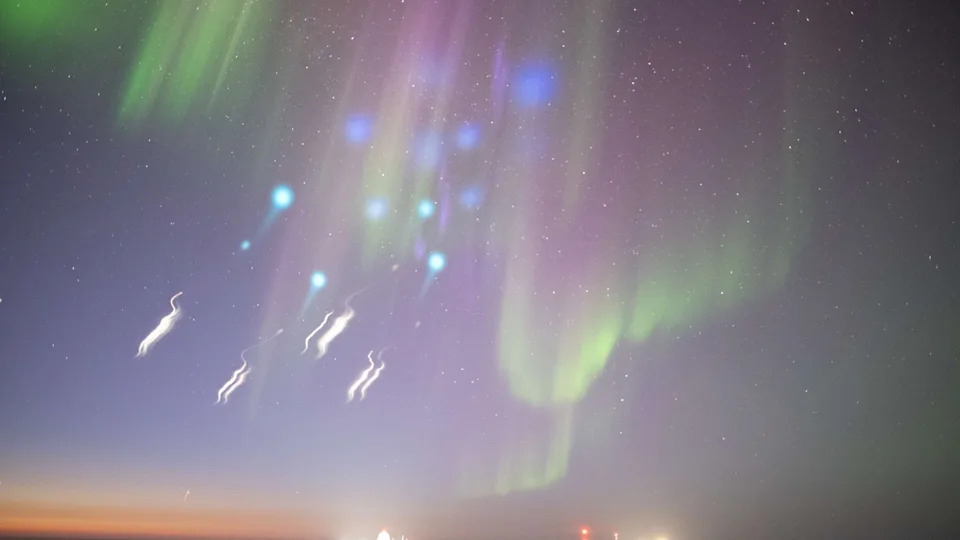
Vapor tracers light up the atmosphere over the Arctic Ocean as seen from Utqiagvik, Alaska, on March 25, 2025. | Credit: AWESOME Mission
Rockets Into the Aurora: The AWESOME Campaign
During an auroral substorm at Alaska's Poker Flat Research Range, two NASA sounding rockets launched and released colorful vapor tracers into the aurora. As part of the AWESOME mission, cameras across northern Alaska imaged the tracer clouds to help scientists track winds, particle flows and magnetic variations in real time.
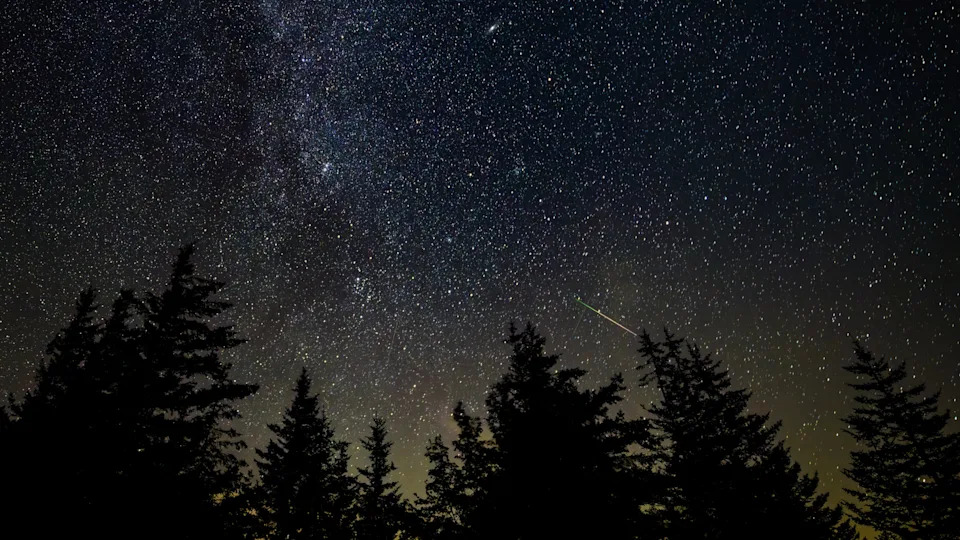
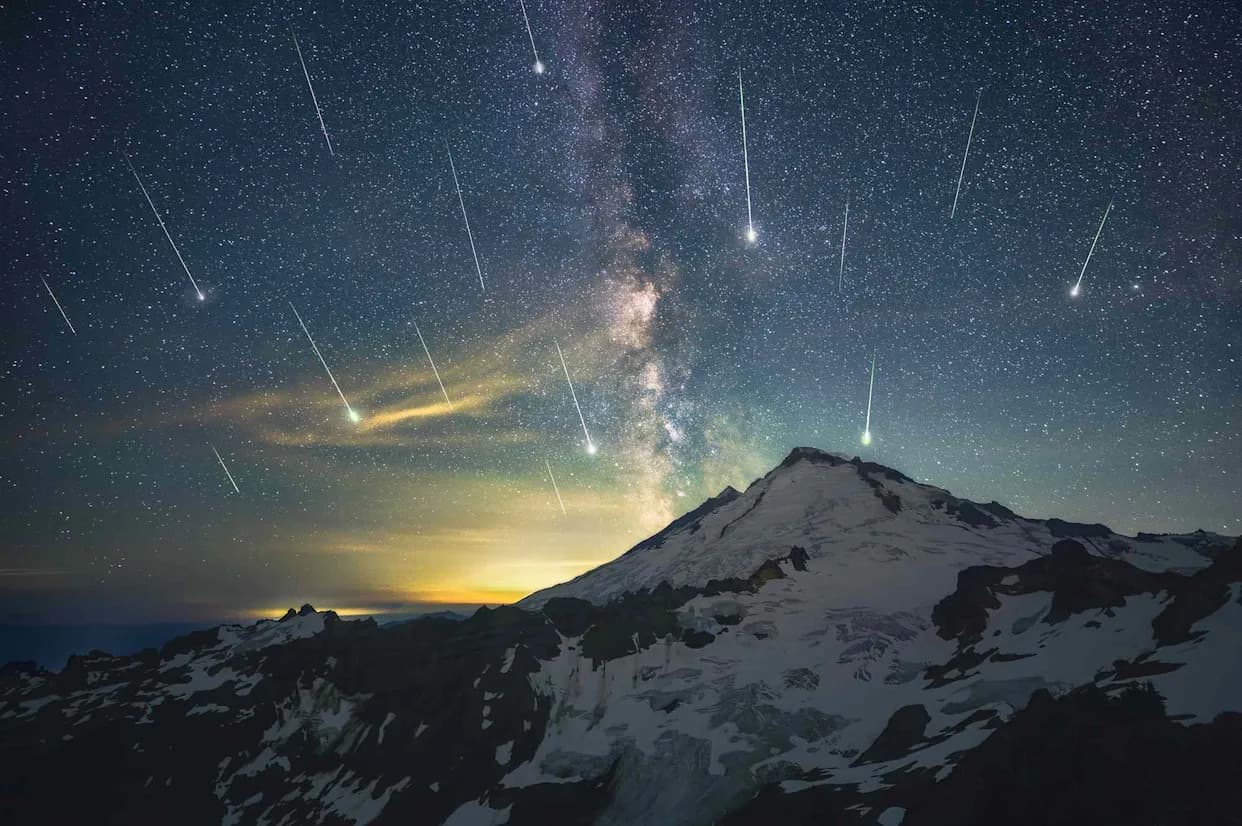
A meteor streaks across the sky over Spruce Knob, West Virginia, on Aug. 3, 2025. | Credit: NASA/Bill Ingalls
Meteors, Perseids and Lucky Long Exposures
The Perseid meteor shower is usually a Northern Hemisphere favorite, but in 2025 its peak on Aug. 12–13 coincided with an 84%-illuminated crescent moon, reducing visibility. Still, a brief window of darker sky before the peak produced bright meteors, and long-exposure images — such as Bill Ingalls' shot from Spruce Knob, West Virginia — caught memorable streaks.
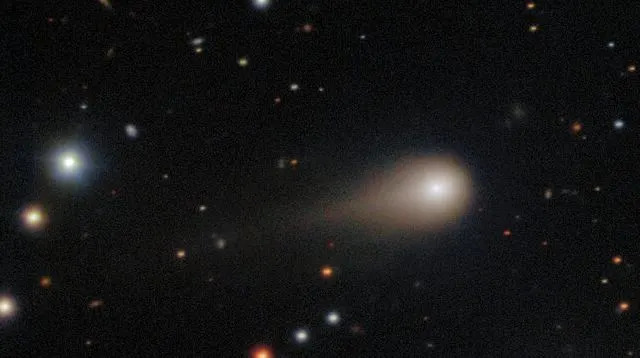
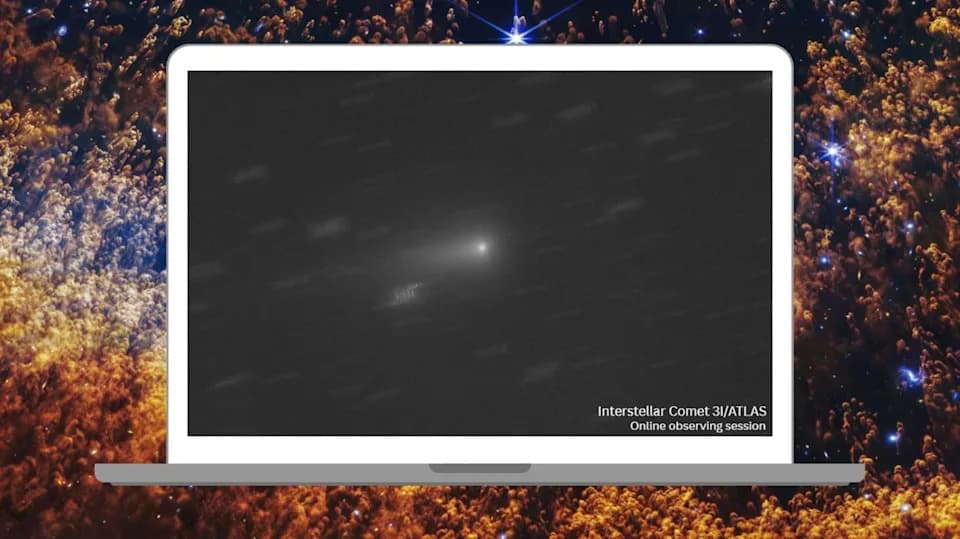
A deep image of the interstellar comet 3I/ATLAS by the Gemini South Telescope in Chile. | Credit: International Gemini Observatory/NOIRLab/NSF/AURA/Shadow the Scientist. Image Processing: J. Miller & M. Rodriguez (International Gemini Observatory/NSF NOIRLab)/T.A. Rector (University of Alaska Anchorage/NSF NOIRLab)/M. Zamani (NSF NOIRLab).
Interstellar Visitor: Comet 3I/ATLAS
Comet 3I/ATLAS became the third confirmed interstellar object to visit our solar system, joining 1I/'Oumuamua (2017) and 2I/Borisov (2019). In late August, astronomers using Gemini South in Chile observed the development of a tail on this fast-moving interstellar interloper, offering rare opportunities to study material from another star system.
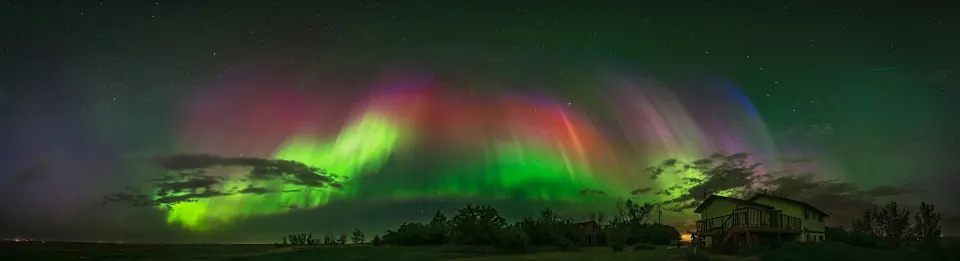
The great aurora of June 1, 2025. | Credit: VW Pics /Getty Images
Solar Maximum Sparks Auroras Across Low Latitudes
Riding the crest of solar maximum, 2025 delivered frequent geomagnetic activity. Strong G4-class geomagnetic storms on dates including April 14–15, June 1, June 17 and Sept. 2 produced vivid auroras visible at unusually low latitudes, delighting observers worldwide.
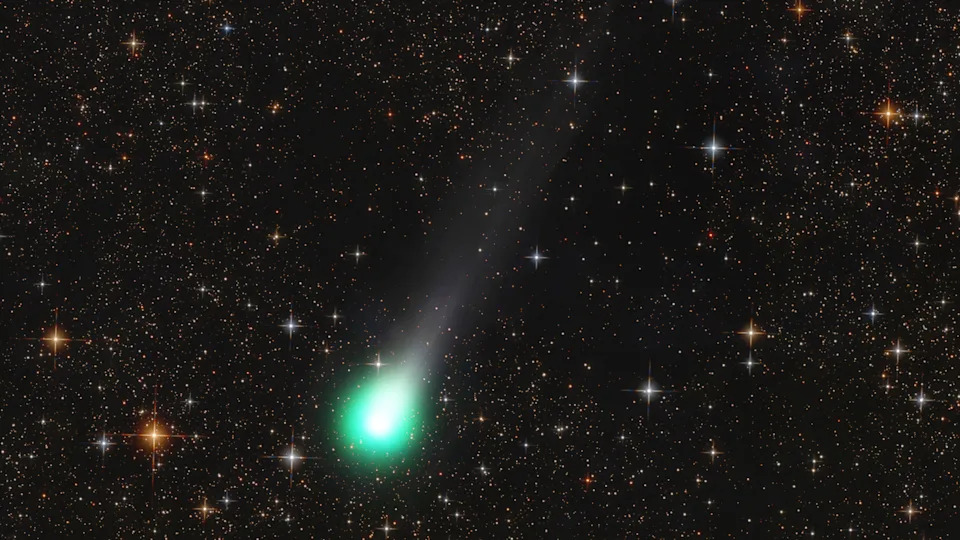
Comet C/2025 A6 (Lemmon) with a glowing green coma and visible tail as seen from Málaga, Spain, on Oct. 1, 2025. | Credit: Javier Zayas Photography/Getty Images
Late-Season Comets: Lemmon and a Surprise Companion
Comet Lemmon (C/2025 A6) brightened in mid–late October and flirted with naked-eye visibility, providing stunning views for astrophotographers. A surprise companion, Comet C/2025 R2 (SWAN), was spotted in early September but never achieved Lemmon’s visual impact.
Looking Back: Between dramatic eclipses, interstellar visitors, private lunar landings and vivid auroras, 2025 was a banner year for skywatchers and professional astronomers alike. Whether you watched with binoculars, a telescope or the naked eye, the year offered a rich calendar of celestial spectacles.
Help us improve.