Senators Kirsten Gillibrand (D-N.Y.) and Ashley Moody (R-Fla.) have reintroduced bipartisan legislation to bar members of Congress and their immediate family members from buying or owning individual stocks. The bill would require current lawmakers to divest within 180 days and newly sworn members within 90 days, and would also restrict certain securities, commodities and futures; the president and vice president would be exempt. The proposal joins competing measures in the House—one viewed as weaker by critics—and faces an uncertain path to a floor vote despite strong public interest.
Bipartisan Senators Reintroduce Bill to Bar Lawmakers From Trading Individual Stocks
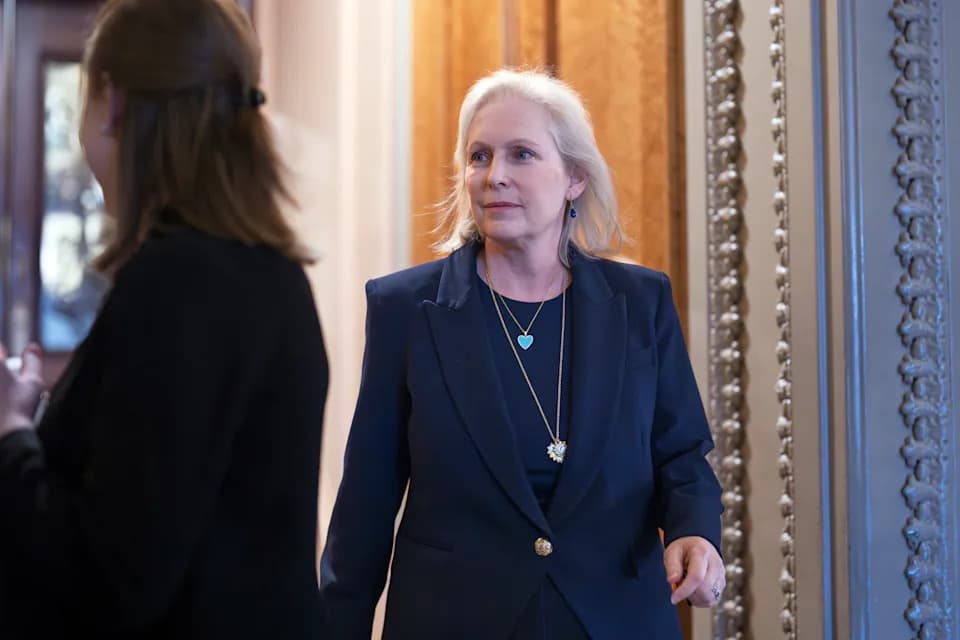
FILE - Sen. Kirsten Gillibrand, D-N.Y., leaves the Senate chamber after voting on a government funding bill at the Capitol in Washington, March 14, 2025. (AP Photo/J. Scott Applewhite, File)(ASSOCIATED PRESS)
Two U.S. senators from opposite parties are relaunching a bipartisan effort to prohibit members of Congress and their immediate family members from buying or owning individual stocks. Sen. Kirsten Gillibrand (D-N.Y.) and Sen. Ashley Moody (R-Fla.) plan to introduce legislation that would also restrict certain other financial instruments and require sitting and newly sworn members to divest existing holdings within specified time frames.
What The Bill Would Do
The Senate proposal would:
- Bar members of Congress and their immediate family members from buying or owning individual stocks and certain other assets, including some securities, commodities and futures.
- Require current lawmakers to divest individual stock holdings within 180 days after the law takes effect and newly elected members to divest within 90 days of being sworn in.
- Exclude the president and vice president from the ban, a carveout that may draw criticism.
Bipartisan Momentum—And Competing Plans
The measure arrives amid a flurry of competing proposals in both chambers of Congress. House Republican leaders are backing an alternative that would prohibit new purchases of individual stocks and require public notice seven days before a sale but would not force members to divest existing holdings. Critics say that plan is significantly weaker than a total ban.
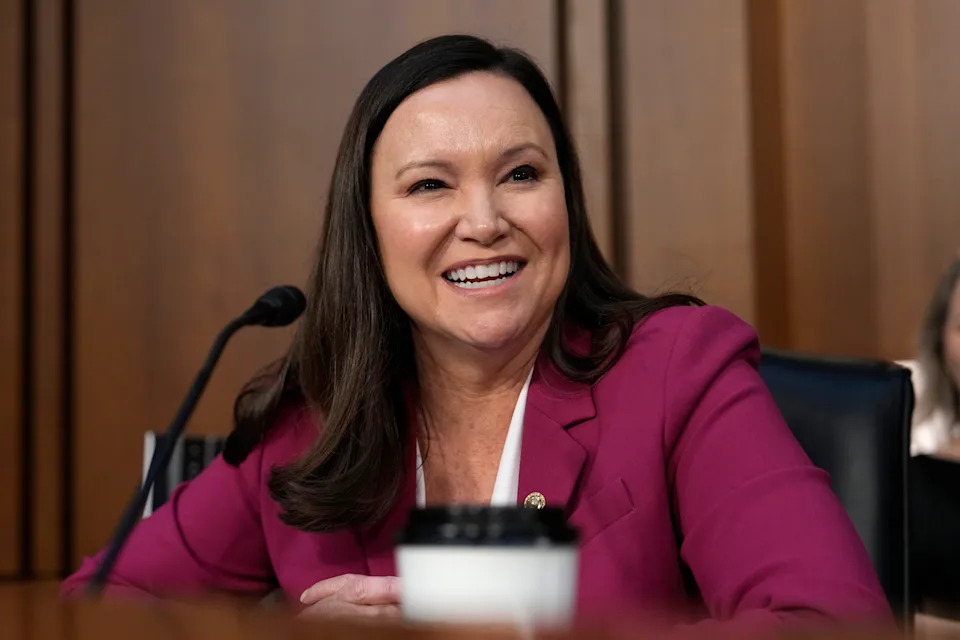
FILE -Sen. Ashley Moody, R-Fla., speaks during the confirmation hearing before the Senate Judiciary Committee for Kash Patel, President Donald Trump's choice to be director of the FBI, at the Capitol in Washington, Jan. 30, 2025. (AP Photo/Ben Curtis, File)(ASSOCIATED PRESS)
Separately, a House effort led by Rep. Anna Paulina Luna (R-Fla.) is pursuing a discharge petition to force a floor vote on a tighter ban; that petition has secured 79 of the 218 signatures needed. A House bill introduced last year by Reps. Chip Roy (R-Texas) and Seth Magaziner (D-R.I.)—which would ban members from buying or selling individual stocks—now has more than 100 cosponsors.
Ethics Concerns and Political Stakes
“There’s an American consensus around this, not a partisan consensus, that members of Congress and, frankly, senior members of administrations and the White House, shouldn’t be making money off the backs of the American people,”
Gillibrand said in an interview. Stock trading by lawmakers has prompted ethics reviews and criminal investigations in recent years amid allegations that some members profited from nonpublic information gained in the course of their duties.
It remains unclear whether the new Senate bill will reach a floor vote. A related proposal co-sponsored by Gillibrand and Sen. Josh Hawley (R-Mo.) in 2023 did not advance out of committee. Still, the issue has traction with voters: Moody is running for her first full Senate term after being appointed to her seat, and Gillibrand leads the Senate Democrats’ campaign arm.
Outlook
Support for banning or restricting stock trading by lawmakers spans both parties, but the multiplicity of competing bills creates uncertainty about which reforms might become law. The president and vice president’s exemption and other carveouts will likely be focal points of debate as the proposals move through Congress.
Help us improve.