
The House remains largely partisan, but a small set of lawmakers frequently broke with their parties in 2025, affecting close outcomes and revealing internal divisions. Rep. Henry Cuellar led the list with 83 dissents (24.1%), followed by Marie Gluesenkamp Perez, Thomas Massie and Jared Golden, each crossing party lines on high-profile votes. Many of the most frequent dissenters represent competitive districts or cited political and legal pressures that help explain their choices.
House Mavericks of 2025: Who Broke Party Ranks Most and Why It Mattered

Pictured from left to right: Reps. Henry Cuellar, D-Texas, Thomas Massie, R-Ky., and Chip Roy, R-Texas.
Party-line voting still dominates the U.S. House of Representatives, but a small cohort of lawmakers repeatedly cast ballots against their own parties in 2025 — altering tight outcomes, challenging leadership and exposing internal divisions on both sides of the aisle. Using roll-call data from the 119th Congress, this piece profiles the members who dissented most often and explains the context behind their votes.
Top Dissenters: Profiles and Patterns
Rep. Henry Cuellar (D-Tex.) — Most Frequent Dissenter
Rep. Henry Cuellar led the House in party dissent, casting 83 votes against the Democratic majority (24.1% of his roll calls). His voting record attracted attention amid legal and political drama in 2025: Cuellar faced a Department of Justice indictment alleging bribery and acting as an unregistered foreign agent, and later received a presidential pardon in early December. Shortly after the pardon he filed for re-election as a Democrat. Despite his frequent cross-aisle votes, Cuellar’s 2024 win was fairly comfortable (52.8% to 47.2%).
Rep. Marie Gluesenkamp Perez (D-Wash.) — Second Most Likely to Split
Representing a competitive Washington district, Rep. Marie Gluesenkamp Perez recorded 77 votes against the Democratic majority (22.5%). Her cross-party votes included siding with Republicans on condemnation of socialism, advancing the annual defense authorization bill, supporting censure of Rep. Al Green, and backing immigration measures such as the Laken Riley Act. She narrowly won re-election in 2024 (51.7% to 47.9%).
Rep. Thomas Massie (R-Ky.) — High-Profile Republican Maverick
Rep. Thomas Massie is a visible dissenter known for pushing limited-government and transparency agendas. He opposed his party 73 times (22.3%) and led efforts such as the Epstein Files Transparency Act, which sought DOJ disclosure related to Jeffrey Epstein. Massie was also one of only two Republicans to oppose the final passage of the so-called One Big Beautiful Bill Act.
Rep. Jared Golden (D-Maine) — Reliable Cross-Aisle Vote
Jared Golden recorded 72 votes against the Democratic majority (20.8%). He joined a number of bipartisan or Republican-led actions, including measures to end the government shutdown and, notably, was the lone Democrat to support a year-long funding bill in March. Golden has said he will not run for re-election in 2026 and narrowly retained his seat in 2024 by roughly 0.6%.
Reps. Don Davis, Vicente Gonzalez and Adam Gray — Moderates in Competitive Districts
Several Democrats who represent competitive districts frequently sided with Republicans on key votes. Rep. Don Davis (D-N.C.) dissented 70 times (20.3%), joining Republicans on votes including a motion to dismiss an impeachment resolution and tougher immigration penalties. Rep. Vicente Gonzalez (D-Tex.) broke with his party 65 times (19.8%), voting with Republicans eight times on the final day of the 2025 session and supporting the Laken Riley Act. Rep. Adam Gray (D-Calif.) dissented 60 times (18.4%) and was among six Democrats who voted to reopen the government after a 43-day shutdown.
Rep. Chip Roy (R-Tex.) and Rep. Andy Biggs (R-Ariz.) — Conservative Dissenters
Rep. Chip Roy recorded 53 votes against the Republican majority (15.7%), often opposing bills he saw as expanding government; he announced he will run for Texas attorney general rather than seek House re-election. Rep. Andy Biggs cast 48 dissents (14.2%), frequently aligning with the GOP’s most conservative flank against measures with broader bipartisan support.
Rep. Eric Burlison (R-Mo.) — Unexpected Entry
Tied for 10th most frequent in the list, Rep. Eric Burlison cast 46 votes against the Republican majority (13.8%). Unlike some peers known as contrarians, Burlison is generally viewed as policy-focused; his dissent tended to come on measures that increased federal regulation or added administrative burdens.
What These Votes Mean
Taken together, these patterns underscore how a small group of lawmakers can affect outcomes in a narrowly divided chamber. Many top dissenters represent competitive districts and cited local pressures, ideological differences or legal and political challenges when they crossed party lines. Key legislation where cross-party votes were consequential included the Laken Riley Act, the Stop Illegal Entry Act, FEMA coordination proposals and several major funding measures where a single member’s choice could sway the result.
Bottom line: While party-line voting still dominates, repeated dissent by a handful of members can shift policy, expose intraparty fault lines and shape the political narrative ahead of the 2026 elections.
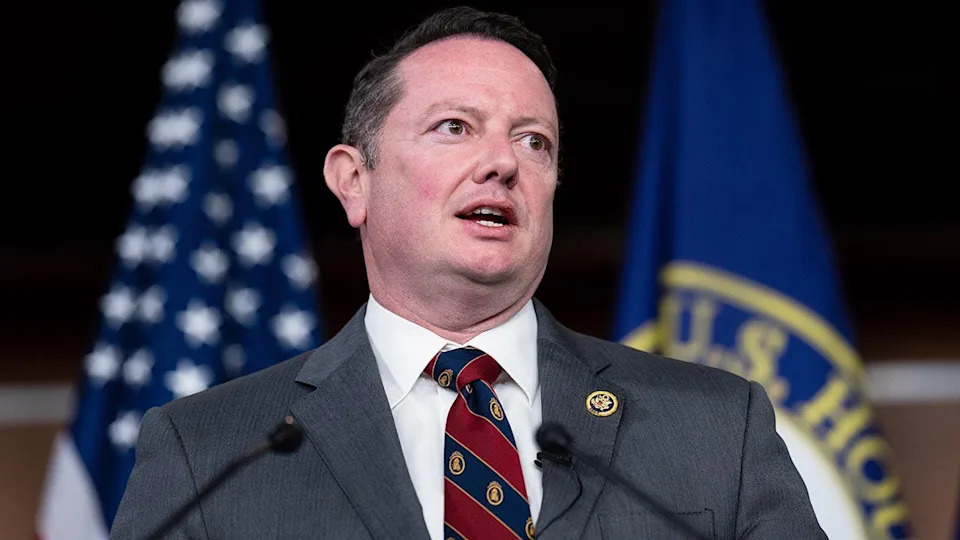
Rep. Eric Burlison, R-Mo., participates in a Republican Study Committee news conference in the U.S. Capitol in Washington, March 21, 2024.
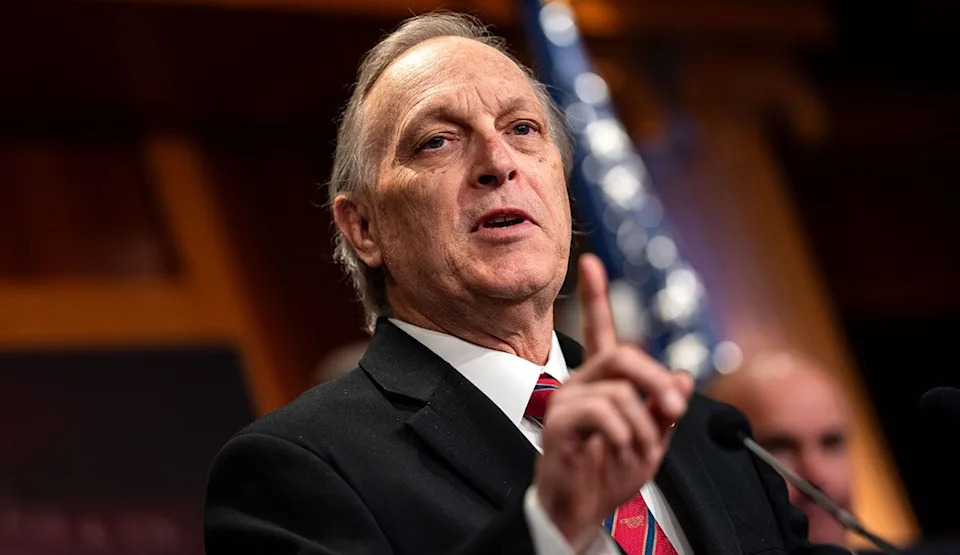
Rep. Andy Biggs speaks during a news conference in Washington, Dec. 18, 2024.
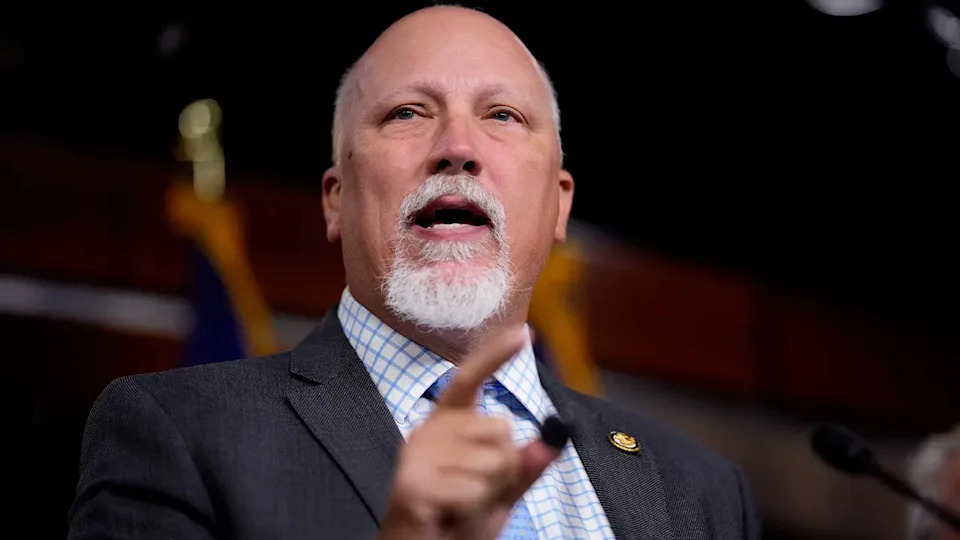
Rep. Chip Roy, R-Texas, speaks during a news conference on Capitol Hill in Washington, Oct. 20, 2025.

Rep. Adam Gray, D-Calif., speaks during a swearing-in ceremony at the Merced County Courthouse Museum in Merced, Calif., Jan. 30, 2025.

Rep. Vicente Gonzalez, D-Texas, leaves the U.S. Capitol after the last votes of the year in Washington, Dec. 14, 2023.

Rep. Jared Golden, D-Maine, attends a news conference in the Capitol Visitor Center in Washington, July 17, 2025.

Rep. Thomas Massie, R-Ky., leaves a meeting of the House Republican Conference in the U.S. Capitol in Washington, Jun. 4, 2025.

Rep. Marie Gluesenkamp Perez, D-Wash., walks up the House steps for the final votes in the Capitol before Congress' October recess in Washington, Sept. 25, 2024.
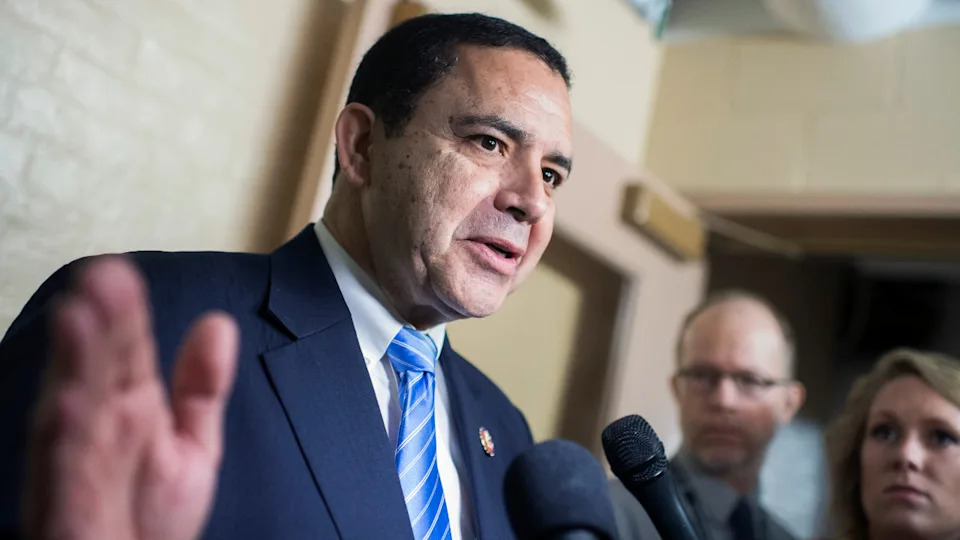
Rep. Henry Cuellar, D-Texas, talks with reporters in the Capitol in Washington, Jun. 27, 2019.
Help us improve.


