Ukrainian negotiators led by Kyrylo Budanov arrived in Miami to meet Jared Kushner, Steve Witkoff and US Army Secretary Dan Driscoll about security guarantees and post‑war recovery. The visit comes ahead of the fourth anniversary of Russia’s invasion as winter strikes have left hundreds of thousands facing power shortages and infrastructure damage. Kyiv seeks clear, binding security commitments; differences with Washington persist, but Zelensky hopes to formalize agreements soon. Fighting has intensified in the east, and Moscow continues to reject Western peace proposals.
Ukraine Delegation Arrives in Miami for High‑Stakes Talks on Security Guarantees and Post‑War Recovery
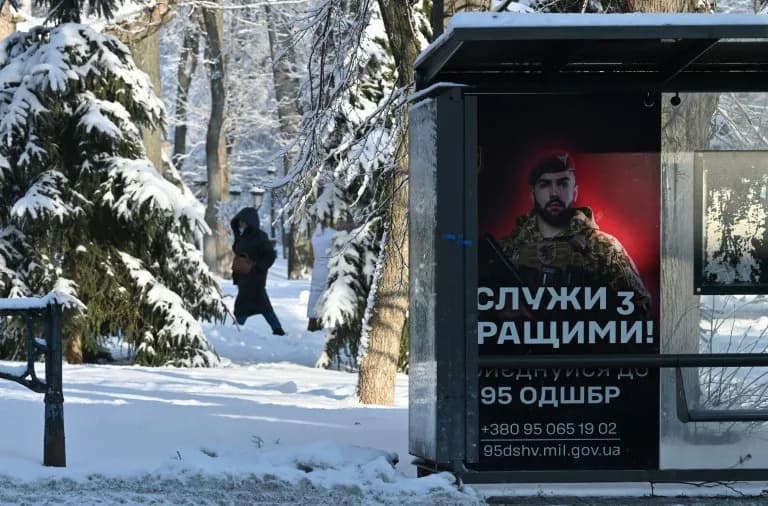
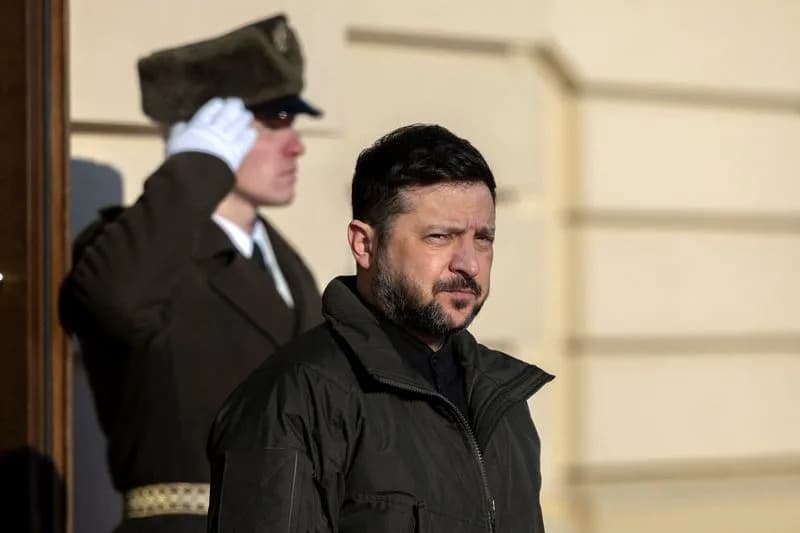
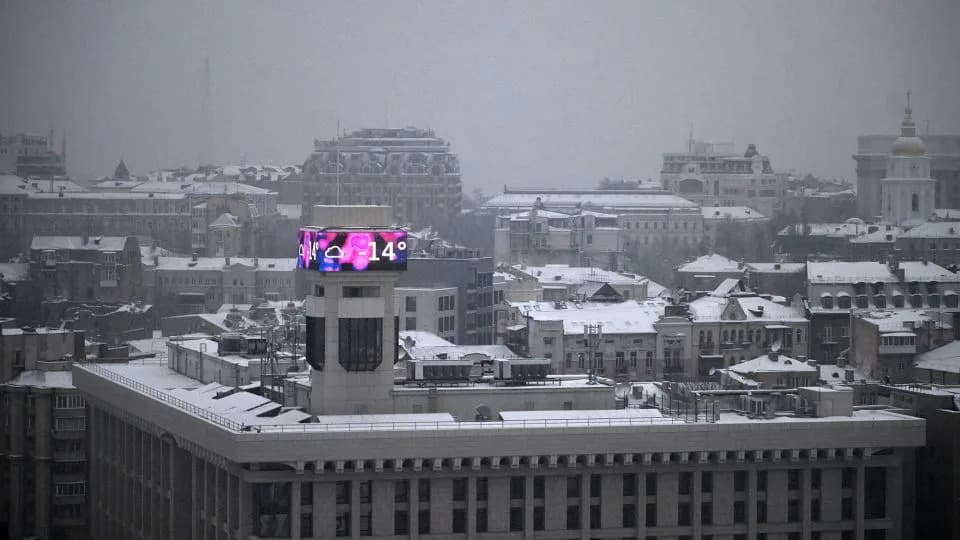
Next month marks four years of Russia's invasion of Ukraine (Sergei SUPINSKY)(Sergei SUPINSKY/AFP/AFP)
Ukrainian negotiators arrived in Miami on Saturday to hold high‑level talks linked to former US president Donald Trump’s circle and other US officials about ways to end four years of war with Russia. The discussions are expected to focus on post‑war security guarantees and plans for reconstruction.
Delegation and meetings
The delegation is led by President Volodymyr Zelensky’s newly appointed chief of staff, Kyrylo Budanov. He will be joined by Ukraine’s security chief, Rustem Umerov, and negotiator David Arakhamia. Meetings in Miami are scheduled with Jared Kushner, businessman and former presidential adviser Steve Witkoff, and US Army Secretary Dan Driscoll.
Context and aims
The visit comes as the fourth anniversary of Russia’s full‑scale invasion approaches and following renewed Russian strikes that have heavily damaged Ukraine’s energy infrastructure during a bitter winter. Kyiv is pressing for clear, binding post‑war security guarantees it says are essential to deter future aggression. While differences remain between Kyiv and Washington on the guarantees’ precise form, Zelensky has expressed hope that documents could be signed with the United States as early as next week.
Humanitarian and energy impact
Zelensky said his delegation’s mandate is to "provide all the real information about what is happening." Authorities report widespread power outages amid freezing temperatures — as low as -19°C in parts of Kyiv. Officials said about 400,000 people in Kharkiv were experiencing electricity shortages after night‑time strikes, and roughly 56,000 families in the Bucha area were left without power. Ukraine’s energy ministry declared a state of emergency in the energy sector and announced nationwide power restrictions "due to constant massive attacks by the Russian Federation." Schools in the capital were ordered closed until February over health concerns related to the outages.
Battlefield developments and diplomacy
On the battlefield, Russia’s offensive in eastern Ukraine has accelerated since autumn. Moscow said its forces captured two additional Ukrainian villages in the Donetsk and Zaporizhzhia regions. The Kremlin has rejected Western peace proposals to date and has reiterated maximalist demands, warning it will seize territory it claims by force if diplomacy fails.
International responses
Territory and security guarantees remain central unresolved issues in negotiating an end to the war. The United Kingdom and France have signed a declaration expressing an intent to deploy troops to Ukraine in the event of a ceasefire — a plan Moscow condemned, saying any foreign forces would become "legitimate targets." In recent weeks some European governments, including France and Italy, have suggested re‑engaging with Moscow diplomatically to seek an end to the conflict, while the UK has said it does not plan to open discussions with the Kremlin. The United States says it is engaging with both Kyiv and Moscow to explore diplomatic options.
Zelensky: "One of the consequences of this terror is the discrediting of the diplomatic process; people are losing faith in diplomacy."
As talks begin in Miami, Ukrainian negotiators aim to secure concrete commitments on security and reconstruction that Kyiv believes are necessary to prevent future aggression and enable long‑term recovery.
Help us improve.