At least 17 people in West Singhbhum district, Jharkhand, have been killed in about 12 attacks since Jan. 1, authorities say. Officials believe a single young adult male elephant — possibly in musth, a hormonal state linked to aggression — is responsible. Wildlife teams are searching to tranquilize and relocate the animal while officials move residents from high-risk villages and attempt to prevent further casualties. Villagers have demanded longer-term measures and compensation for the bereaved families.
Rampaging Elephant Kills At Least 17 People in Jharkhand, Including Family of Four; Authorities Race To Tranquilize and Relocate
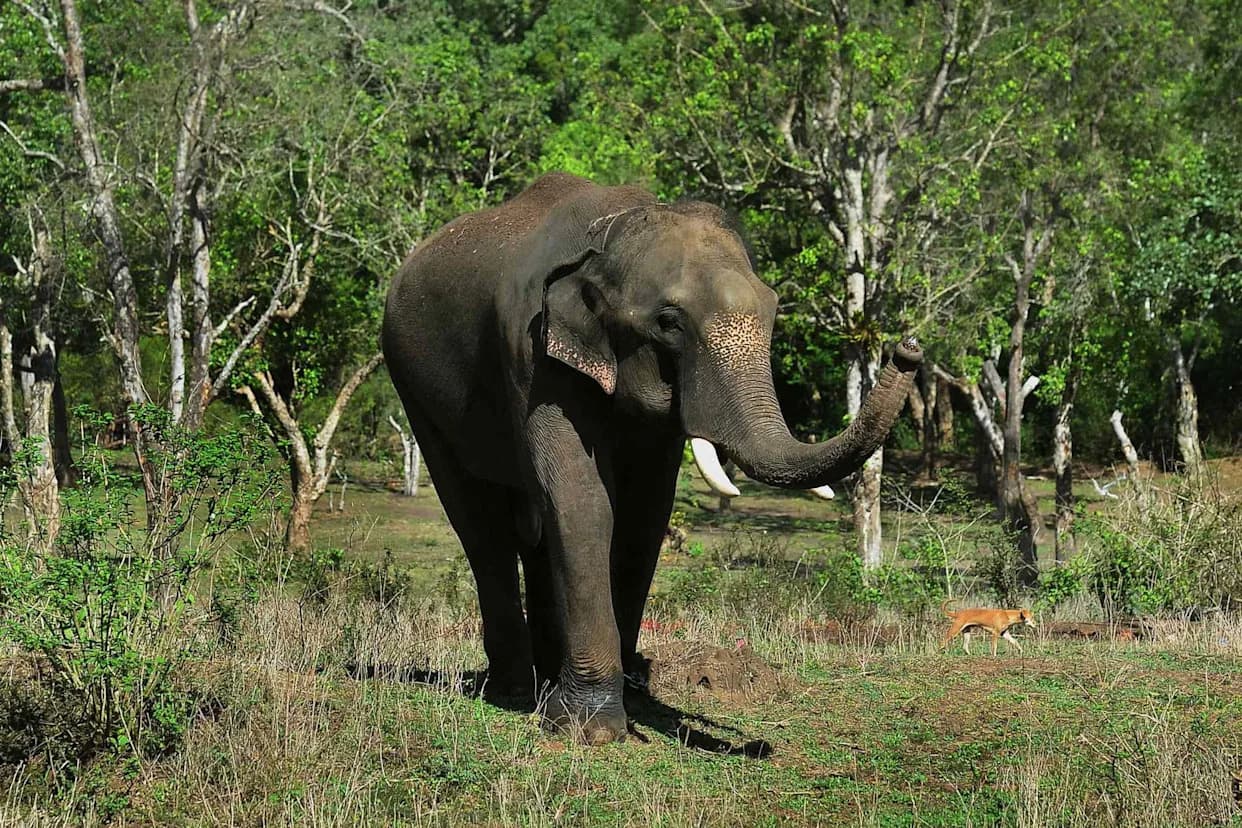
MANJUNATH KIRAN/AFP via GettyA tamed elephant seen at the Dubare Elephant Camp west of Bangalore, India, in 2018
At least 17 people have been killed in a wave of attacks attributed to a single elephant in West Singhbhum district, Jharkhand, eastern India. Officials say the attacks — believed to span roughly a week — include about 12 separate incidents since Jan. 1 and have left nearby communities alarmed and seeking urgent protection.
What Happened
Local and national outlets report that the suspect is likely a young adult male elephant. Among the victims were a wife, her husband and their two children, who were killed together in the village of Babadia. Other victims identified by reporters include Chipri Chimpi of Sialjod and 40-year-old Prakash Das; according to The Hindu, Das was found decapitated. One woman injured in an earlier encounter died on Jan. 7 at a local hospital.
Official Response
Divisional forest officer Aditya Narayan told The Times of India that wildlife teams have not yet located the animal, although multiple government and independent agencies from across India are involved in the search. Authorities say that once the elephant is found, the forest department plans to tranquilize and relocate it to minimize further risk to residents.
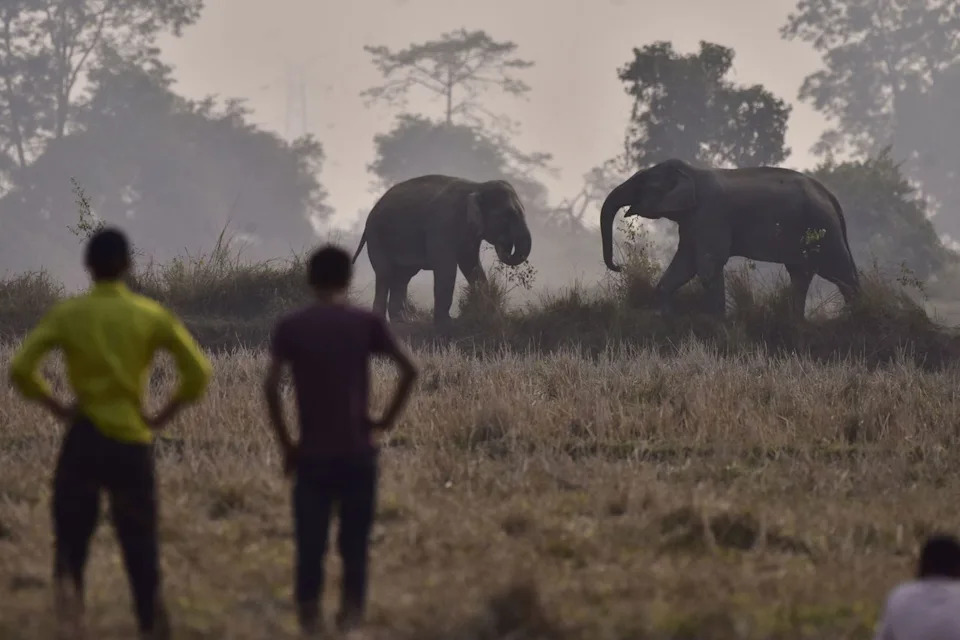
Anuwar Hazarika/NurPhoto via GettyVillagers observe a herd of wild elephants in a village in Assam, India, on Dec. 24, 2025
“We are still camping in the fields while trying to trace the elephant with multiple teams, but it wasn’t spotted today,” Narayan said, noting that public guidance has been issued on what to do if people encounter the animal.
Officials describe the animal's movement as erratic, saying it appears to be roaming a roughly 100-km (about 62-mile) circumference across three forest divisions. The elephant was last tracked on Jan. 8. Kolhan regional chief forest conservator Smita Pankaj said the immediate priority is preventing further casualties.
West Singhbhum Deputy Commissioner Chandan Kumar said authorities are helping residents of high-risk villages relocate temporarily: “We are planning to shift them to the nearest safer places from the critical areas.”
Local Measures and Possible Cause
Eyewitnesses told reporters many attacks occur at night while people are sleeping. Residents have organized volunteer patrols and used firecrackers to try to deter the animal. Wildlife experts suspect the male elephant may be in musth — a periodic hormonal condition in male elephants associated with elevated testosterone and increased aggression.
Villagers have urged authorities to provide longer-term protections and compensation for the families of the deceased as search and relocation efforts continue.
Context and Safety
Human-elephant conflict is a long-standing issue in many parts of India, often driven by habitat overlap, crop-raiding, and fragmented landscapes. Officials emphasize caution: if residents encounter a distressed or aggressive elephant, they should keep a safe distance, avoid sudden movements, and follow guidance issued by local forest authorities.
Help us improve.