Florida’s three-week, state-approved black bear hunt ended with 52 bears killed between 6 and 28 December, and officials say a full harvest report will follow. The FWC defended the hunt as a conservative management step after the statewide black bear population recovered to more than 4,000 animals. Animal-welfare groups condemned the decision and tactics such as baiting, while critics warned the operation echoes the disastrous 2015 hunt that killed nearly 300 bears. The debate over science, safety and ethics is expected to continue.
Florida’s Controversial Black Bear Hunt Draws Outcry After 52 Killed During Three-Week Season
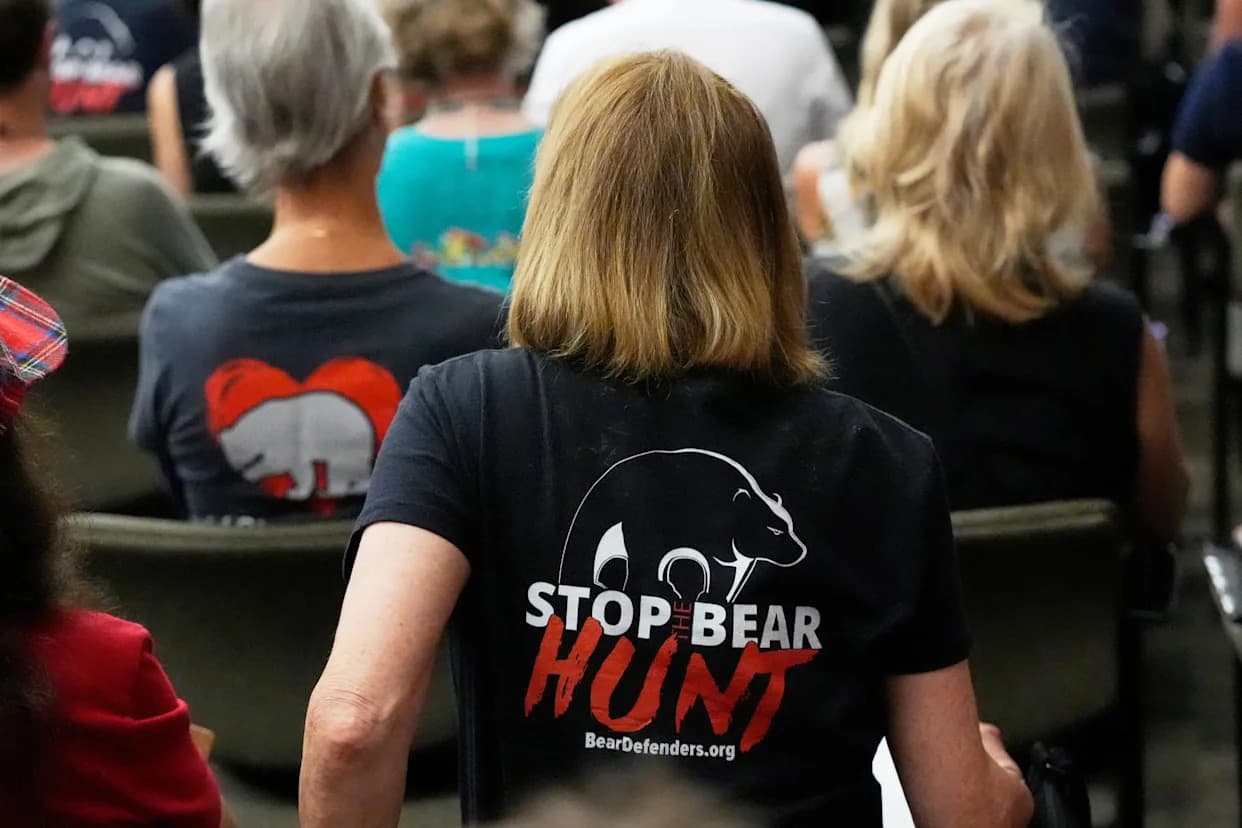
Floridians attend a fish and wildlife commission hearing about the bear hunt on 1 May 2025 in Ocala, Florida.Photograph: John Raoux/AP
Florida wildlife officials say a state-authorized, three-week black bear hunt that sparked protests has ended with 52 bears killed between 6 and 28 December. The Florida Fish and Wildlife Conservation Commission (FWC) said it will release a full harvest report in the coming months providing details about where and how the animals were taken.
What happened
The FWC issued 172 single-take permits across four of seven designated bear-management zones where bear numbers have increased the most. Officials described the hunt as a cautious management tool intended to address a growing black bear population, which the commission estimates at more than 4,000 animals statewide — a rebound from several hundred in the 1970s.
Officials’ defense
“The 2025 black bear hunt, rooted in sound scientific data, was a success. We’re proud to have joined the more than 30 states that manage black bears with regulated hunting,” Roger Young, FWC executive director, said in a press release announcing preliminary results.
“The limited number of permits issued in areas with the largest bear populations and other components of the hunt prioritized a conservative approach that ensures the long-term health of bear populations in Florida, while providing opportunity for hunters.” — George Warthen, FWC chief conservation officer.
Opposition and concerns
Animal welfare and conservation groups denounced the hunt as unnecessary and grounded in flawed science. Humane World For Animals pointed to a poll it commissioned showing 81% of Floridians oppose bear hunting overall, with an even larger share opposed to baiting and the use of dogs. Kate MacFall, the group's Florida state director, said images of hunters posing with killed bears were deeply upsetting to many residents.
“Seeing the photos of trophy hunters gloating over their slaughtered bears has been deeply upsetting for all Floridians who love Florida’s bears and want them protected. This bloody spectacle has been a heartbreaking way for Floridians to enter the holiday season,” MacFall said.
Critics also warned the operation resurrected painful memories of the controversial 2015 hunt, when a planned three-week season was halted within 48 hours after nearly 300 bears — including many females that were pregnant or accompanied by cubs — were killed.
Methods and future rules
The commission approved a range of tactics in August that drew criticism — baiting, archery and the potential use of dog packs among them. The FWC did not authorize dog packs for the 2025 season; officials say dog use may be phased in during future seasons. Opponents called some approved tactics “barbaric,” while supporters said regulated hunting is a standard wildlife-management tool used across North America.
Broader debate
The dispute has become highly politicized. Critics accuse lawmakers and regulators of prioritizing politics over science, and detractors highlighted extreme, widely disputed claims made during the debate — including a 2024 comment by state representative Jason Shoaf alleging dangerously aggressive behavior by drug-affected bears.
The FWC’s promise of a detailed harvest report could provide more context on the distribution of the kills, age and sex of the animals, and whether the hunt met its stated conservation goals. Until that report is released, the controversy over whether the hunt was necessary and humane is likely to continue dividing Floridians and conservationists alike.
Help us improve.