Scientists report that coyotes typically form lifelong, genetically monogamous pair bonds and often show grief-like behaviors — prolonged howling, lethargy and reduced appetite — after a mate dies. Brain tissue analyses from a small sample indicate elevated CRF stress-receptor expression in the olfactory tract and hippocampus of widowed coyotes, changes that may tune smell and memory after loss. Although preliminary and limited by sample size, the findings could inform humane wildlife management and potentially suggest avenues for understanding prolonged grief in humans.
Lifelong Bonds and Loss: How Coyotes Grieve After a Mate Dies
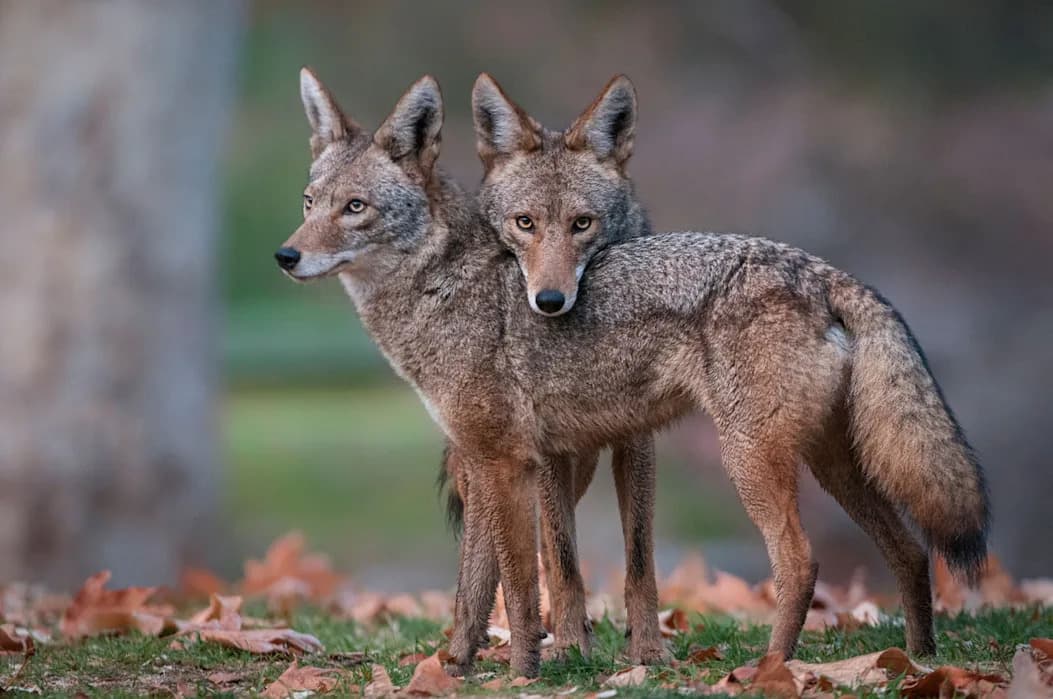
A pair of coyotes (Canis latrans) in Griffith Park, Los Angeles. Unlike most other animals, coyotes have only one partner in their lifetimes.Photographer Sean Crane, Minden Pictures
The pain of losing a long-term companion is not unique to people — research suggests coyotes also form deep pair bonds and show clear signs of mourning when a mate dies. Scientists studying coyote behavior and brain chemistry hope these findings will both foster public empathy and shed light on the biological basis of grief.
Monogamy in Coyotes
About 3–5% of mammal species are considered monogamous. Among them, coyotes appear to be unusually faithful. A 2012 study led by Stan Gehrt analyzed genetic data from urban coyotes in the Chicago area — 18 litters and 96 pups — and found no evidence of extra-pair parentage, a pattern known as genetic monogamy. Gehrt and colleagues report a decade of subsequent, unpublished data that supports those findings.
Signs of Mourning
Coyotes that lose their mate often display behaviors that researchers describe as grief-like: prolonged, mournful howling; lethargy; reduced appetite; lowered posture; and repeated visits to locations where a partner or pup was last seen. One field anecdote recalled a male that howled continuously when his temporarily captured female partner was taken into a laboratory and only quieted when she was returned.
What Happens in the Brain?
Neuroscientist Sara Freeman and her team have spent years studying the behavioral, hormonal and neural consequences of coyote pair-bonding. Working at the USDA National Wildlife Research Center’s Predator Research Facility in Millville, Utah, Freeman’s group examined brain tissue from six deceased coyotes — three of which were known widows — to map changes in receptors for corticotropin-releasing factor (CRF), a hormone that activates the body’s stress-response system.
The researchers found increased CRF receptor expression in the olfactory tract (involved in smell processing) and the hippocampus (important for learning and memory) in widowed animals compared with non-widows. Freeman suggests these neurochemical changes may help bereaved coyotes detect social scents — for example, a lost mate’s odor — or otherwise alter memory and sensory processing after loss.
Connections to Other Species and Human Health
Similar mourning-like responses are reported in other monogamous mammals. Prairie voles, for example, show "depressive-like" behavior in laboratory tests after partner loss. Because some stress and bonding pathways are conserved across mammals, Freeman and others speculate that studying grief in coyotes might eventually suggest new approaches to treating prolonged grief in people — ranging from pharmacological targets to nonpharmacological interventions such as structured exercise programs, which already show benefits for bereaved humans.
Conservation, Management and Compassion
Beyond clinical implications, Freeman and colleagues hope the work encourages empathy for coyotes, which are often vilified as pests. Julie Young notes coyotes contribute to ecosystems by dispersing seeds via fruit consumption, a function that can support landscape resilience. Moreover, killing one member of a bonded pair can destabilize territory boundaries, trigger conflicts among newcomers and sometimes create so-called "problem coyotes" that increase negative interactions with people. Researchers argue that recognizing coyotes’ social complexity may support less-lethal, more effective wildlife management.
Study Limitations
Freeman and Gehrt caution that the evidence remains preliminary. The brain study used a very small sample (six animals, all female), and the widows had been bereaved for differing intervals (three days, four months and 14 months). These limitations mean results should be interpreted cautiously and validated with larger, more controlled studies.
Why It Matters
Whether viewed through the lens of animal behavior, neuroscience or wildlife management, the research highlights that coyotes are socially complex animals capable of sustained bonds and sorrow-like responses. As Gehrt and others have found, sharing these facts with the public can change attitudes: when people learn about coyote monogamy and bonding, many become more inclined toward coexistence rather than lethal control.
“We have this opportunity to really understand what happens during loss and how that might translate to improved outcomes for people who have extended grief,” says Sara Freeman, associate professor of biology at Utah State University.
Help us improve.