
Representatives Michael Baumgartner (R-Wash.) and Marie Gluesenkamp Perez (D-Wash.) are leading a rare bipartisan effort to address rising sea lion predation on Pacific Northwest salmon and steelhead. Officials say protections under the 1972 Marine Mammal Protection Act contributed to rebounding sea lion numbers that now threaten Columbia River fish runs. A House Natural Resources subcommittee recently held a hearing, and some lawmakers are urging expanded management tools, including exploring lethal removal, while weighing legal and conservation implications.
Bipartisan House Push Seeks Harsher Measures Against Sea Lions Devouring Northwest Salmon

Apex predator threatening Northwest salmon sparks rare bipartisan push to 'kill more'
Lawmakers from both parties in the U.S. House of Representatives have rallied around an unexpected point of agreement: rising sea lion predation that threatens salmon and steelhead runs in the Pacific Northwest.
Representatives Michael Baumgartner (R-Wash.) and Marie Gluesenkamp Perez (D-Wash.) say growing populations of California and Steller sea lions are exerting new pressure on already imperiled native fish in Washington State. Officials and experts point to protections enacted under the Marine Mammal Protection Act (MMPA) of 1972 as one factor in the rebound of some pinniped populations.
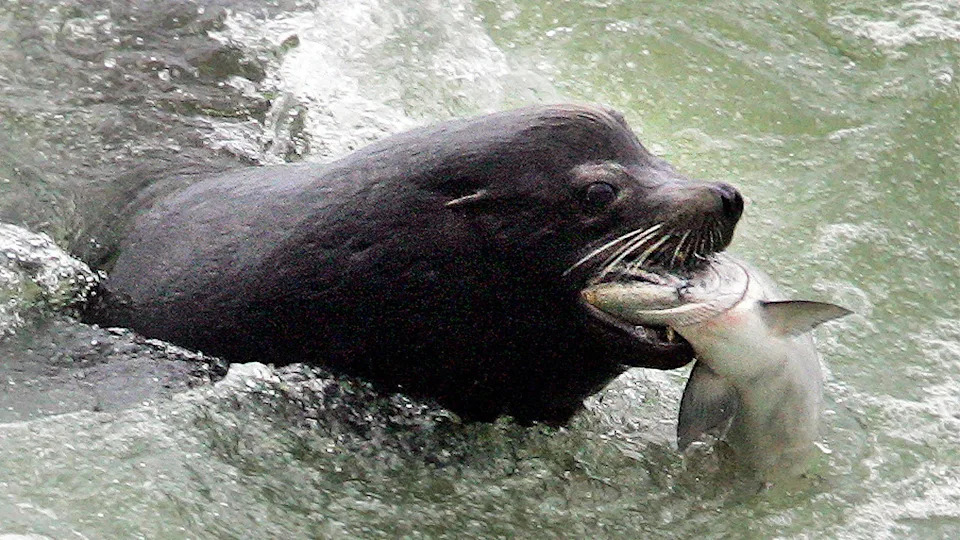
California sea lions, apex predators, are posing an issue for salmon and steelhead trout populations in the Pacific Northwest.
Washington's Department of Fish and Wildlife has labeled sea lions a serious threat to Columbia River salmon and steelhead trout, species that are central to tribal cultures, regional fisheries and local economies. Baumgartner emphasized that salmon-bearing rivers in Washington have historical and cultural importance to Native American tribes, support recreational and commercial fishing, and are tied to hydroelectric infrastructure.
"There are now huge numbers of sea lions in a far disproportionate amount to any sort of historical numbers that sit at the mouth of the Columbia River and eat salmon all day," Baumgartner told Fox News Digital, warning that concentrated predation can significantly reduce migrating fish counts.
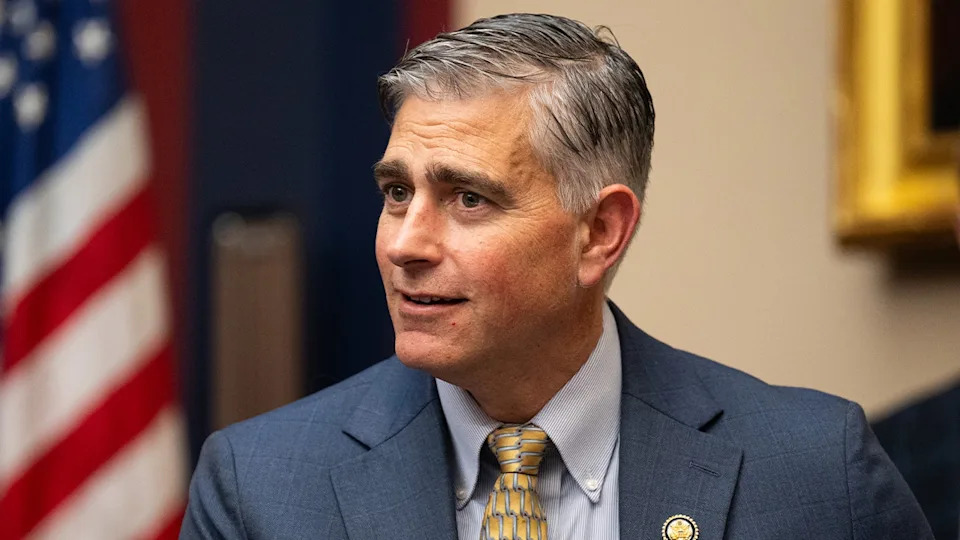
Rep. Michael Baumgartner, R-Wash., attends a hearing on Feb. 5, 2025.
Lawmakers Call For Expanded Management Options
The developing bipartisan effort has focused on expanding management tools available to state and federal managers, including exploring lethal-removal options and other more aggressive techniques. A House Natural Resources subcommittee convened a hearing earlier this month to examine sea lion predation in the Pacific Northwest; both Baumgartner and Gluesenkamp Perez participated.
After the hearing Baumgartner posted on X: 'Save more salmon, shoot more sea lions.' Gluesenkamp Perez has described a Steller sea lion as similar in size to a Toyota Corolla to illustrate how large these animals can be and why they can consume substantial numbers of fish.
Gluesenkamp Perez called the problem a practical one that voters expect Congress to address, saying the dramatic scenes of large pinnipeds consuming fish are hard for policymakers and the public to ignore. In a post on X she also warned that 'tens of thousands' of sea lions are venturing farther up the Columbia River and its tributaries.

Rep. Marie Gluesenkamp Perez, D-Wash., walks up the House steps for the final votes in the Capitol before Congress' October recess, Sept. 25, 2024.
Policy Tensions And Next Steps
The debate highlights tensions between federal marine mammal protections and regional requests for stronger tools to protect endangered fish runs. Advocates for lethal removal and more permissive management say current protections impede efforts to safeguard declining salmon and steelhead. Conservation groups and marine protection advocates warn that any changes must be guided by science, consider nonlethal alternatives where possible, and comply with federal law.
Congressional hearings and continuing dialogue among federal and state agencies, tribal governments, fisheries managers and lawmakers are likely to shape next steps. The issue underscores the complex balancing act between species protections, ecosystem recovery, and the needs of communities that depend on healthy salmon runs.


