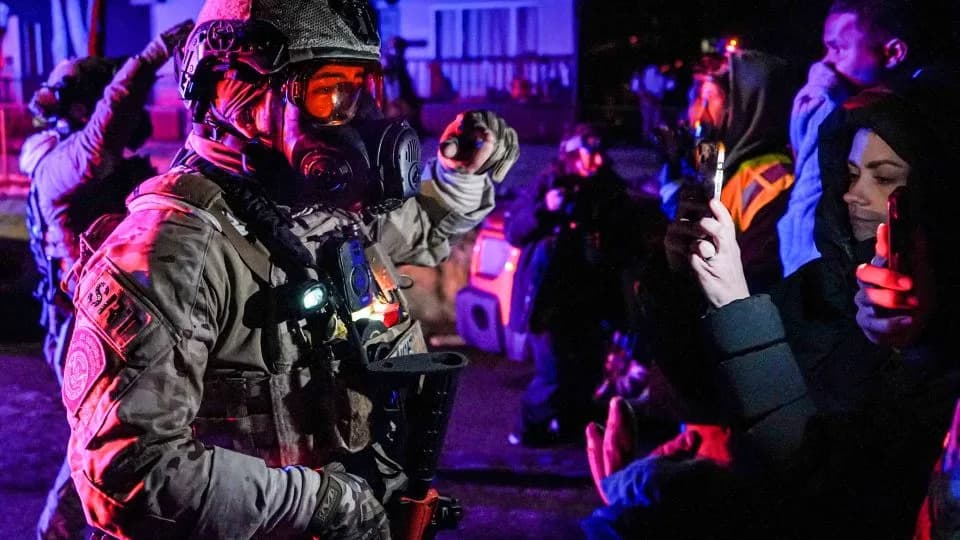
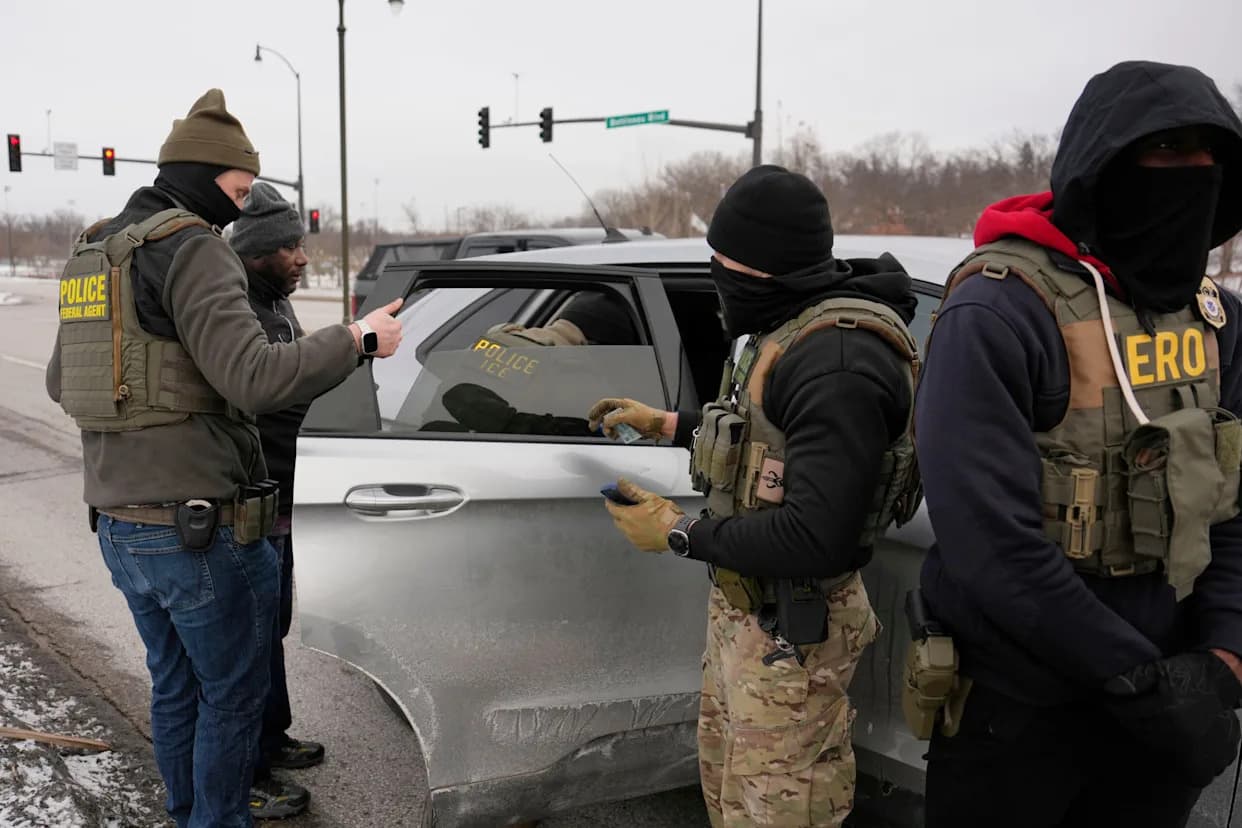
Most immigration arrests use administrative warrants, which name individuals but typically do not authorize forced entry into private homes. Judicial warrants signed by a judge are required to lawfully enter and search private property for an arrest. Narrow exceptions (hot pursuit, immediate danger, calls for help) rarely apply to routine immigration arrests. Advocates run "know-your-rights" campaigns urging people to ask to see a warrant and to refuse entry if agents only present an administrative warrant.
What to Know About the Warrants Immigration Agents Use — And When They Can Enter Your Home

A family member, center, reacts after federal immigration officers make an arrest Sunday, Jan. 11, 2026, in Minneapolis. (AP Photo/John Locher)(ASSOCIATED PRESS)
As federal immigration enforcement has ramped up, public video and high-profile arrests at private homes and businesses have raised a critical legal question: when may federal immigration agents legally enter private property to make an arrest?
Why This Matters
The answer hinges on a legal distinction most people do not know: the difference between administrative (immigration) warrants and judicial (criminal) warrants. That difference determines whether agents can lawfully force entry into a private residence or whether residents can refuse them entry.
How Warrants Differ
Judicial Warrants: Issued and signed by a magistrate or judge, these warrants authorize law enforcement to enter private property and effect an arrest without the owner’s consent. They can permit entry and searches when properly scoped and signed.

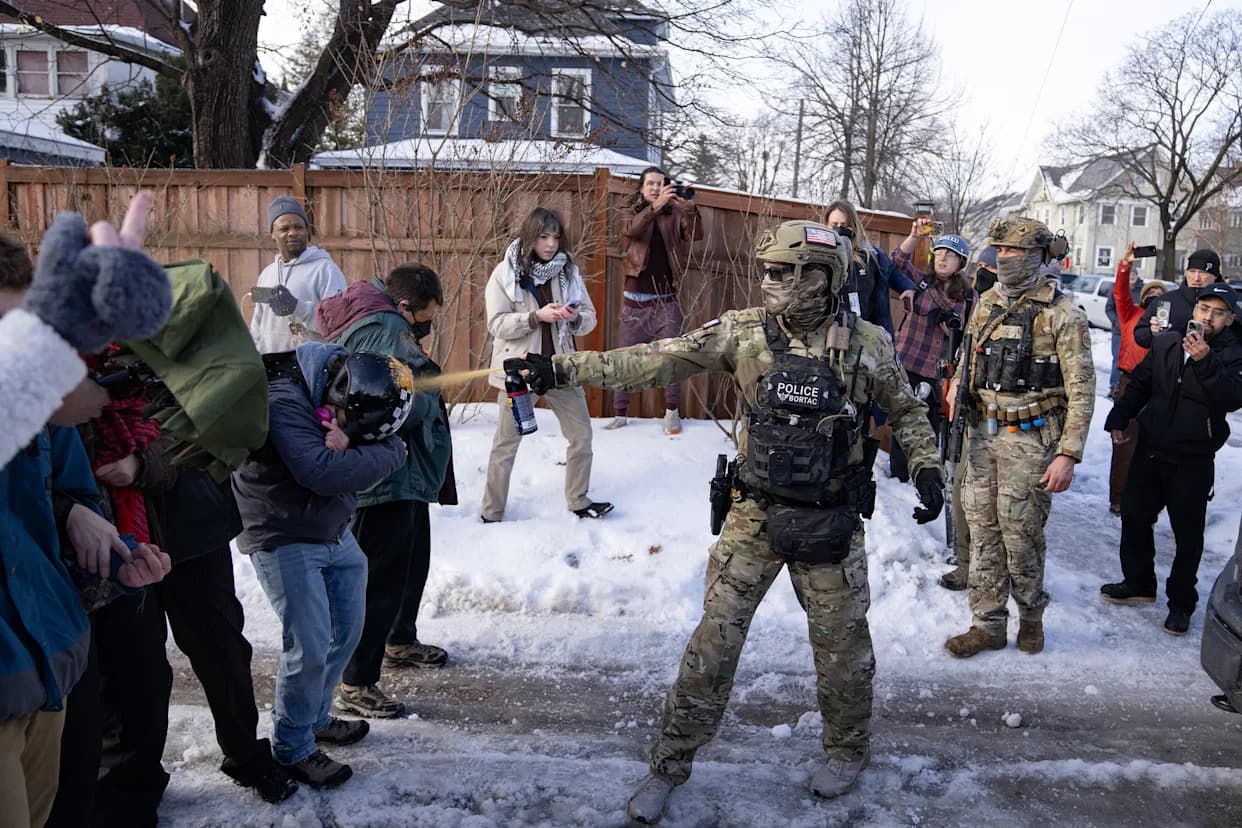
A federal immigration officer deploys pepper spray as officers make an arrest Sunday, Jan. 11, 2026, in Minneapolis. (AP Photo/John Locher)(ASSOCIATED PRESS)
Administrative Warrants: Commonly used by agencies in the Department of Homeland Security (including ICE and CBP), these internal authorizations name a specific person for arrest but generally do not authorize forced entry into a private home or other nonpublic spaces. Administrative warrants are not the same as court-signed criminal warrants.
When Officers May Enter Without Consent
There are narrow exceptions that can justify a warrantless entry: if someone inside is in immediate danger, if officers are in hot pursuit of a fleeing suspect, or if someone inside is actively calling for help. Legal experts say these exceptions typically do not apply to routine immigration arrests.
John Sandweg, a former ICE acting director, has warned that expanding enforcement duties to officers (such as assigning Border Patrol agents to tasks usually done by ICE) can increase the risk that rules are misapplied, especially when personnel act outside their usual training.
The Minneapolis Case
A recent raid in Minneapolis highlighted the dispute: agents reportedly forced entry during a tense operation while holding only an administrative warrant. Documents reviewed by news organizations indicated there was no judge-signed order authorizing entry. DHS officials described the arrested individual as having a prior deportation order and alleged criminal history, but did not publicly provide a legal justification for the forced entry.

A family member reacts after federal immigration officers make an arrest Sunday, Jan. 11, 2026, in Minneapolis. (AP Photo/John Locher)(ASSOCIATED PRESS)
Legal Remedies And Limits
Lawyers caution that an unlawful entry or arrest can create liability for officers under civil or state law, but accountability is often complicated when federal agencies investigate themselves. Additionally, immigrants may have limited practical recourse: evidence obtained during an administrative-warrant arrest can sometimes still be used in immigration proceedings because the exclusionary rule that blocks illegally seized evidence in criminal court does not always apply in immigration court.
Heidi Altman, vice president of policy at the National Immigration Law Center, warns that even when an arrest may have been illegal, the immediate consequences for the person detained — including rapid detention or deportation — can be difficult to reverse in immigration court.
Know-Your-Rights Campaigns
In response to practices such as “knock-and-talks” — where officers ask residents to step outside without indicating an intent to arrest — activists, attorneys and local governments have launched "know-your-rights" trainings and materials. Common guidance includes asking to see a warrant before opening the door, refusing entry when agents present only an administrative warrant, and knowing limited exceptions when officers may lawfully enter without consent.
Takeaways
Understanding the legal distinction between administrative and judicial warrants can help people respond calmly and lawfully when immigration agents come to a door. If you are unsure, ask to see a warrant and consult an immigration attorney or local legal aid organization for guidance.
Help us improve.