Summary: Illinois and Minnesota filed separate federal suits asking courts to bar ICE from enforcing immigration laws in parts or all of their states. Legal analyst Elie Honig calls those broad requests "close to completely meritless," noting there is no precedent for enjoining federal agents statewide. He says the courts are more likely to pursue fact-finding or limited declaratory relief than to impose a sweeping ban, and urges individuals with specific harms to pursue tailored civil claims.
Legal Analyst: Minnesota and Illinois Lawsuits Seeking To Halt ICE Enforcement Are ‘Almost Completely Meritless’
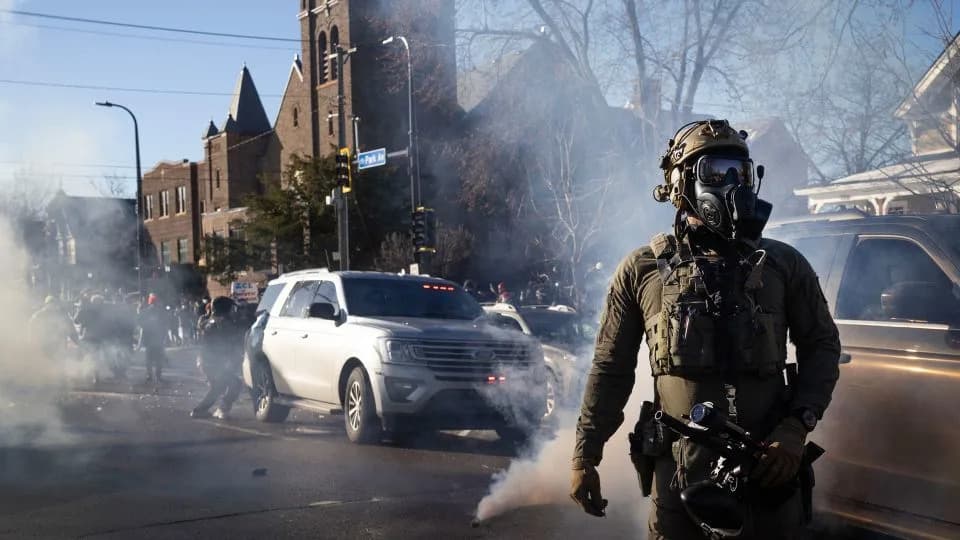
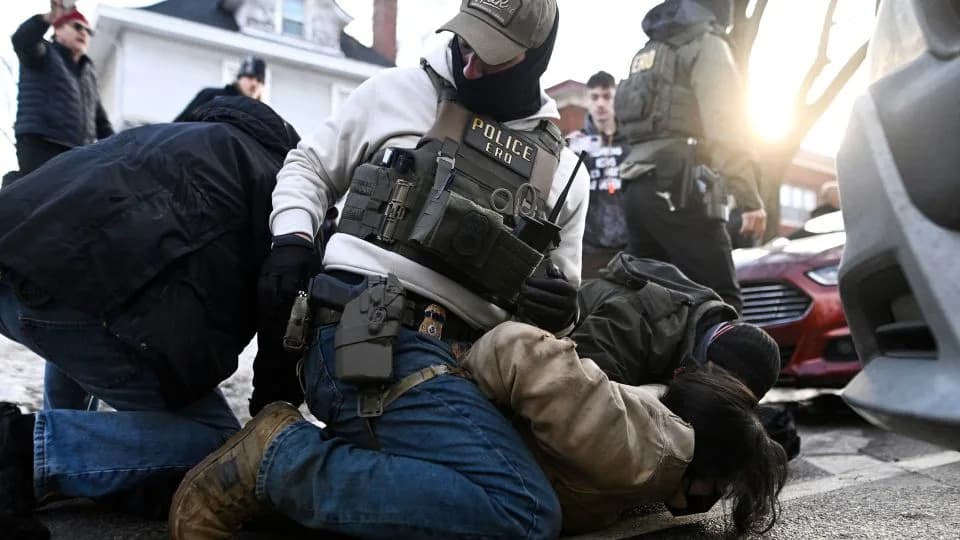
Tear gas tossed by federal immigration agents fills the air as agents clash with residents following a house raid in Minneapolis, Minnesota, on Tuesday. - Scott Olson/Getty Images
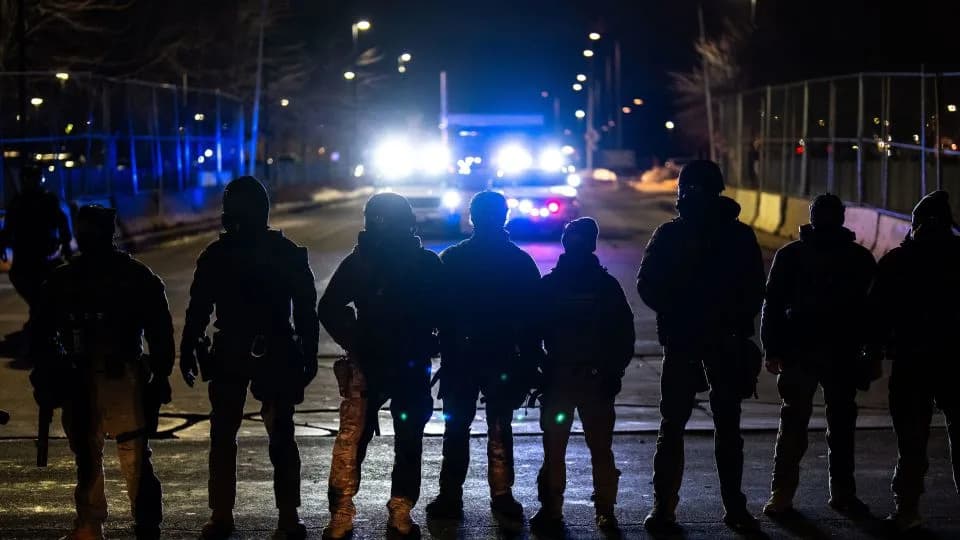
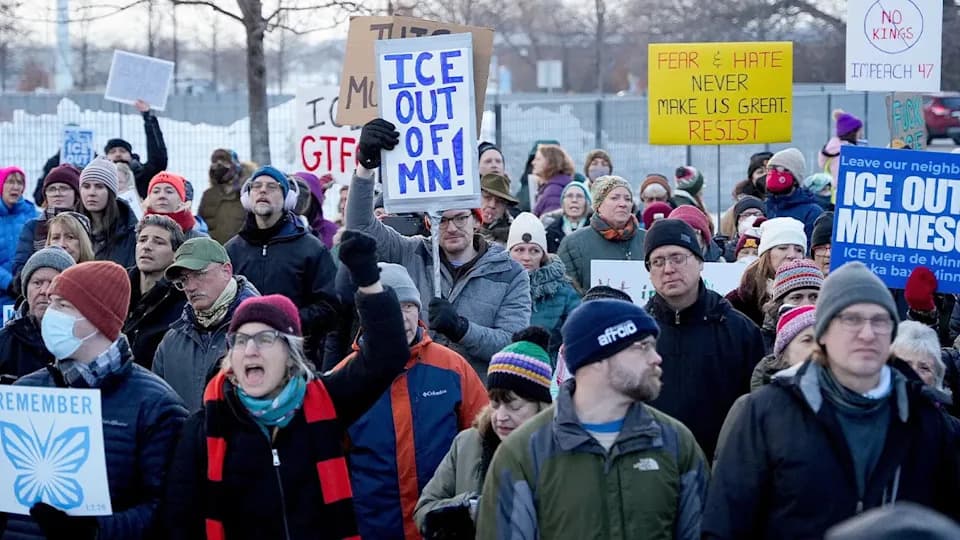
Over recent months, federal immigration enforcement has ramped up in Chicago, Minneapolis and St. Paul, with agents arresting thousands across neighborhoods, shopping centers, schools and protests — including some U.S. citizens. Illinois and Minnesota, joined by municipal partners, filed separate federal lawsuits Monday challenging what they say are unlawful and unconstitutional ICE operations in their jurisdictions.
What The States Are Asking For
At their core, both states ask federal judges to block Immigration and Customs Enforcement from carrying out immigration enforcement in state or city boundaries. Illinois seeks a broad statewide bar on ICE activity; Minnesota asks courts to stop a recent "surge" of officers. Both also request declarations that certain ICE tactics are unconstitutional.
Legal Analysis From Elie Honig
Elie Honig, a former federal and state prosecutor and CNN senior legal analyst, has been tracking developments in Chicago and the Twin Cities. Honig told CNN he believes the core requests are "close to completely meritless," noting there is no precedent for a court enjoining federal agents from enforcing federal law across an entire state.
"You can’t just take a situation that has no legal precedent and no legal support and say, 'Well, yes, but our situation is really, really bad, therefore we get to invent new law,'" Honig said.
Why Courts Are Likely To Resist Broad Injunctions
Federal defenses rest on the Supremacy Clause and Article II, which support the federal government's authority to carry out federal laws and prevent states from blocking that work. Because the lawsuits seek sweeping, prophylactic relief rather than redress for concrete injuries, judges are likely to be cautious.
Most Likely Outcomes
Honig says the most realistic result is limited: preliminary hearings, targeted fact-finding, and perhaps a declaratory judgment urging changes in ICE practices or oversight of specific tactics. A district court issuing a blanket ban on enforcement is unlikely, and would likely be reversed quickly on appeal.
Alternatives For Addressing Alleged Abuses
Honig emphasized that individuals who suffer specific harms from ICE actions retain remedies: unlawful searches, wrongful detentions, or injuries can be pursued through civil suits seeking damages or injunctive relief tailored to particular conduct. He cautioned that broad, abstract suits are a poor substitute for individual claims based on concrete injuries.
How This Differs From The Illinois National Guard Case
Honig noted the earlier Illinois challenge over attempted federalization and deployment of the Illinois National Guard under Section 12406 was a statutory dispute that reached the Supreme Court, which construed a specific term in the statute. That case turned on statutory interpretation, not the constitutional separation issues presented by these immigration-enforcement challenges.
Next Steps And Timing
Minnesota has a status conference scheduled before U.S. District Judge Katherine M. Menendez; Illinois has not yet received a hearing date. Judges are likely to move quickly on these time-sensitive matters and may schedule proceedings within days to gather more facts and hear from the parties.
Bottom line: The states have raised urgent policy and public-safety concerns, but legal experts say the path to the sweeping relief they request is narrow. Expect fact-finding and targeted remedies, not a wholesale prohibition on federal immigration enforcement.
Help us improve.