Researchers created Race Against Rot, a free simulation in which more than 1,000 players managed a small apple orchard under realistic policy choices. Despite a small cash incentive ($1 per $40,000 of profit), most participants chose lower personal earnings to prioritize supplying neighbors with fresh fruit — a behavior the team calls 'community nourishment.' The findings highlight the fragile economics of U.S. small farms and suggest social preferences that could inform more equitable local food policies, while acknowledging limits of simulation-based evidence.
Free Apple-Orchard Game Reveals Strong Public Support For Local Farming

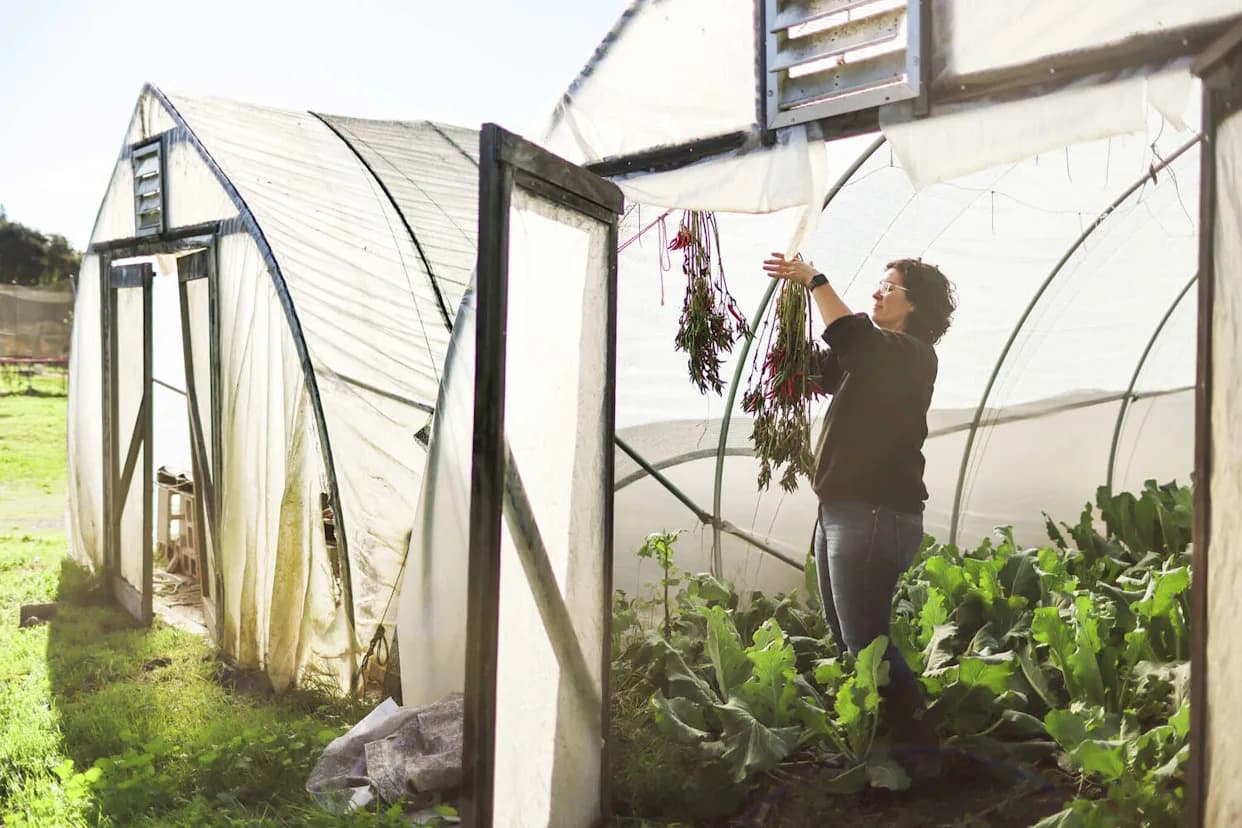
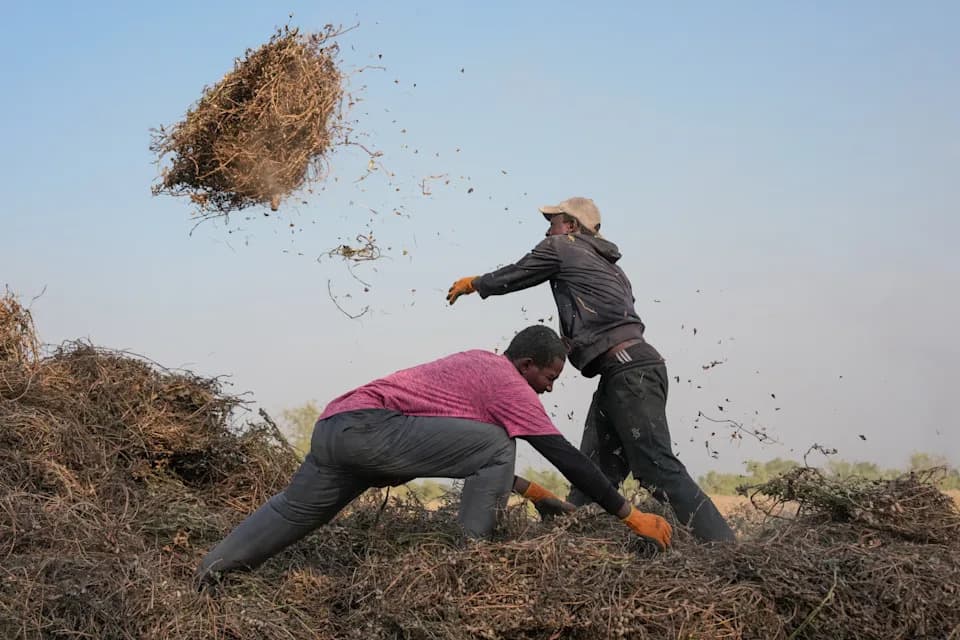
Less than half of small operations farms earn a profit in the US every year.
New research using a free simulation called Race Against Rot shows that many people are willing to sacrifice personal profit to help neighbors access fresh fruit. Developed by researchers at the University of Vermont, the game asked players to run a small apple orchard under realistic policy choices and market conditions.
What the Game Did
Race Against Rot enrolled more than 1,000 participants in 2023. Players made decisions about distribution (farmers market vs. wholesale), whether to support local food hubs, and whether to provide a universal basic income (UBI) to workers. To encourage participation, the experiment offered a modest real-money incentive: $1 for every $40,000 of orchard profit.
Key Findings
Rather than simply maximizing payouts, most players opted for strategies that reduced their own earnings to increase neighbors' access to fresh apples — a preference the research team described as a commitment to 'community nourishment.' That pattern emerged consistently across randomized participants, suggesting people value collective well-being even when it slightly reduces private returns.
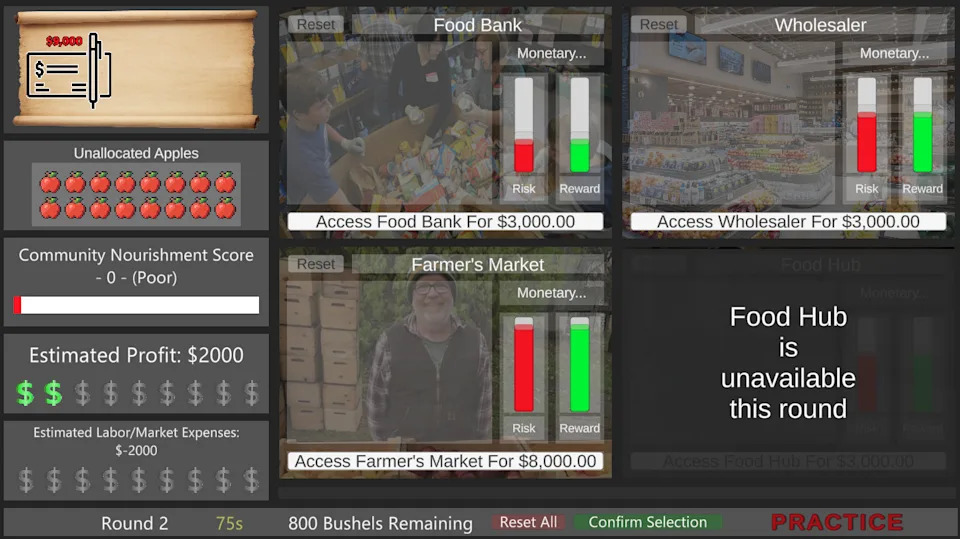
A sample round during the game Race Against Rot. Credit: University of Vermont
Amy Trubek, principal investigator: We found that there was a very, very strong commitment to a value structure around community nourishment.
Carolyn Hricko, co-author of the policy report: When they walked in the shoes of a farmer, they came out the other side saying they’re willing to support community nourishment alongside their ability to stay in business, theoretically.
Context: Why This Matters
The game's findings are set against a challenging real-world backdrop. The U.S. Department of Agriculture estimates about 88% of U.S. farms qualify as 'small operations' (gross sales under $350,000 per year), and after expenses fewer than half of those small farms report any profit. Those economic pressures help explain why local, sustainable food can cost more and why access is uneven for low-income communities and food deserts.
Policy Insight and Limitations
Researchers and report authors urge caution in extrapolating directly from a simulation to real-world policy. People may behave differently when their livelihoods or larger sums of money are at stake, and a single apple-orchard model cannot capture the full complexity of global agriculture. Still, the experiment highlights social preferences that policymakers could consider when designing equitable local food strategies, such as incentives for community-oriented distribution models, support for food hubs, or programs that reduce price barriers for low-income consumers.
As the policy report notes, equitable food-system solutions depend on asking the right questions and collecting data that honestly reflect both current structures and the aspirations for a better system.
Overall, the experiment suggests broad public interest in systems that balance farm viability with community well-being — a promising signal for policymakers and advocates working on localized, sustainable food solutions.
Help us improve.