At a Sebastopol farm, members of Second Generation Seeds and Bay Area growers are saving heirloom Asian, Palestinian and North African seeds as both a climate strategy and a way to preserve culinary heritage. The Gohyang Seed Campus—developed with about $1.5 million in funding—stores hundreds of varieties and trains seed stewards. Farmers select drought-tolerant genetics, practice Korean natural farming, and view seed saving as a form of cultural survival and political resistance for communities like the Palestinian diaspora.
Seed Guardians: Bay Area Asian American Farmers Preserve Heirloom Seeds for Culture and Climate
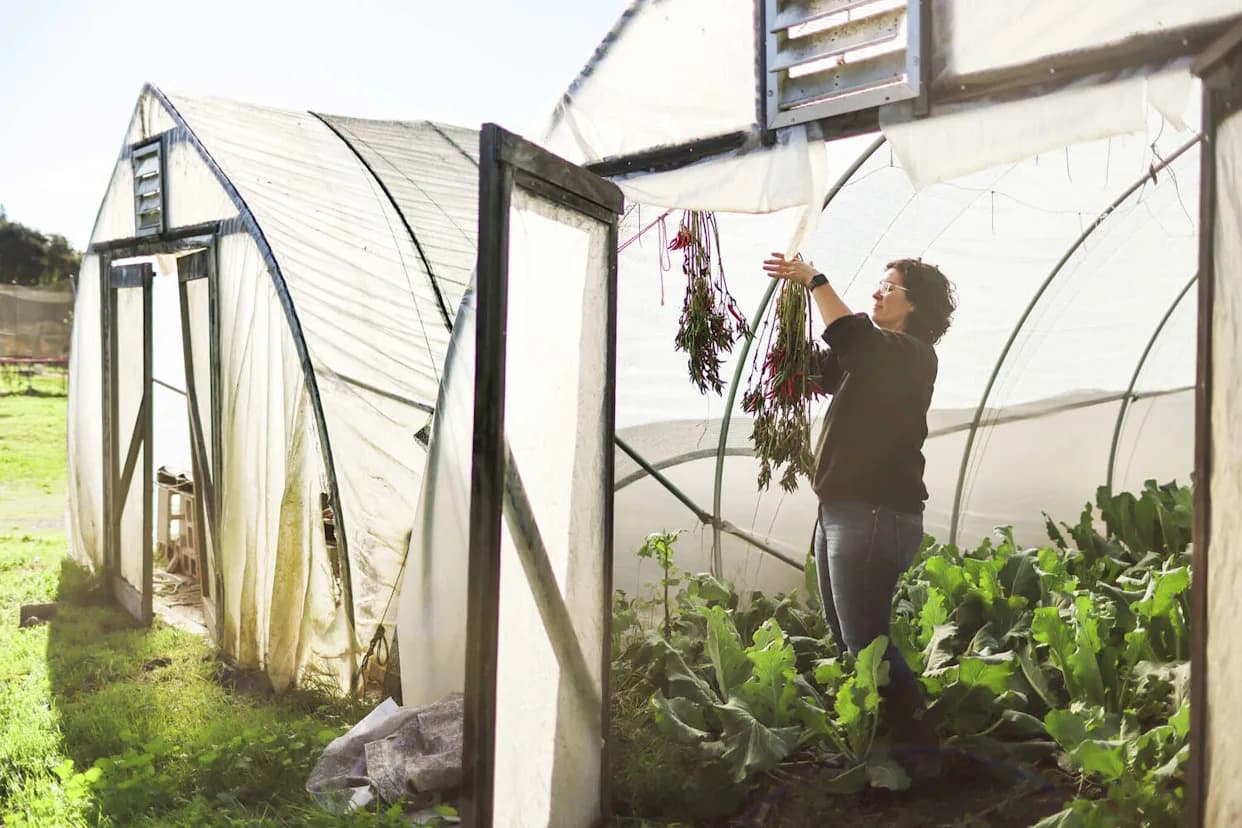
Leslie Wiser, a Taiwanese-German American grower who focuses on Asian chili peppers and other heritage produce, moves dried peppers on her farm, Radical Family Farm, in Sebastopol. A variety of farmers are finding ways to create and preserve Asian produce and farming techniques through their work. (Gabrielle Lurie/S.F. Chronicle)
Kristyn Leach cupped a small pile of iridescent green seeds in her hand and asked the dozen or so women gathered at her Sebastopol farm to do more than admire their color.
"Try to look at a seed as if it is looking back at you," Leach told the group as they prepared to thresh and winnow. "That reflection is all your ancestors looking at you."
The seeds came from molokhia, also called jute mallow, a leafy green used in savory, viscous soups across the Middle East and parts of Africa since the age of the pharaohs.
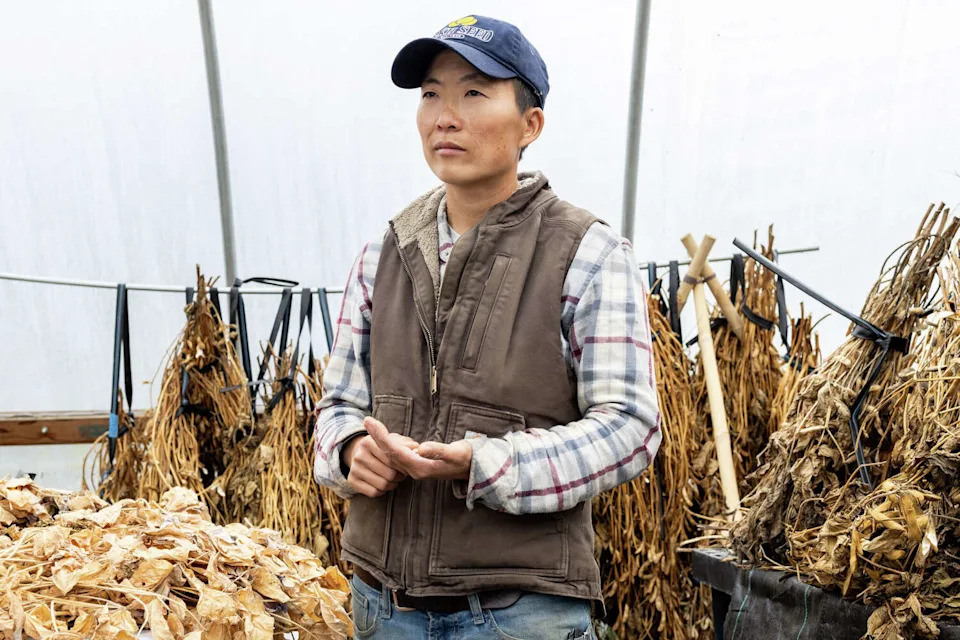
Kristyn Leach, a Korean American farmer, holds Korean soybeans at her farm in Sebastopol. (Rachel Bujalski/For the S.F. Chronicle)
"Cleopatra is looking at me!" laughed Palestinian American grower Nadia Barhoum, as the group celebrated the tiny star-shaped seeds spilling from dried pods.
Second Generation Seeds And The Gohyang Seed Campus
Leach and Barhoum are members of Second Generation Seeds, a Bay Area growers' collective focused on breeding and saving rare and heirloom varieties from Asia, Palestine and North Africa. By selecting plants that perform under increasingly extreme weather, the collective is actively adapting genetic stocks to a warming, more volatile climate.
Operating from Leach's Sebastopol property, the Gohyang Seed Campus—developed with roughly $1.5 million in philanthropic and community funding—functions as a regional hub where growers process, store and share hundreds of seed varieties. The campus also hosts training for volunteer seed stewards and community seed exchanges.
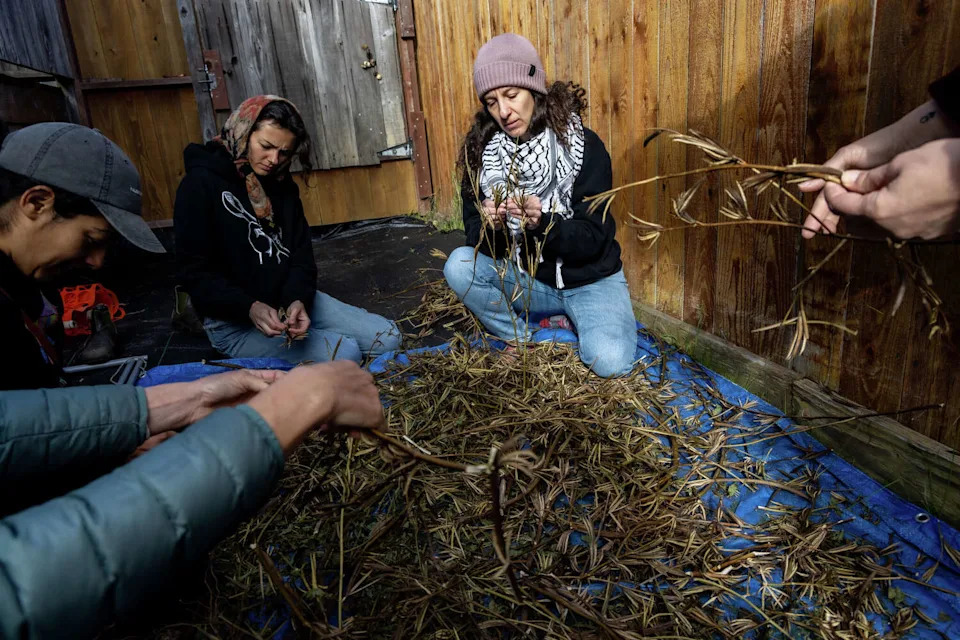
Community members harvest seeds from the Mulukhiyah plant together. The Mulukhiyah plant also known as Jew's mallow, and is an edible green leafy vegetable commonly used in various cuisines, particularly in the Middle East like Palestine. (Rachel Bujalski/For the S.F. Chronicle)
Food Security, Cultural Memory And Market Independence
As climate disruption and ecological stressors threaten global food systems, these farmers argue that a diverse seed library is essential both for food security and for preserving culinary traditions. Seed stewardship also reduces dependence on large agribusiness firms: a USDA report notes that a small group of corporations holds a majority of patents on newly developed seed varieties.
"These seeds have seen so much, the most tumultuous times of human history," Leach said. Her mission is to steward them "not just throughout her life, but for many lifetimes to come."
From Kitchen Partnerships To Climate-Smart Selection
The seed-saving effort is one pillar of a growing network of Asian American farmers in the Bay Area who cultivate organic and heritage Asian crops rarely found in mainstream supermarkets—plants such as perilla, Korean mustard greens and Chinese sponge gourd. Many growers began through partnerships with local Asian restaurants.
These farmers learn traditional techniques from growers in Asia but must adapt methods for California's dry summers. That adaptation often means selecting the most productive, drought-tolerant plants or adjusting planting schedules to local rainfall patterns.
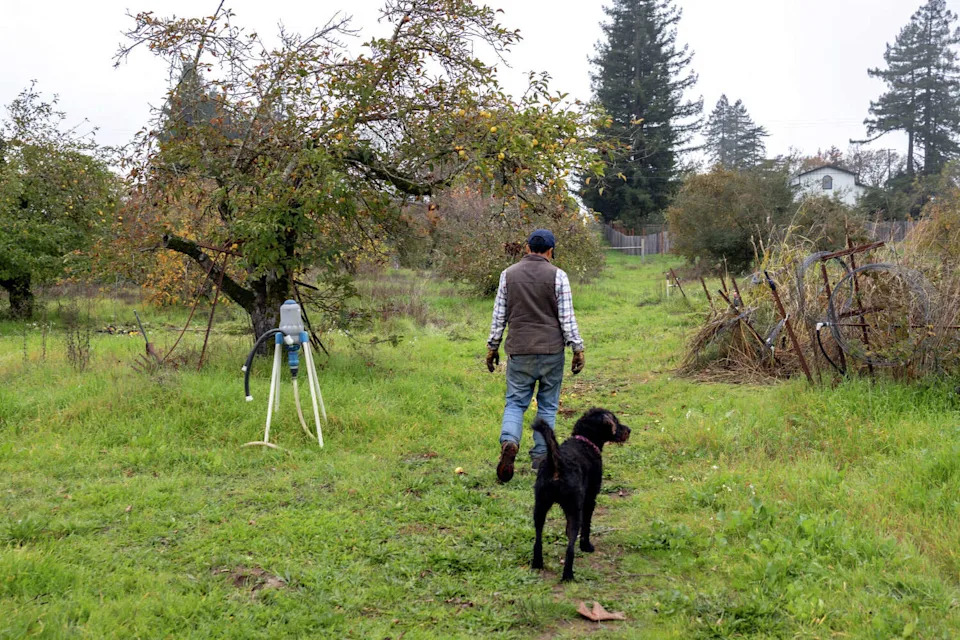
Kristyn Leach walks through her farm in Sebastopol. (Rachel Bujalski/For the S.F. Chronicle)
In November, growers including Scott Chang-Fleeman, Li Schmidt and Kimberly Chou Tsun An visited farmers in Taiwan who cultivate heirloom soybean, millet and rice in typhoon-prone areas. There they observed how local seed stewardship and annual selection help crops adapt rapidly to frequent natural disasters.
"Even in one year, you can adapt the genetics and select the plants that do best in that environment," said Schmidt. In California, adaption often focuses on drought resistance, heat tolerance and productivity in poorer soils.
Farming Practices And Financial Realities
Leach, a Korean adoptee raised in Washington state, practices Korean natural farming, which seeks to work with existing ecosystems—minimizing external inputs, avoiding pesticides, reducing tillage and recycling plant material to build microbe-rich soil over time.
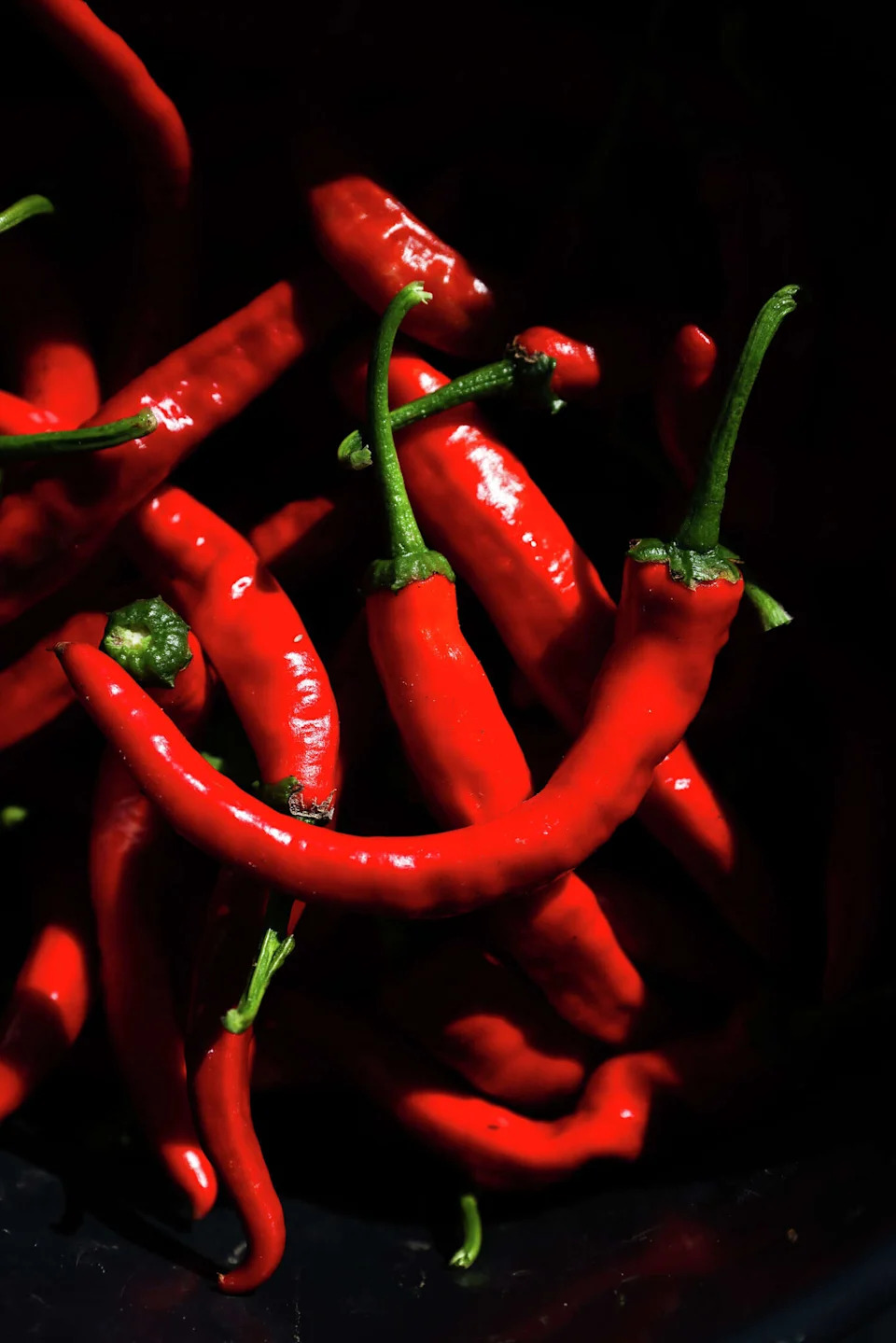
A bucket of Er Jing Tiao peppers at Radical Family Farms owned by Leslie Wiser, a Taiwanese-German American grower who focuses on Asian chili peppers and other heritage produce in Sebastopol, Calif., on Friday, Nov. 14, 2025. A variety of farmers are finding ways to create and preserve Asian produce and farming techniques through their work.. (Gabrielle Lurie/S.F. Chronicle)
Small-scale organic farming, however, is financially precarious. Many growers rely on second jobs; long hours and physically demanding labor make profitability difficult. Leach acknowledges she is not primarily a businessperson, but she mobilized community support in 2023 to purchase the three-acre site that became the Gohyang Seed Campus. She raised about $1 million in philanthropic donations—sparked by a community fundraiser that gathered $142,000 from more than 770 contributors—and took a $500,000 loan to complete the purchase.
The seed stewards program currently receives major support from the 11th Hour Project, a climate philanthropy. Leach and her collaborators continue to explore sustainable models so seed growers can earn steady incomes while preserving vital varieties.
Personal Stories And Political Meaning
For growers such as Leslie Wiser, farming heirloom Taiwanese varieties is both personal and practical. Wiser, the child of German and Taiwanese immigrants, grew more than 60 crop types on a three-acre plot before scaling back to focus on value-added products—like chili sauces produced with a USDA grant—to balance family life and farm economics.
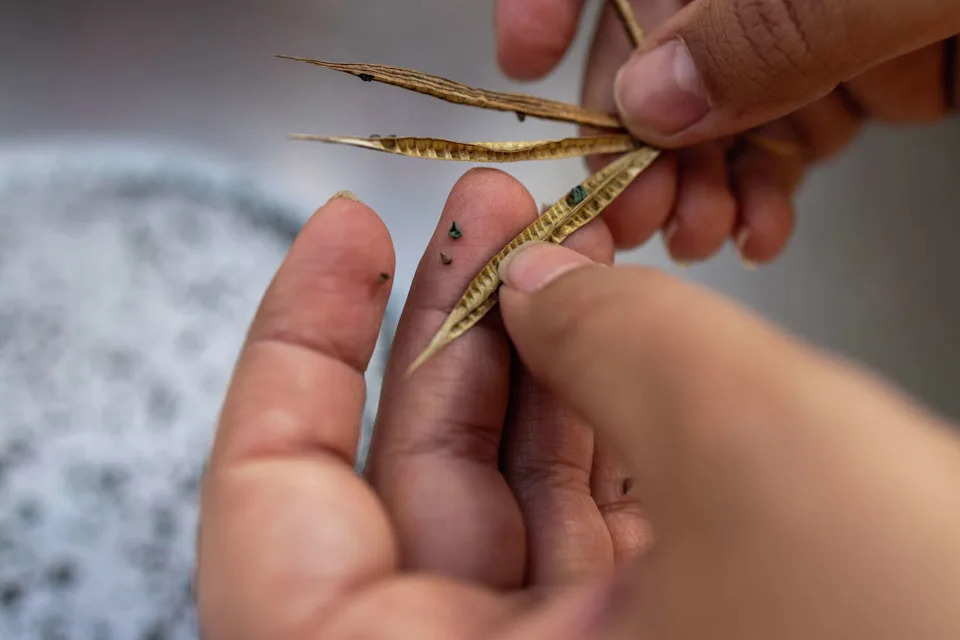
Community members harvest the seeds from the Mulukhiyah plant, also known as Jew's mallow, which is an edible green leafy vegetable commonly used in various cuisines. (Rachel Bujalski/For the S.F. Chronicle)
For Barhoum, seed saving carries explicit political and cultural weight. She descends from a long line of Palestinian fellahin—rural farmers forced from their homes during the 1948 Nakba. Seed saving reconnects her to family foodways and, she says, resists cultural erasure amid ongoing conflict in the region. Barhoum planted molokhia seeds sourced from the Palestine Seed Library; by fall she and others were threshing seeds and celebrating the regenerative potential of each tiny kernel.
"They always say existence is resistance," Barhoum said. "When I think about the seeds, I think about the land and our people. It's a resistance to erasure."
Contextual Statistics
Historically, Asian American growers once produced a far larger share of California's vegetables: before World War II and the mass incarceration of Japanese Americans, Japanese American farmers produced more than 40% of the state's vegetable crops. By 2022, Asian farmers accounted for about 9% of the value of California's crops. Nationally, just 0.8% of U.S. farmers were Asian in the most recent agriculture census, despite Asians making up approximately 7% of the U.S. population. Approximately 5% of U.S. farmland was certified organic as of 2019.
These numbers underline both the historical contribution of Asian American farmers and the challenges of rebuilding and sustaining culturally specific, climate-resilient agriculture in the U.S.
As communities nationwide confront climate risks and cultural loss, the work at the Gohyang Seed Campus illustrates how seed saving can combine practical resilience with cultural continuity: safeguarding crops, flavors and the knowledge that has sustained communities for generations.
Help us improve.