WEST in Provence replaced its carbon interior with tungsten and sustained plasma at about 50 million °C for six minutes, achieving record energies and densities for its design. Using a hybrid photon-counting ME-SXR camera, researchers tracked tungsten impurities and transport from the wall into the core. These results are especially relevant after ITER's 2023 decision to adopt tungsten for inner surfaces and will inform long-duration fusion operations and commercial reactor design.
Tungsten Breakthrough: WEST Tokamak Holds 50 Million °C Plasma for Six Minutes
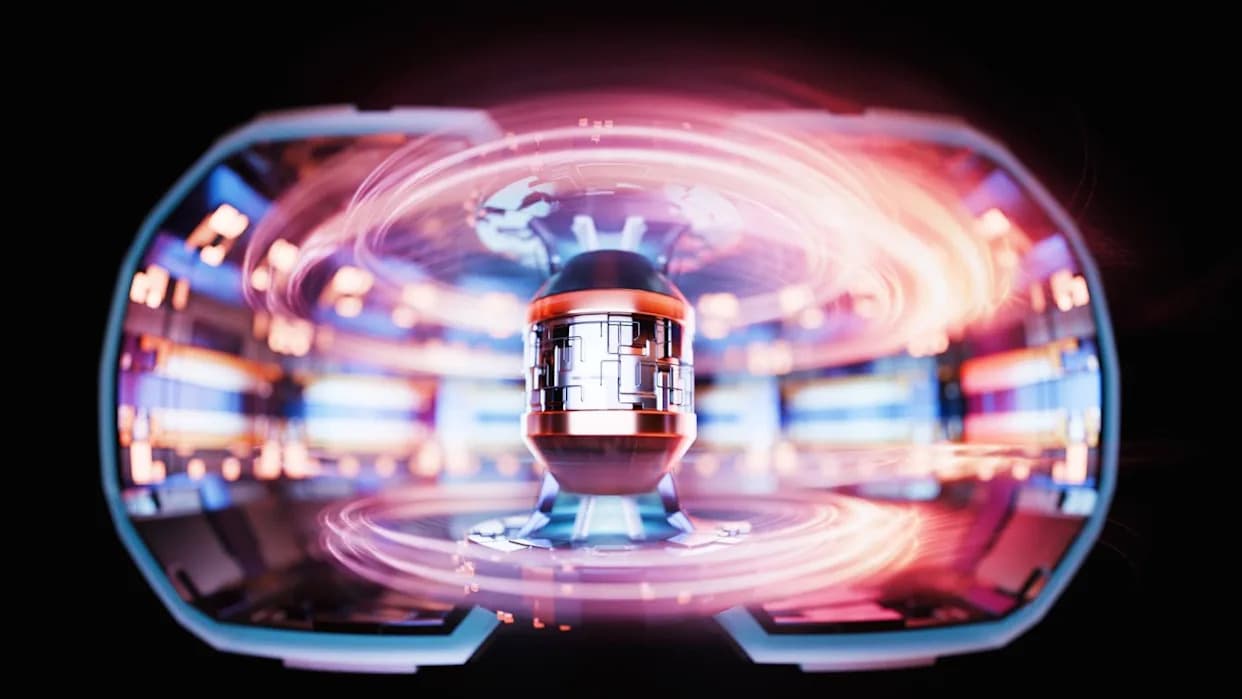
Tungsten Tokamak Breaks Another Fusion Recordkoto_feja - Getty Images
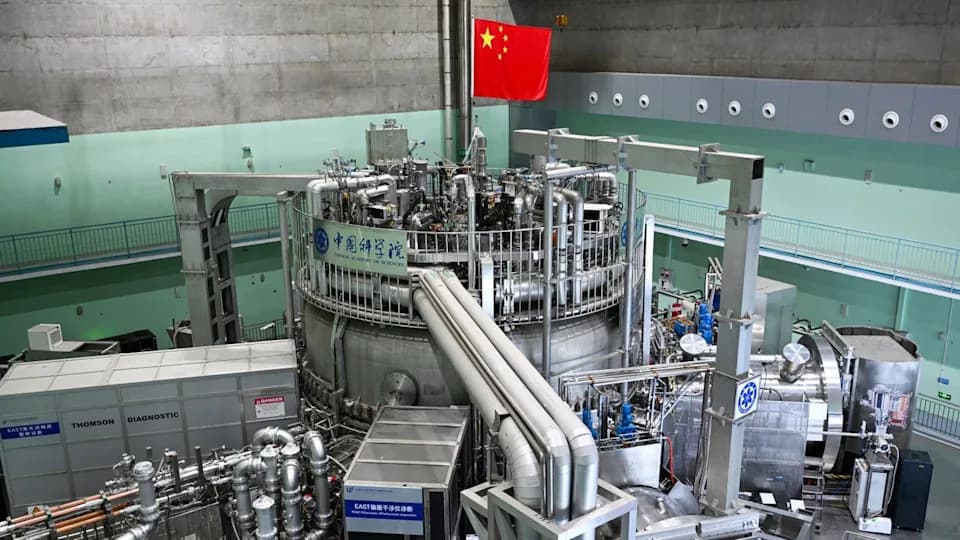
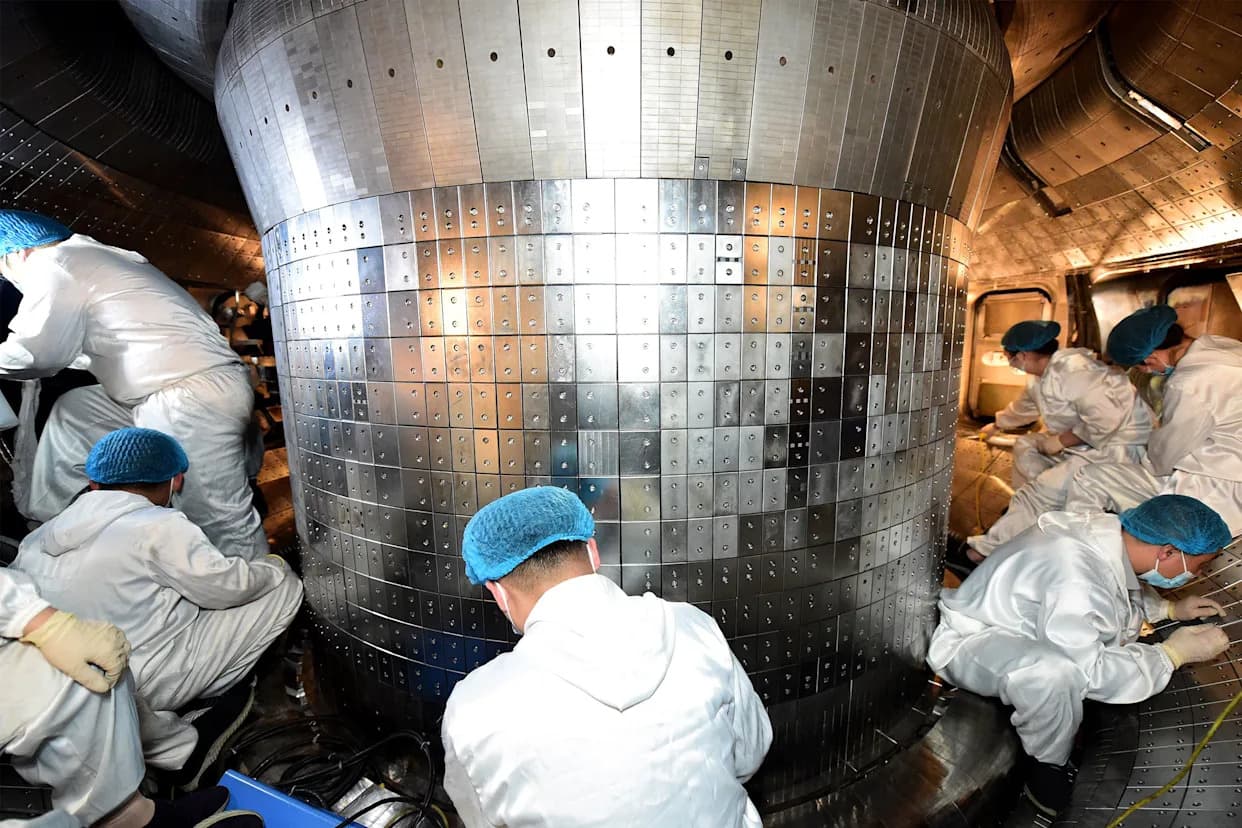
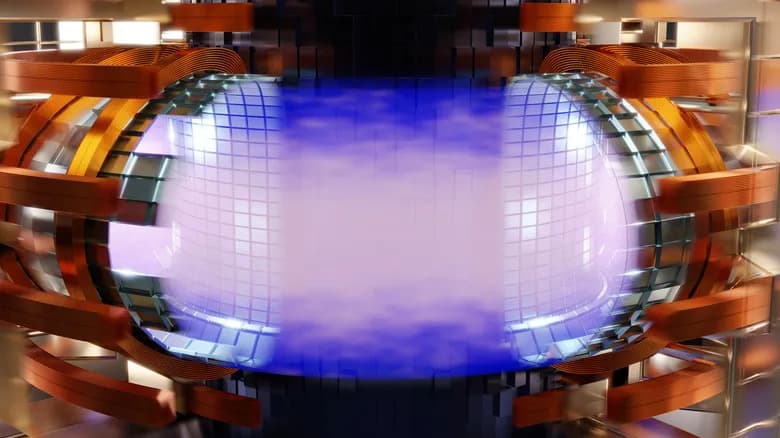
WEST, a tokamak in Provence, France, has achieved a major milestone for fusion materials science: after replacing its carbon-lined interior with tungsten, the device sustained plasma at roughly 50 million °C for six continuous minutes at higher energies and densities than previous carbon-walled operations.
Why This Matters
Tungsten (chemical symbol W, from wolframite) is emerging as a leading candidate for plasma-facing components in tokamaks because it reduces fuel retention in reactor walls — a critical advantage when reactors must breed and manage tritium for sustainable operation. At the same time, tungsten presents new engineering challenges: even small tungsten fragments that enter the plasma can radiate energy away and cool the core, so careful diagnostics and wall management are essential.
What WEST Did
WEST is the successor to Tore Supra and recently completed a materials upgrade from graphite to tungsten. The team used advanced diagnostics, including a hybrid photon-counting multi-energy soft X-ray (ME-SXR) camera, to track plasma behavior and to measure tungsten impurities and transport from the wall into the plasma core. These measurements were coordinated under the CICLOP program with the International Atomic Energy Agency (IAEA).
'The tungsten-wall environment is far more challenging than using carbon,' said Luis Delgado-Aparicio, head of advanced projects at Princeton Plasma Physics Laboratory, a WEST partner. 'This is, simply, the difference between trying to grab your kitten at home versus trying to pet the wildest lion.'
Context and Implications
The results are timely: ITER — the large international experimental reactor in southern France — announced in 2023 that it will switch its inner wall material from beryllium to tungsten. Data and operational experience from WEST will therefore be highly relevant to ITER's commissioning and to future commercial reactor designs.
Other projects are also demonstrating tungsten's potential: in April 2024, South Korea's KSTAR reported sustaining plasma at 100 million °C with the help of a tungsten divertor. Together, these experiments are refining our understanding of how tungsten behaves under long-duration, high-performance plasma conditions.
Diagnostics and Next Steps
The ME-SXR camera and hybrid photon-counting technology enabled WEST researchers to resolve X-ray energies and photon counts, supporting measurements of temperature, density, and impurity content without being overwhelmed by radiation. This energy-resolved capability helps scientists follow tungsten transport from the wall to the core — a critical factor for maintaining plasma performance over long pulses.
Moving forward, WEST will continue to refine wall conditioning, impurity control, and diagnostics to reduce tungsten contamination while leveraging its advantages for tritium management. The insights gained will feed directly into ITER operations and inform the materials choices for future commercial fusion power plants.
Help us improve.