The National Institute for Fusion Science (NIFS) experimentally distinguished two turbulence roles in fusion plasma: a slow "heat carrier" that progressively transports energy outward and a fast "heat connector" that can link the whole plasma in ≈0.0001 s. Shorter heating pulses strengthen the connector mode and accelerate global heat spread. These observations in the Large Helical Device (LHD), reported in Communications Physics, improve prediction and control of plasma temperature — a critical step toward continuous fusion power.
NIFS Identifies Two Turbulence Modes That Control Heat Flow Inside Fusion Plasmas
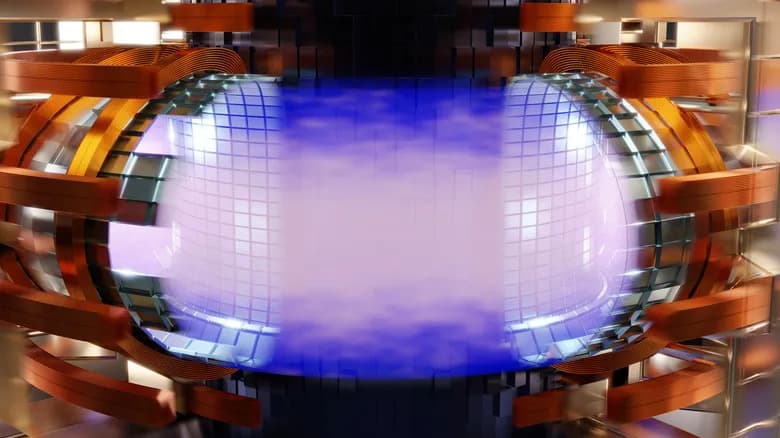
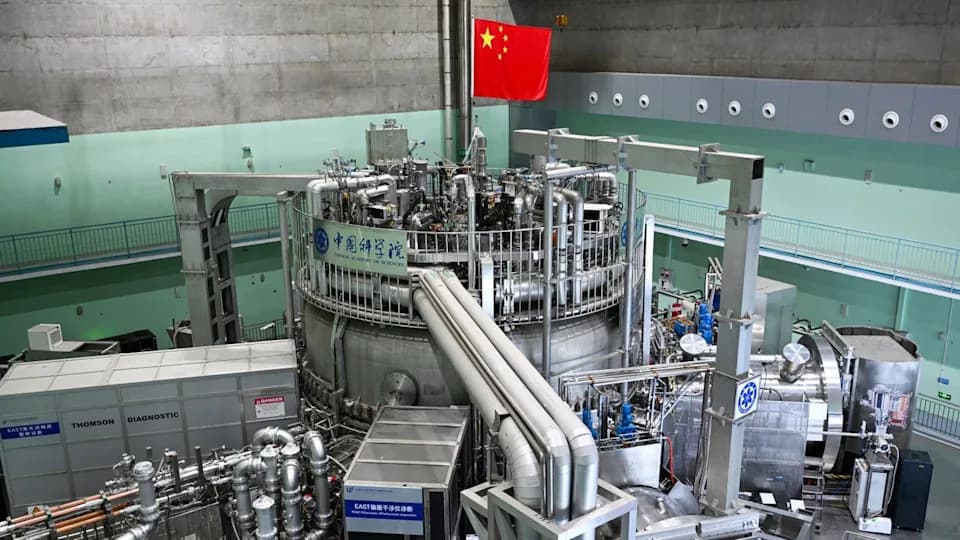
Fusion reaction inside a Tokamak - Peter Hansen/Getty Images
The National Institute for Fusion Science (NIFS) in Japan reports an experimental breakthrough that clarifies how turbulent motions in fusion plasma move heat inside a reactor — an advance that improves scientists' ability to predict and control temperature behavior needed for sustained fusion.
Two Distinct Turbulence Roles
Like airflow turbulence around aircraft, plasma turbulence forms structures that redistribute energy in complex ways. For the first time, NIFS separated and characterized two distinct roles: a transporting (heat carrier) mode that gradually moves thermal energy from the core toward the edge, and a connector (heat connector) mode that links distant regions of the plasma almost instantaneously.
Experiments on the Large Helical Device (LHD) showed the connector mode can produce nearly simultaneous temperature changes across the entire plasma on the order of 1/10,000 of a second (≈0.0001 s). The team also observed an inverse relationship between heating duration and the connector effect: shorter heating pulses strengthen connector turbulence, causing heat to spread more rapidly and globally.

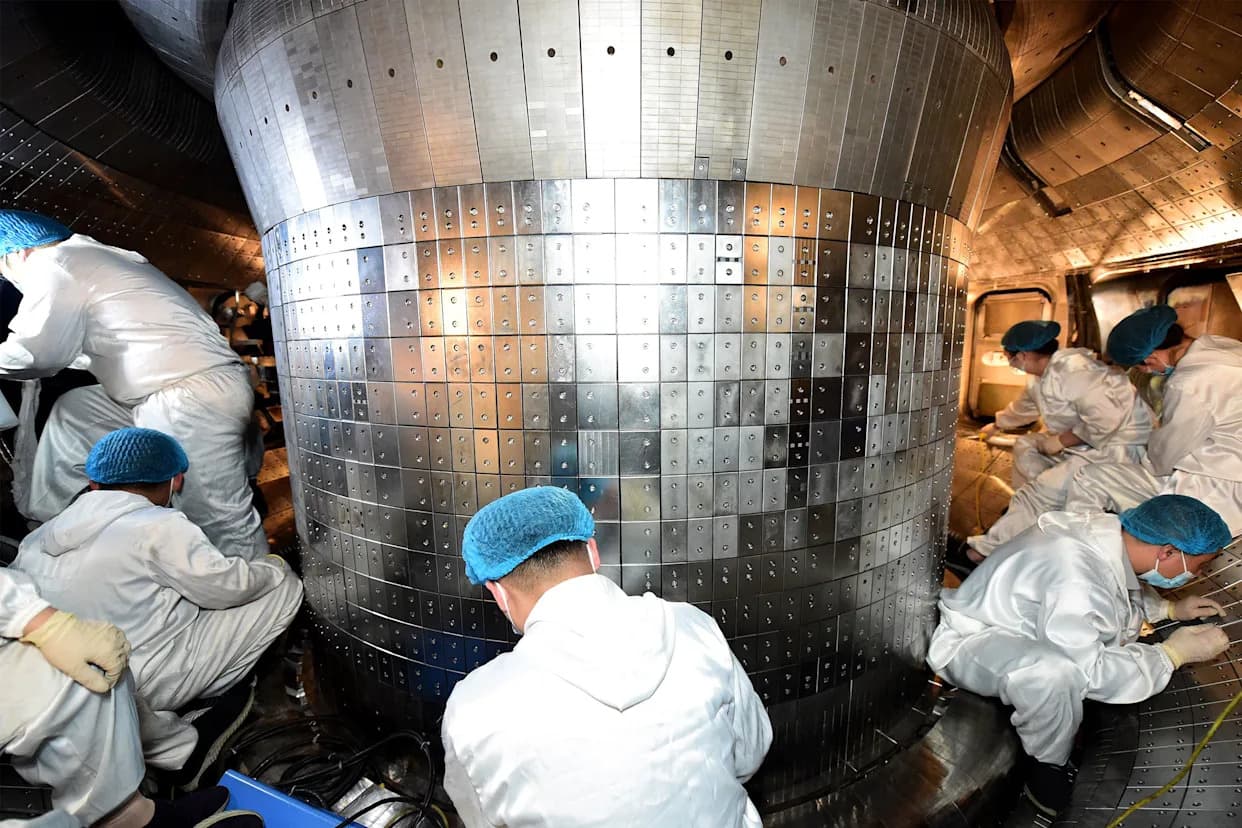
Plasma in Helix Kanata - Helical Fision
Why This Matters For Fusion
Fusion reactions require plasma temperatures near 100 million °C and tight confinement by superconducting magnets so the plasma does not touch the vessel walls and cool. Turbulence that carries heat outward degrades confinement and can create erratic temperature structures — including plasma islands — that threaten magnetic stability. The U.S. Department of Energy has previously warned that such irregular temperature profiles can damage magnetic topology.
By distinguishing transporting and connector turbulences and showing how heating time shifts the balance between them, the NIFS results give researchers a practical lever to improve modeling and design active control strategies for heat propagation. Better prediction and control of heat flow are essential steps toward stable, continuous fusion power.
"This research provides the first unambiguous experimental evidence for the long-hypothesized mediator pathways, validating key theoretical predictions in plasma physics," the team wrote in a paper published in Communications Physics.
The researchers say follow-up work is underway to translate these insights into methods for managing plasma turbulence in future reactor designs.
Help us improve.