Chinese researchers using the EAST tokamak report experimental plasma densities beyond the empirical Greenwald limit in a paper published Jan. 1 in Science Advances. By increasing pre‑plasma gas pressure and injecting extra heating power, they kept the plasma stable even as density rose. The result suggests a practical, scalable route to extend density limits in tokamaks, though significant work remains before commercial fusion is achievable.
China’s EAST Tokamak Achieves Plasma Densities Beyond the Long‑Standing Greenwald Limit
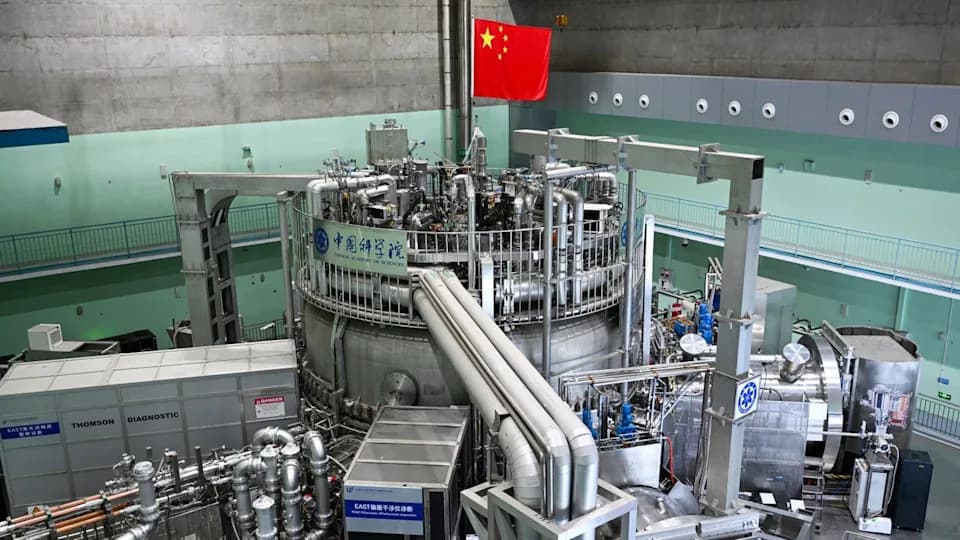
Huang Bohan / Xinhua via Getty Images
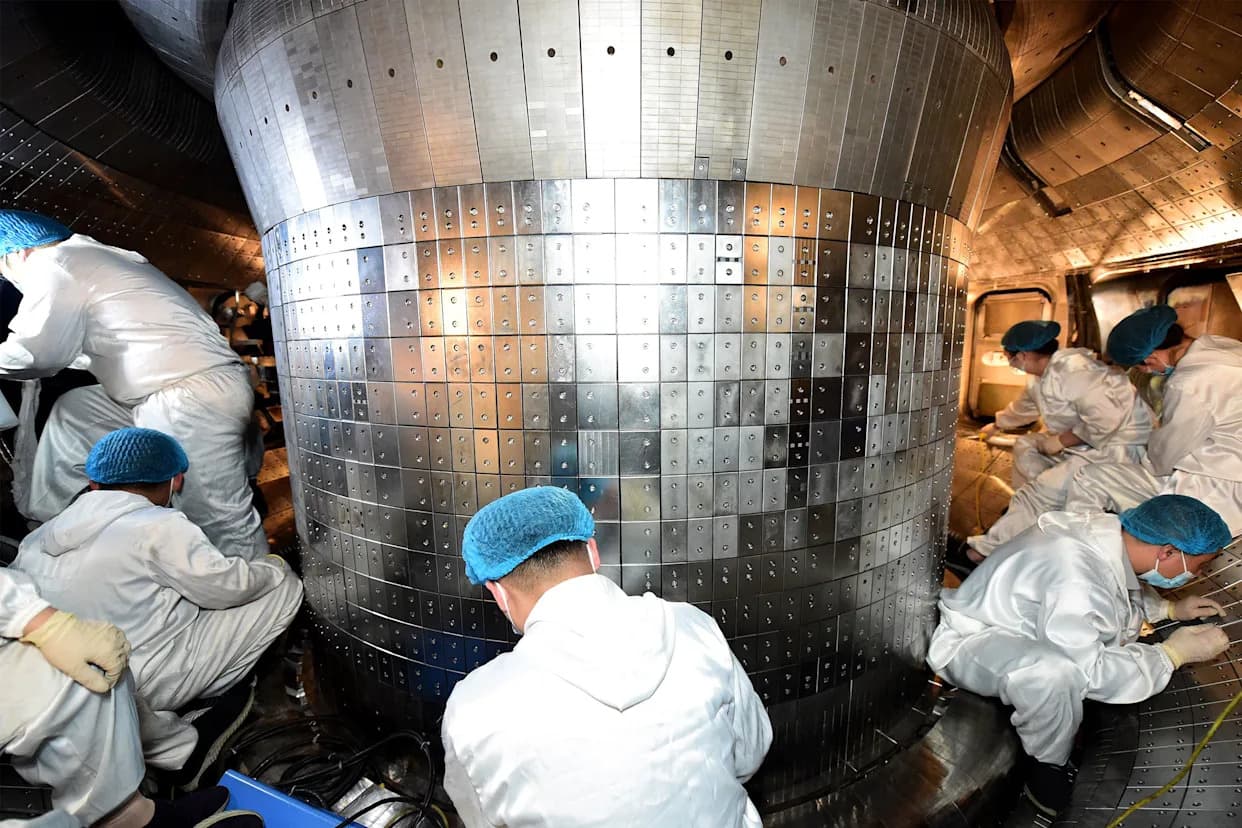
Researchers working with China’s Experimental Advanced Superconducting Tokamak (EAST) have reported experimental plasma densities that surpass a long‑standing empirical ceiling known as the Greenwald limit. The team, based at the Hefei Institutes of Physical Science of the Chinese Academy of Sciences, published their results on January 1 in the peer‑reviewed journal Science Advances.
What the Team Did
The EAST researchers adopted two complementary tactics to push density higher while preserving stability. First, they raised the gas pressure inside the reactor before forming the plasma, which alters how the plasma interacts with the vessel walls and reduces destructive wall‑plasma effects. Second, they injected additional heating power into the plasma as it formed, allowing density to climb while maintaining confinement.
Why This Matters
In tokamak fusion devices, ions must be heated to extreme temperatures (on the order of 150 million kelvin) and kept hot, dense, and stable long enough for fusion reactions to produce net energy. For decades, experimentalists observed an empirical density ceiling — the Greenwald limit — beyond which plasmas tended to become unstable and crash. The EAST results show that carefully controlled prefill gas pressure and active heating can maintain stability at densities described by the authors as "far exceeding empirical limits."
"The findings suggest a practical and scalable pathway for extending density limits in tokamaks and next‑generation burning plasma fusion devices," said Ping Zhu, a co‑author and plasma physicist at Huazhong University of Science and Technology.
Context and Caveats
This advance is an important experimental milestone but does not mean commercial fusion power is imminent. Tokamak research requires simultaneous optimization of temperature, density, and confinement time; raising density without degrading other conditions is challenging. The EAST experiments point to a promising control strategy that can be explored and tested on larger machines and in different operational regimes.
Overall, the work refines our understanding of tokamak plasma limits and suggests practical pathways for future devices to operate at higher densities — a potentially valuable step toward more efficient fusion performance.
Help us improve.