Researchers have made the first confirmed live sighting and taken the first photographs of a ginkgo‑toothed beaked whale off Baja California, with findings published in Marine Mammal Science. A lightweight biopsy dart provided a skin sample that genetic testing confirmed as the rare species. The discovery helps pinpoint the whale's range, informs conservation advice — including guidance to reduce harmful military sonar exposure — and highlights the need for further study to protect this little‑known deep‑diving cetacean.
Scientists Capture First Confirmed Live Sighting and Photos of Rare Ginkgo‑Toothed Beaked Whale Off Baja California

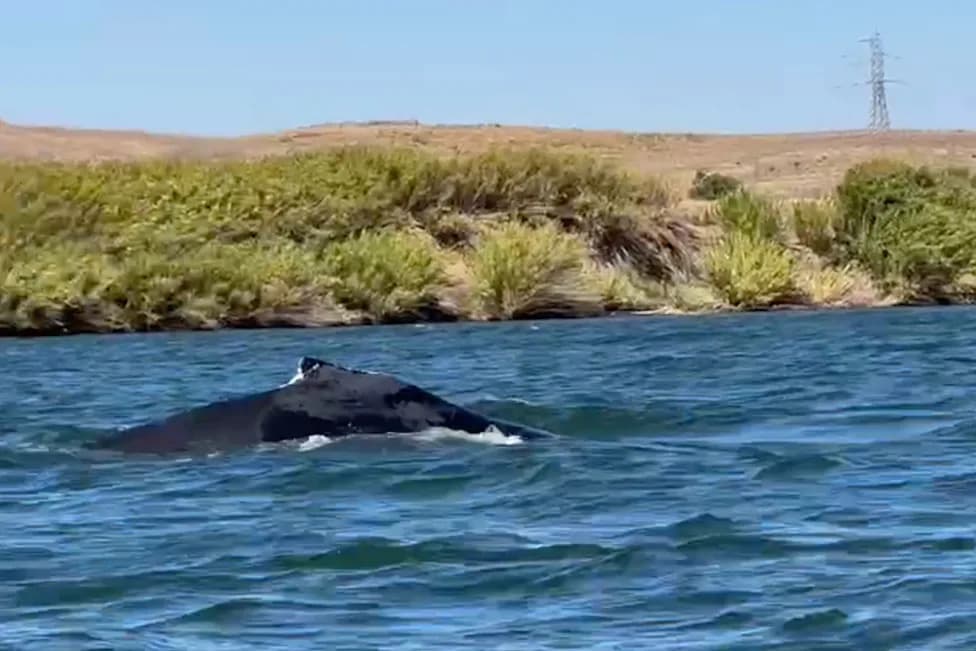
Researchers have documented the first confirmed live sighting and photographic evidence of a ginkgo‑toothed beaked whale off the coast of Baja California, Mexico. The discovery and supporting analyses are published in the journal Marine Mammal Science.
Scientific Confirmation
After observing the whale near their vessel, the research team collected a small skin sample using a lightweight biopsy dart. Genetic analysis of that sample verified the animal as the elusive ginkgo‑toothed beaked whale, and high‑quality photographs provide the first visual record of a live individual at sea.
Why This Matters
Beaked whales are notoriously difficult to study: they are deep divers that surface only briefly, and many species remain poorly known. This sighting narrows the known range of the ginkgo‑toothed beaked whale and gives scientists critical data to guide future research and conservation efforts.
"I can't even describe the feeling because it was something that we had worked towards for so long," said Elizabeth Henderson, a researcher at the U.S. Naval Information Warfare Center and lead author of the paper.
Robert Pitman, a retired researcher from Oregon State University, added: "The Society for Marine Mammalogy has a list of 94 accepted species of cetaceans. A quarter of those are beaked whales, but most people have never even heard of them. These are the largest, least‑known animals left on the planet."
Conservation Implications
The team emphasized that ginkgo‑toothed beaked whales — like many beaked whale species — are sensitive to intense underwater noise sources such as military sonar. Loud sonar pulses can force animals to ascend too rapidly, causing fatal injuries, and can disrupt normal foraging behaviors. With clearer information on where these whales occur, researchers can advise military and commercial operators on areas and timing to avoid, reducing harmful acoustic exposure.
Beyond sonar, the broader threats facing marine life — including ship strikes, fishing gear entanglement, pollution and habitat change — underscore the importance of protecting little‑known species. Continued surveys, acoustic monitoring, and coordinated management measures will be essential to safeguard ginkgo‑toothed beaked whales and other deep‑diving cetaceans.
Next steps: Expanded field surveys, genetic sampling, and acoustic studies are needed to better define the species' distribution, population size, and behavior so that targeted conservation measures can be implemented.
Help us improve.