The Schmidt Ocean Institute’s South Atlantic expedition discovered unexpectedly high biodiversity, identifying 28 possible new deep‑sea species such as sea snails, urchins, anemones, and worms. Many were found on the world’s largest known Bathelia candida coral reef, roughly the size of Vatican City. The team also recorded the rare phantom jellyfish Stygiomedusa gigantea, documented Argentina’s first deep‑sea whale fall at ~2.4 miles depth, and recovered plastic debris — including a near‑pristine VHS tape.
Ocean Surprise: 28 Potential New Deep‑Sea Species Discovered — And a Near‑Pristine VHS Tape Recovered
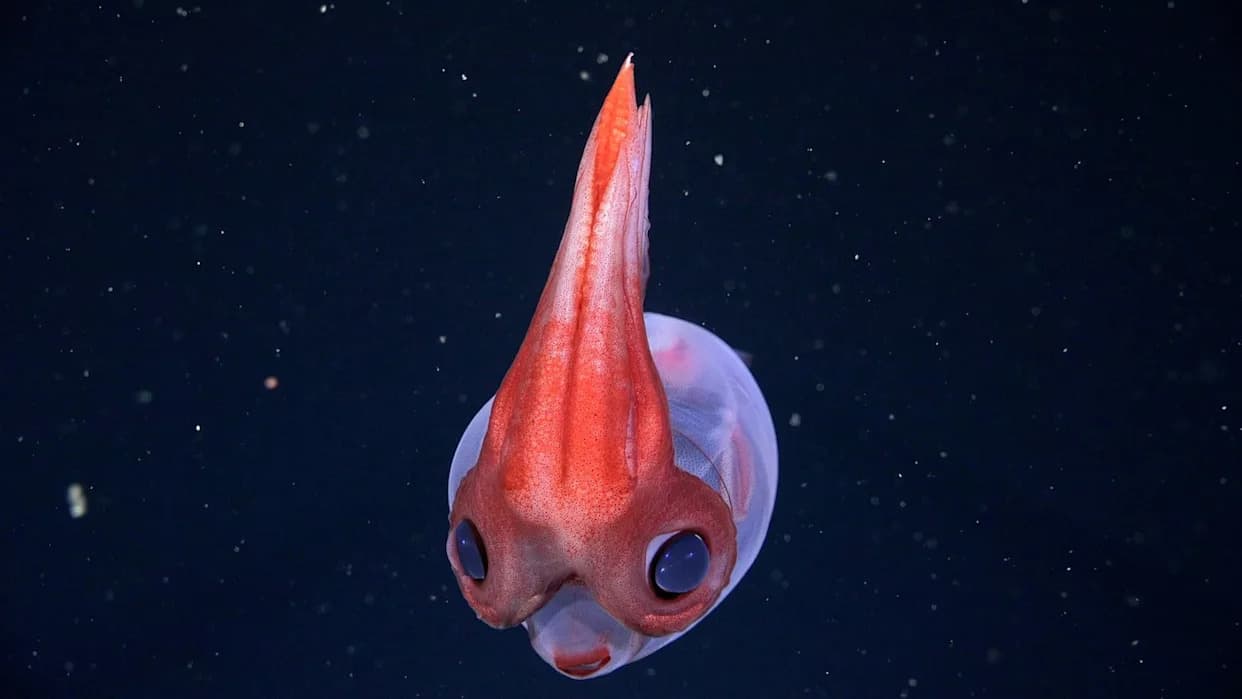
ROV pilots filmed this glass squid while exploring the Colorado-Rawson submarine canyon off the coast of Argentina.
Researchers from the Schmidt Ocean Institute have released a striking set of images and videos from a South Atlantic expedition that revealed unexpectedly rich life on the deep seafloor — and a reminder of how far human trash can travel. The team, aboard the research vessel Falkor (Too), set out to study cold seeps but found abundant biodiversity across the broader region.
Major Discoveries
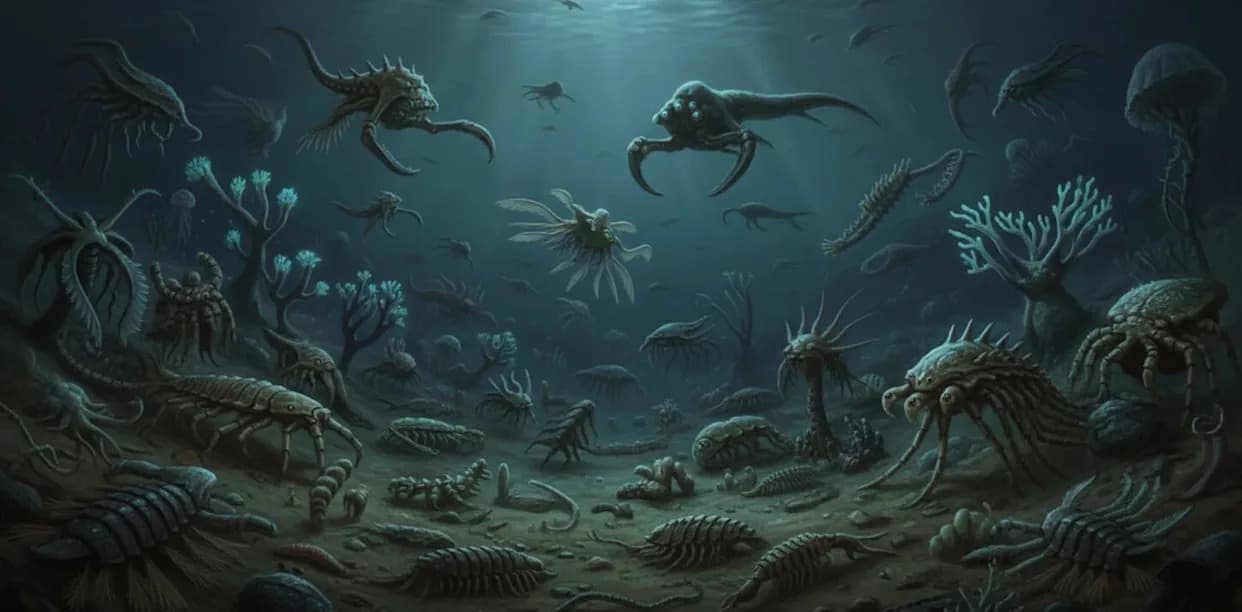
Expedition chief scientist María Emilia Bravo and colleagues estimate they identified 28 possible new species, including sea snails, urchins, anemones, and worms. Many of these organisms were observed living on or around what the team describes as the world’s largest known Bathelia candida coral reef — a colony nearly the size of Vatican City.
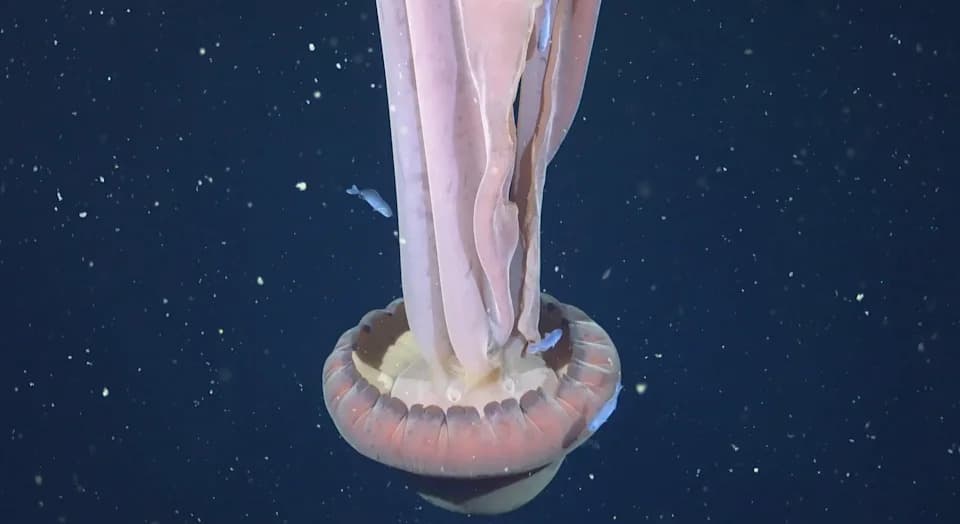
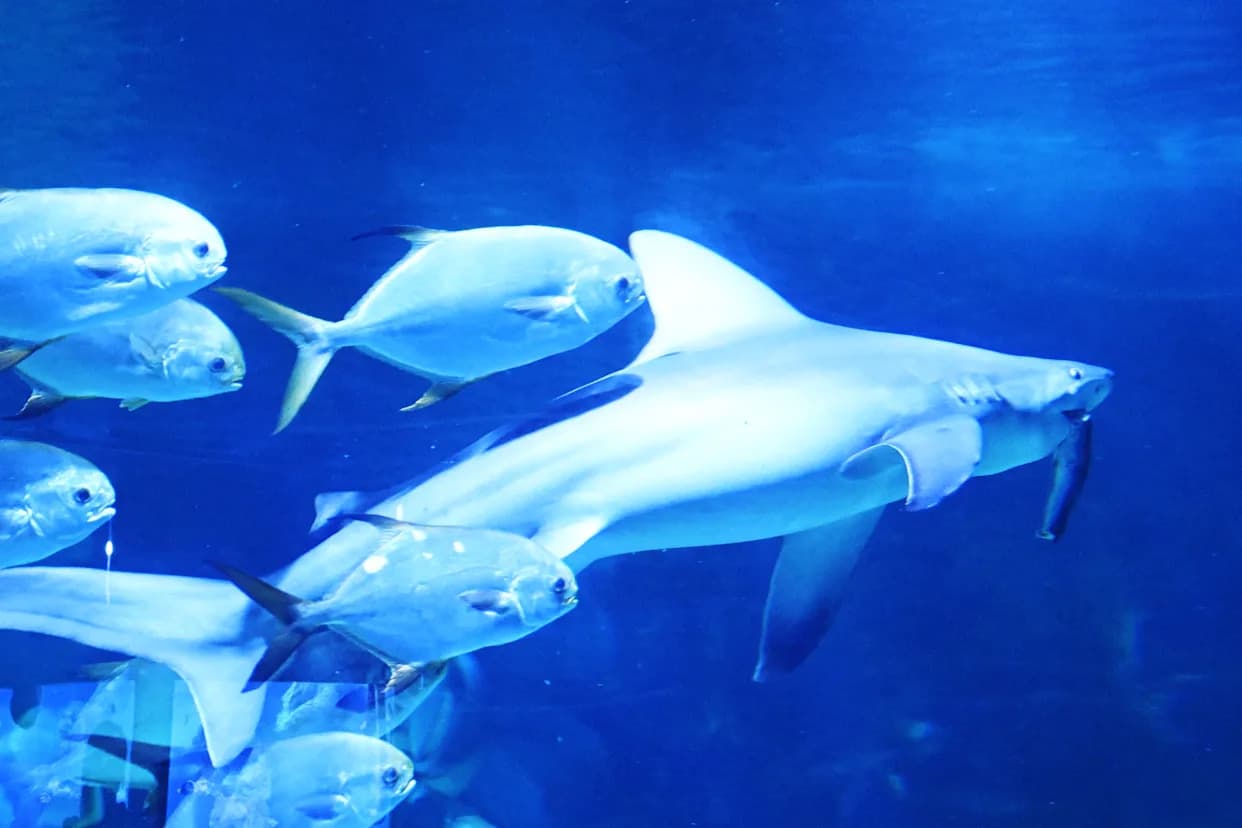
The researchers also documented the extremely rare phantom jellyfish Stygiomedusa gigantea, a gelatinous species that can reach lengths comparable to a school bus. Among other notable finds, the expedition recorded Argentina’s first documented deep‑sea whale fall: a cetacean carcass at roughly 2.4 miles (≈3.9 km) depth whose bones now provide a temporary habitat for sharks, crabs, and other scavengers.
Human Impact and Scientific Opportunity
As distressing but unsurprising evidence of global pollution, the survey recorded debris carried to the deep seafloor: garbage bags, fishing nets, and even a "near‑pristine" VHS tape — a stark reminder of plastic's longevity. The team collected an unprecedented suite of chemical, physical, and biological samples that will support research into deep‑sea ecosystems and connectivity for years to come.
“We were not expecting to see this level of biodiversity in the Argentine deep sea, and are so excited to see it teeming with life,” said María Emilia Bravo. “We opened a window into our country’s biodiversity only to find there are so many more windows left to be opened.”
Schmidt Ocean Institute executive director Jyotika Virmani emphasized the scale of the ocean’s living space: “With every expedition to the deep sea, we find the ocean is full of life — as much as we see on land, and perhaps more, because the ocean contains roughly 98% of the living space on this planet.”
The Institute has released the images and video to document the discoveries and to support further study of these deep‑sea habitats. Scientists from the expedition — including researchers from the Instituto Argentino de Oceanografía — will analyze the collected samples and publish findings in the coming months and years.
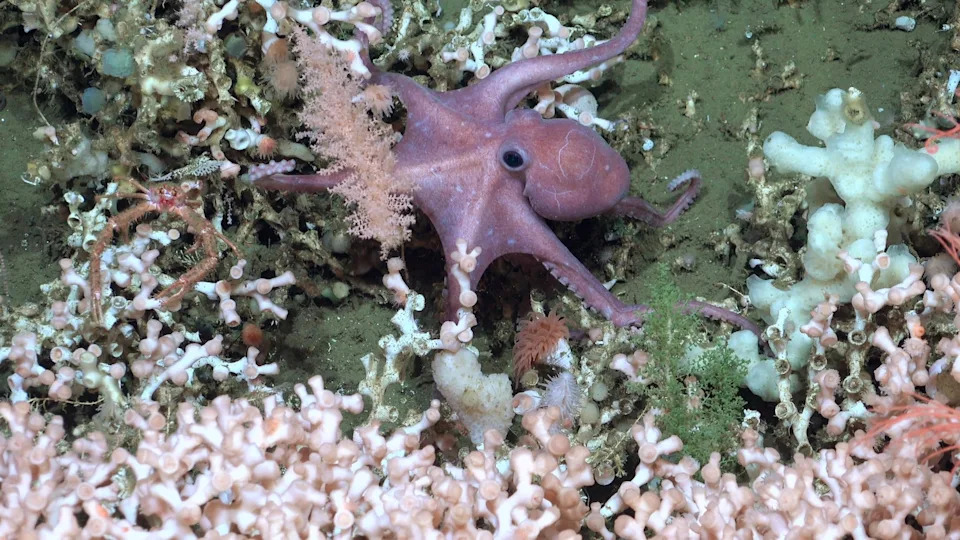
With their three-dimensional structure, deep-sea corals provide shelter, nursery grounds, spawning areas, and feeding habitats for many other species, such as this charismatic octopus. ROV pilots collected this footage at 1,010 meters along the Argentine Continental Slope. Credit: ROV SuBastian / Schmidt Ocean InstituteROV SuBastian / Schmidt Ocean Institute
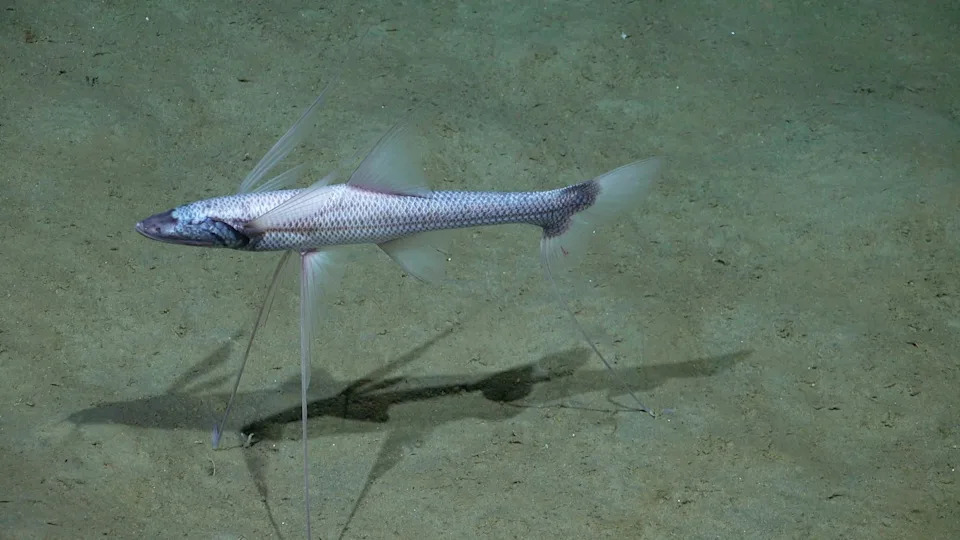
ROV pilots filmed this tripod fish (belonging to the Family Ipnopidae) at 2,700 meters on an escarpment in the Argentine Basin. Credit: ROV SuBastian / SchmidtOcean InstituteROV SuBastian / Schmidt Ocean Institute
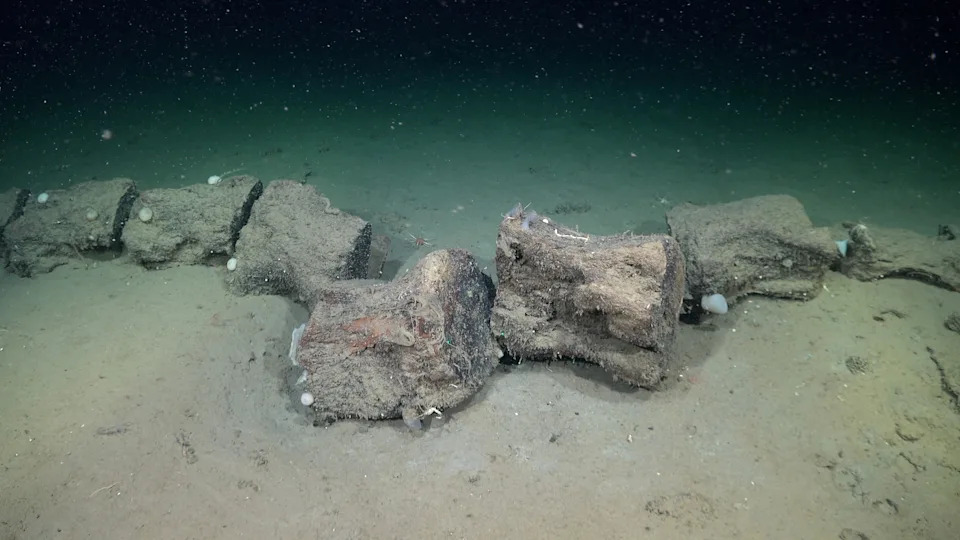
ROV pilots filmed the remains of a deceased whale that had dropped to the seafloor, called a whalefall, at about 3,890 meters deep during a dive on the Salado-Colorado Kilometer scarp in the Argentine Basin. Whale falls offer up thousands of years of nourishment to a place accustomed to scarcity. From large scavengers to invisible microbes and bone-eating Osedax worms, there is something for all creatures that happen upon a whale fall. Once organic matter has been consumed, the succession stage is named ‘reef phase’ and it is mostly used by the animals as a hard-substrate, as in the case of this whale carcass which presumably has spent decades in the seafloor. Credit: ROV SuBastian / SchmidtOcean InstituteROV SuBastian / Schmidt Ocean Institute
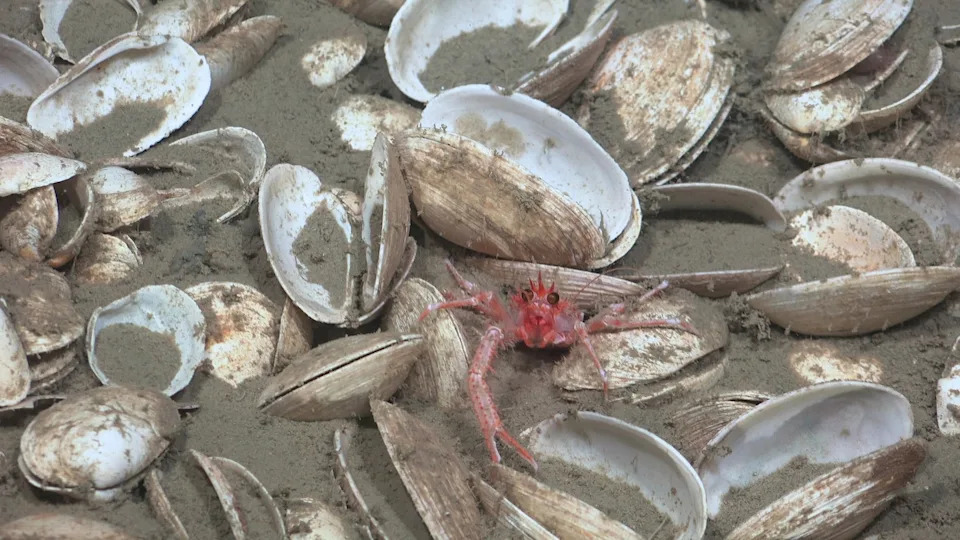
Scientists observed this squat lobster in a bed of chemosynthetic clam shells of the genus Archivesica sp. and Calyptogena sp. at 619 meters while exploring chemosynthetic habitat patches associated with a methane-derived carbonate mound. In Argentine waters, the biodiversity and environmental context of these chemosynthetic ecosystems remain poorly understood. Credit: ROV SuBastian / Schmidt Ocean InstituteROV SuBastian / Schmidt Ocean Institute
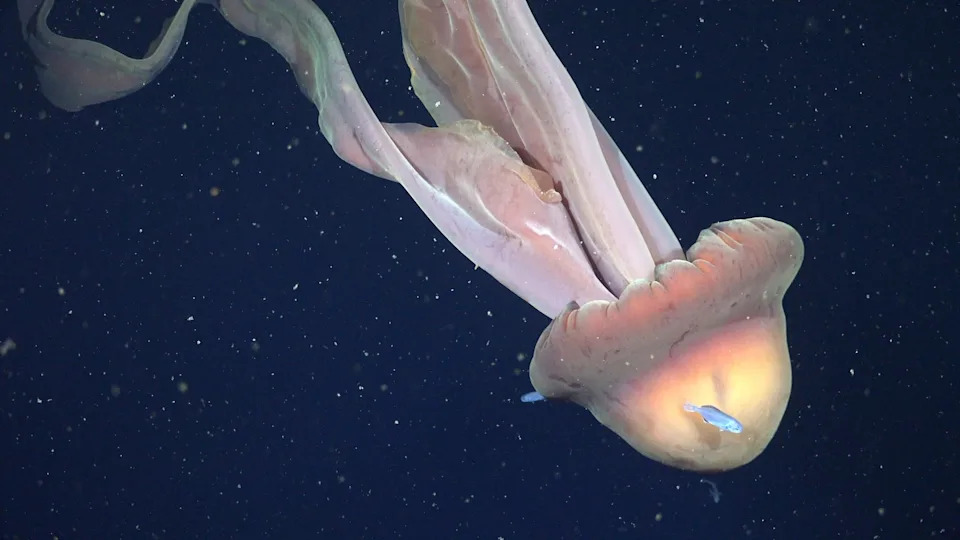
Juvenile fish (Centrolophus sp.) swim around the bell of a Stygiomedusa gigantea, commonly known as the giant phantom jelly, which ROV pilots filmed at 250 meters. Their bell can grow up to 1 m (3.3 ft) in diameter, and their four arms can reach up to 10 m (33 ft) long. They do not have any stinging tentacles, but use their arms to catch prey, including plankton and small fish. Credit: ROV SuBastian / Schmidt Ocean InstituteROV SuBastian / Schmidt Ocean Institute
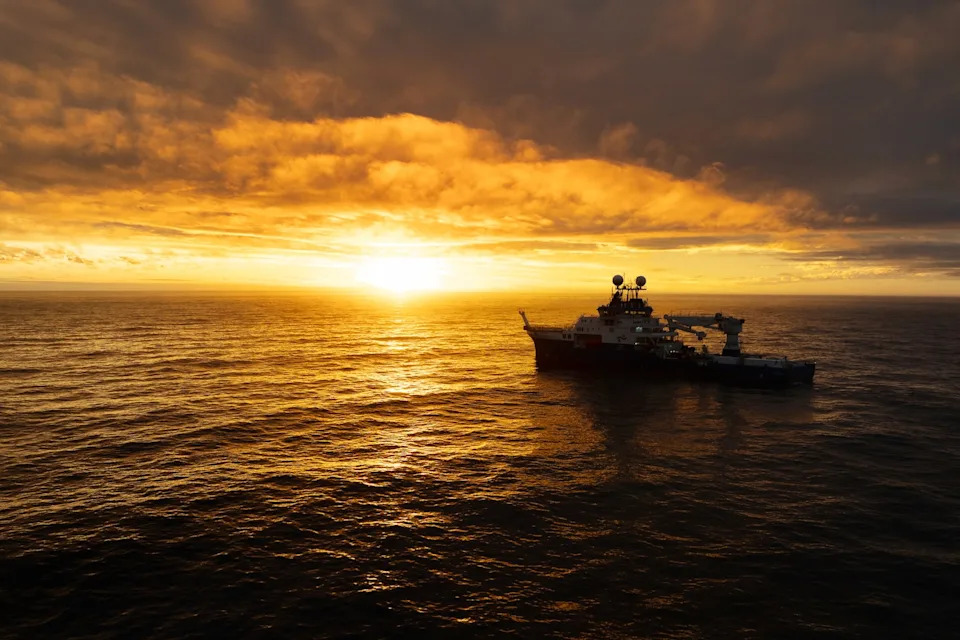
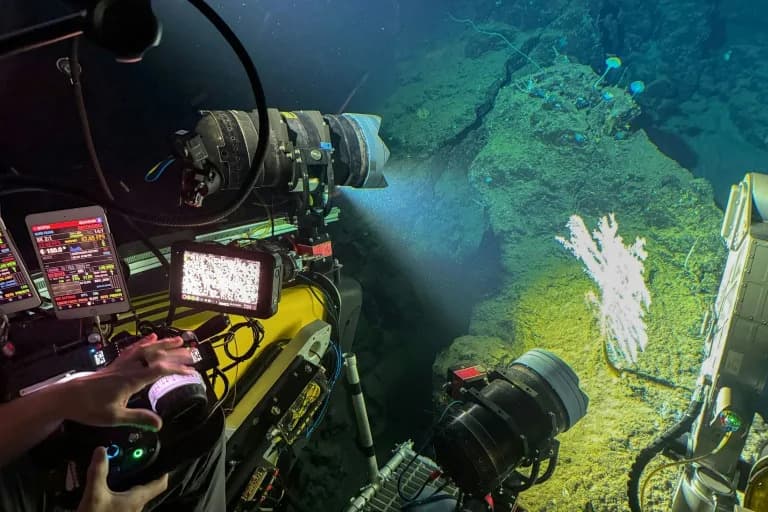
Research Vessel Falkor (too) with its ROV SuBastian deployed in the South Atlantic Ocean during the “Life In Extremes – Cold Seeps Of Argentina” expedition. CREDIT: Misha Vallejo Prut / Schmidt Ocean InstituteMisha Vallejo Prut
Help us improve.