Iran has added a third tier to its subsidized gasoline pricing — the first major change since 2019. The new structure keeps 60 liters/month at 15,000 rials per liter and 100 liters at 30,000 rials; purchases beyond that now cost 50,000 rials per liter. Officials say the move will ease fiscal strain from a weak rial and large energy subsidies, while critics warn it could worsen inflation near 40% and risk public unrest.
Iran Adds Third Tier to Subsidized Gasoline Prices — First Major Change Since 2019

A woman fills her car at a gas station in Tehran, Iran, Thursday, Nov. 27, 2025. (AP Photo/Vahid Salemi)(ASSOCIATED PRESS)
Iran on Saturday introduced a new third pricing tier to its long-standing, nationally subsidized gasoline system — the most significant adjustment since a controversial 2019 increase that sparked nationwide unrest. The measure aims to ease mounting fiscal pressure from a rapidly depreciating rial and international sanctions, while officials say they intend to avoid a repeat confrontation with a public still strained by regional tensions.
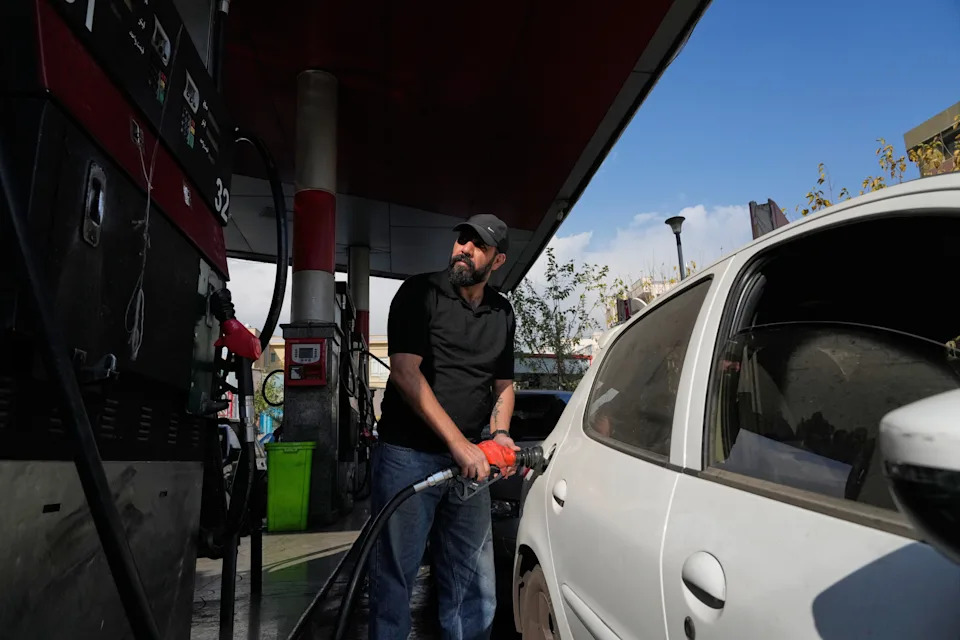
A man fills his car at a gas station in Tehran, Iran, Thursday, Nov. 27, 2025. (AP Photo/Vahid Salemi)(ASSOCIATED PRESS)
What Changed
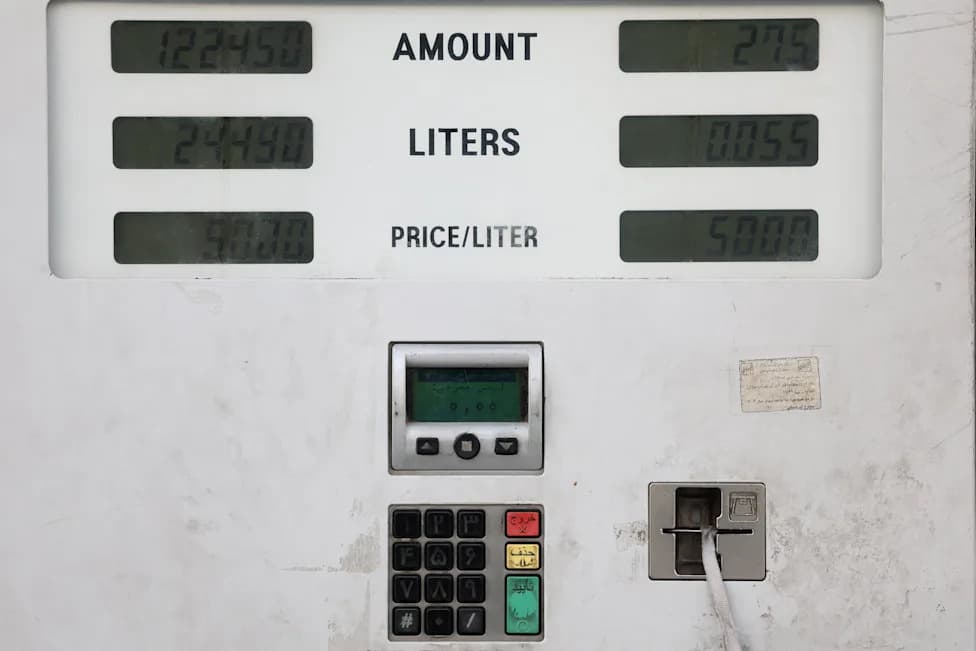
The revised system preserves the two existing subsidy bands and adds a higher-priced third band. Motorists will continue to receive 60 liters per month at 15,000 rials per liter (about 1.25 U.S. cents per liter). The next 100 liters remain priced at 30,000 rials per liter (about 2.5 cents). Fuel purchased beyond that quota now costs 50,000 rials per liter (about 4 cents).
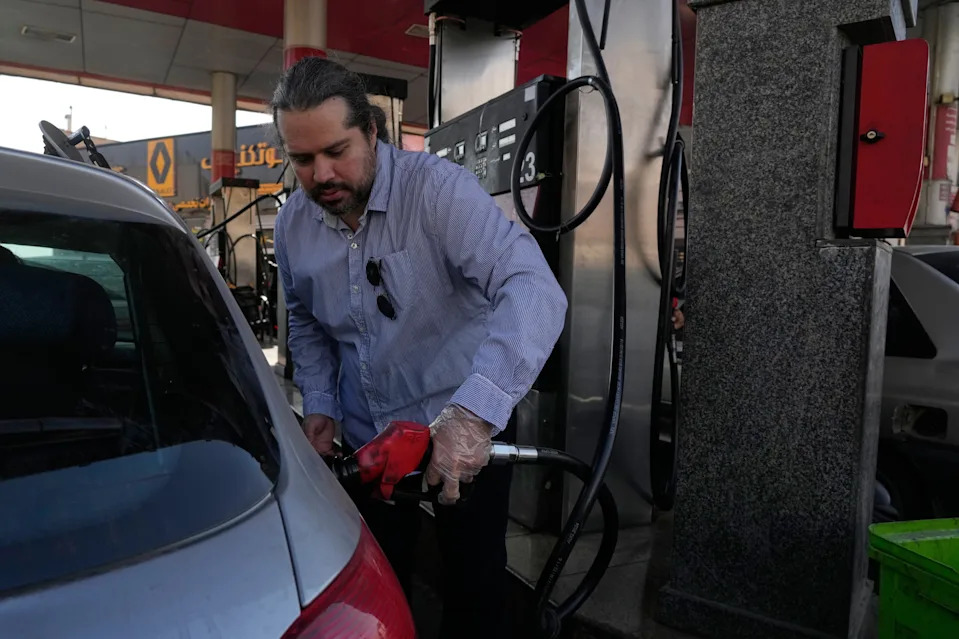
A man fills his car at a gas station in Tehran, Iran, Thursday, Nov. 27, 2025. (AP Photo/Vahid Salemi)(ASSOCIATED PRESS)
Why It Matters
Because pump prices have long been kept far below production and delivery costs, the state covers the gap through subsidies. The International Energy Agency estimated Iran’s energy subsidies at $52 billion in 2022, placing the country among the world’s largest subsidizers of fuel. Officials say the new tier is intended to reduce wasteful consumption and relieve pressure on the national budget.
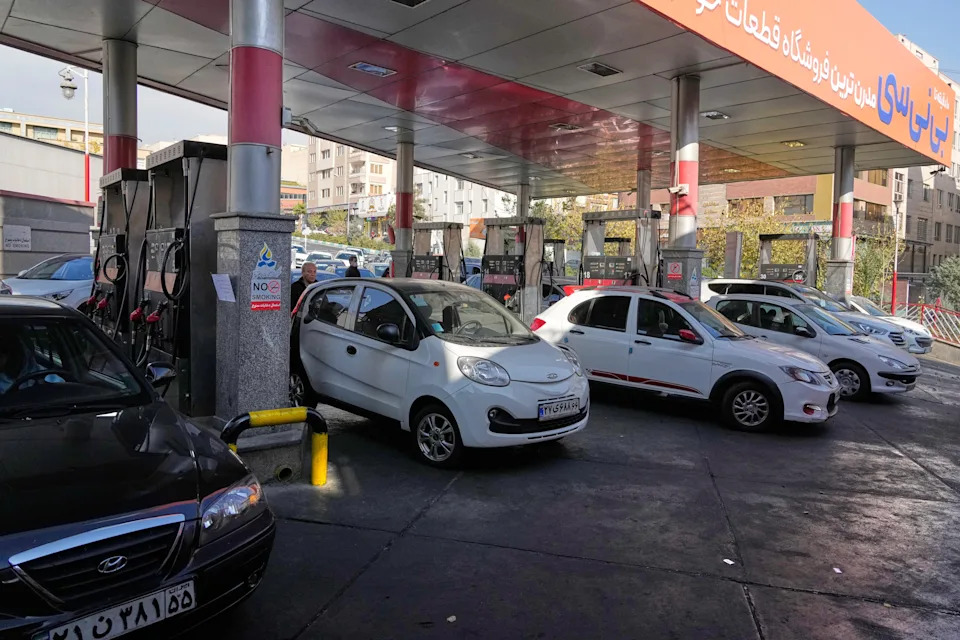
People fill their cars at a gas station in Tehran, Iran, Thursday, Nov. 27, 2025. (AP Photo/Vahid Salemi)(ASSOCIATED PRESS)
Public Reaction and Risks
“Our discontent has no result,” said Saeed Mohammadi, a teacher who supplements his income by driving a taxi. “The government does whatever it likes. They don’t ask people if they agree or not.”
Authorities deployed a modest security presence at some Tehran pumps on Saturday, but there were no widespread queues or immediate unrest reported. Critics warn higher fuel costs could feed inflation — already close to 40% — and risk public anger similar to the 2019 protests, during which rights groups say at least 321 people were killed in a crackdown.
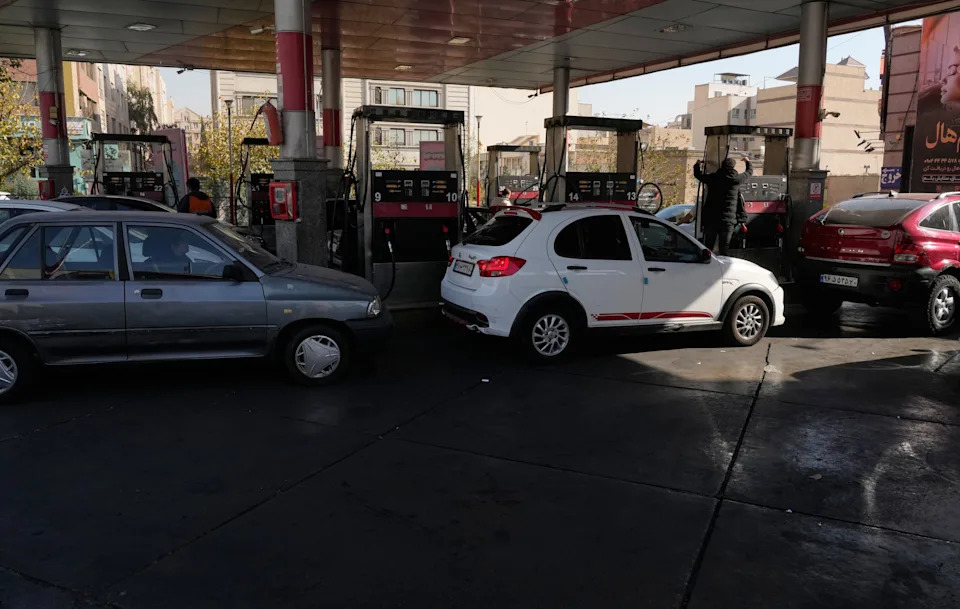
People fill their cars at a gas station in Tehran, Iran, Thursday, Nov. 27, 2025. (AP Photo/Vahid Salemi)(ASSOCIATED PRESS)
Background And Outlook
Iran first introduced fuel rationing in 2007. The government will review fuel prices every three months, leaving open the possibility of further adjustments. Officials present the move as a pragmatic step to shore up public finances and curb excessive consumption, while analysts caution it may raise living costs and inflationary pressures across the economy.
Key figures: ~25 million vehicles in Iran; more than 8 million people reportedly work as taxi drivers through online platforms; subsidies estimated at $52 billion (IEA, 2022); at least 321 deaths reported by Amnesty International during the 2019 crackdown.
Help us improve.