Overview: Tehran's grand bazaar strike ignited nationwide protests that were largely silenced after deadly reprisals and mass detentions. Deep economic decline — driven by mismanagement, enduring sanctions, war-related shocks and environmental crises — underpins public anger. The rial's collapse, frozen oil revenues and a nationwide internet blackout have crippled commerce and could cost Iran a substantial share of annual GDP. Analysts warn there is no quick fix and that outside military action would likely worsen the situation.
Why Iran’s Economy Collapsed — And How It Sparked Deadly Protests
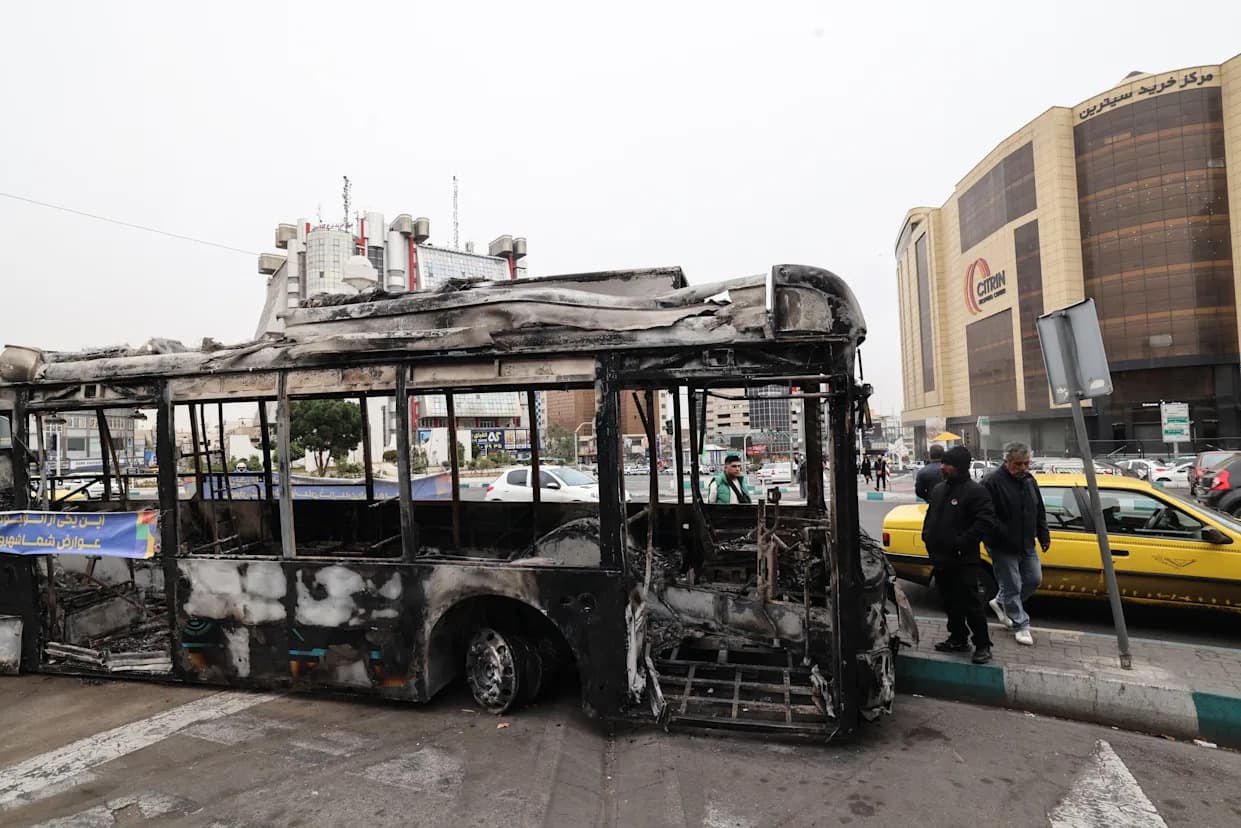
The wreckage of a burned bus in Tehran's Sadeghieh Square on January 15, 2026. A protest movement across Iran, initially prompted by economic grievances, turned into one of the biggest challenges yet to the clerical leadership since it took power in 1979 [Atta Kenare/AFP]
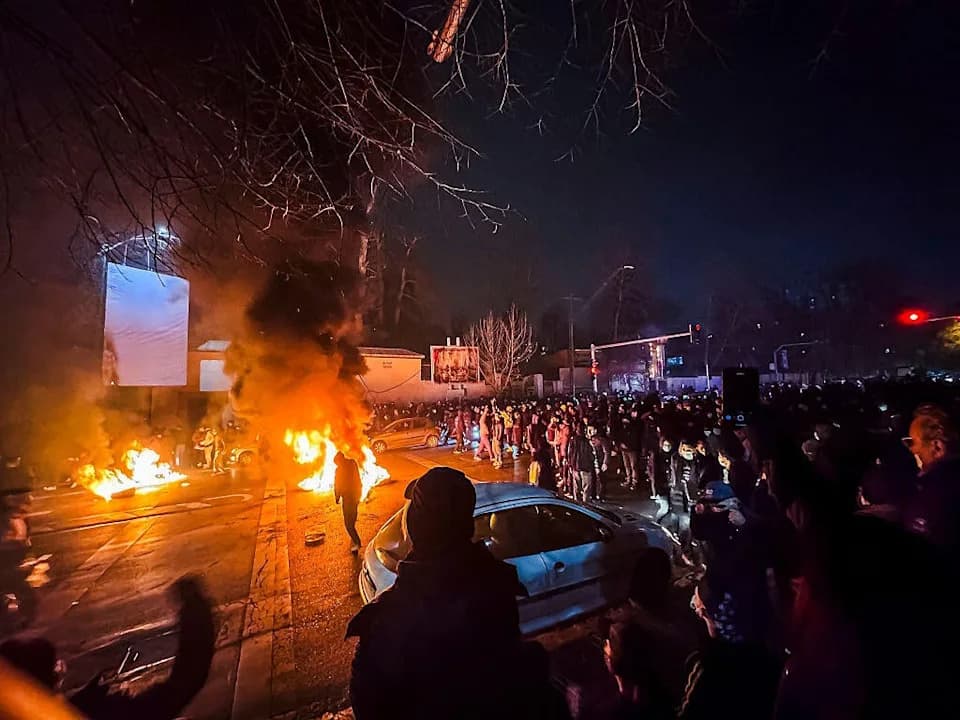
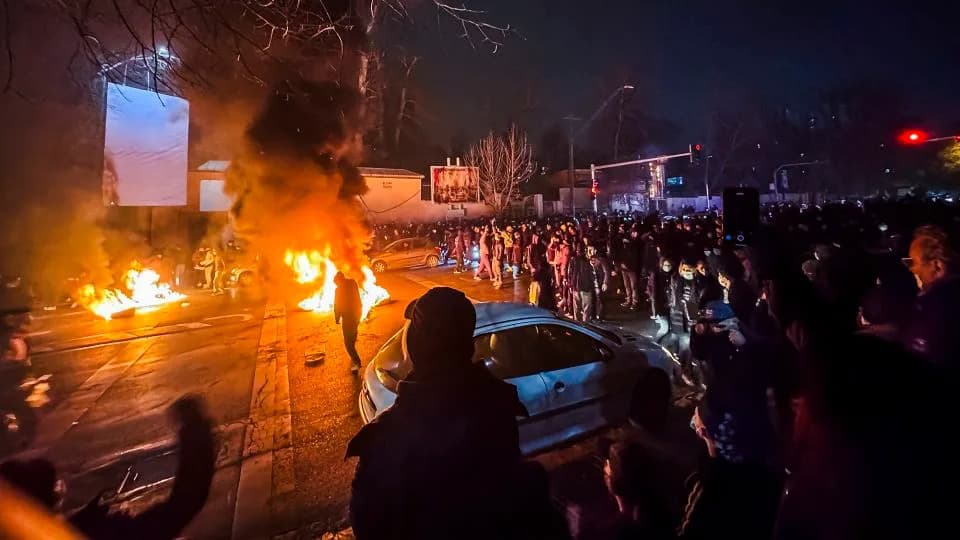
Four weeks after Tehran's grand bazaar merchants shuttered their shops in protest at a plunging currency and collapsing livelihoods, much of Iran remains cut off from the global internet. Mass demonstrations that at their height became broad challenges to the clerical leadership have largely gone quiet after deadly reprisals and mass detentions.
Hundreds of thousands who poured into the streets after the bazaar strike are reported to be staying home amid heavy casualties and arrests. Iranian authorities have not published an official death toll; estimates vary. The United States–based Human Rights Activists News Agency (HRANA) reported 2,615 fatalities this week, a figure Tehran disputes.
Economic Drivers
Experts say the unrest is rooted primarily in long-term economic decline made worse by recent shocks. Decades of mismanagement and corruption, extensive international sanctions, war-related disruptions and acute environmental stressors — including water shortages, widespread power outages and crippling air pollution — have combined to create a severe economic crisis.
“The recent unrest was undoubtedly rooted in economic distress,” said Hassan Hakimian, emeritus professor of economics at SOAS. “Decades of chronic corruption and extensive economic mismanagement were accentuated by international economic sanctions.”
The near-collapse of the rial — which hit record lows on December 28 and slid further in early January — first prompted the bazaar strike. With banking ATMs offline, flights curtailed and currency transactions restricted, everyday commerce has been hobbled by the shutdown of the National Information Network, Iran’s state-controlled domestic intranet.
Economic Cost Of The Blackout And Disruption
Djavad Salehi-Isfahani, an economics professor at Virginia Tech, estimated that a month-long nationwide digital and commercial shutdown could have reduced economic activity to roughly half capacity, implying a near-term loss that could amount to about one-tenth of annual GDP if sustained. Depending on exchange rates and methodology, the annualized cost of prolonged disruption could range widely — Salehi-Isfahani cited figures between $20 billion and $90 billion.
Sanctions, Shadow Trade And Oil Revenues
Sanctions have been a central factor in Iran’s economic decline. Since the 1979 revolution, successive US, UN and EU measures have restricted Tehran’s oil exports, froze assets and limited foreign investment. The 2018 US withdrawal from the 2015 nuclear deal (JCPOA) and subsequent sanctions further tightened restrictions. Under current sanctions, most oil revenues remain frozen and many overseas assets and banking channels are blocked.
China purchased more than 80 percent of Iran’s exported oil in 2025, according to analytics firm Kpler, often using a so-called “shadow fleet” of tankers that evade detection by switching off tracking or flying false flags.
Stagflation And Living Standards
Even before last year’s regional conflict and renewed international pressure, many economists described Iran’s economy as mired in stagflation: negligible growth combined with accelerating inflation. The IMF estimated annual growth at just 0.6 percent. Over the past eight years, Iranians’ purchasing power has fallen by more than 90 percent. Official data show food prices rose about 72 percent year-on-year as the rial plunged: the open-market exchange rate reached roughly 1.36 million rial per US dollar in December 2025 and slid to about 1.42 million in early January.
High youth unemployment — nearly one in five young people is out of work — and shortages of hard currency pushed households and merchants to hoard foreign currency and gold, further destabilizing the exchange rate. As economist Nader Habibi explained, rapid currency devaluation made normal inventory and pricing practices unsustainable for many Bazaaris, driving them to strike.
Outlook And Risks
Analysts warn the government faces no quick or painless remedy. Even if protests are suppressed by force, underlying economic and social grievances will persist. Outside military intervention is widely seen as likely to complicate the situation further and risk broader regional escalation.
Key Facts
- HRANA reported 2,615 fatalities during the unrest; Iranian authorities dispute that number.
- The rial hit record lows in late December 2025 and fell further in early January, exacerbating inflation and shortages.
- Internet and banking blackouts have severely curtailed commerce; monthly output losses could be equivalent to about 10% of GDP if prolonged.
- Longstanding international sanctions and frozen oil revenues have choked foreign exchange and investment channels.
- China accounted for the large majority of Iran’s exported oil in 2025, much of it transported via a shadow fleet to evade sanctions.
The crisis reflects a convergence of policy failures, external pressure and environmental stressors. Without substantive economic reform, relief of sanctions, or a combination of stabilizing measures, analysts say the conditions that sparked these protests are likely to re-emerge.
Help us improve.