Archaeologists at Kastabala in southern Turkey have unearthed five carved stone theatrical masks dated to the first century C.E., discovered near a Roman-era theater that originally seated about 5,000 people. Excavators recorded 36 mask fragments this year, and one relief unusually depicts an elderly philosopher — suggesting the space hosted lectures and public debates as well as plays. The masks show a mix of Eastern and Western stylistic features, reflecting cultural exchange under Roman rule. Ongoing work aims to restore the theater's stage building and preserve the site for visitors and researchers.
Five Roman-Era Theatrical Masks Unearthed Near a 5,000-Seat Theater in Kastabala, Turkey

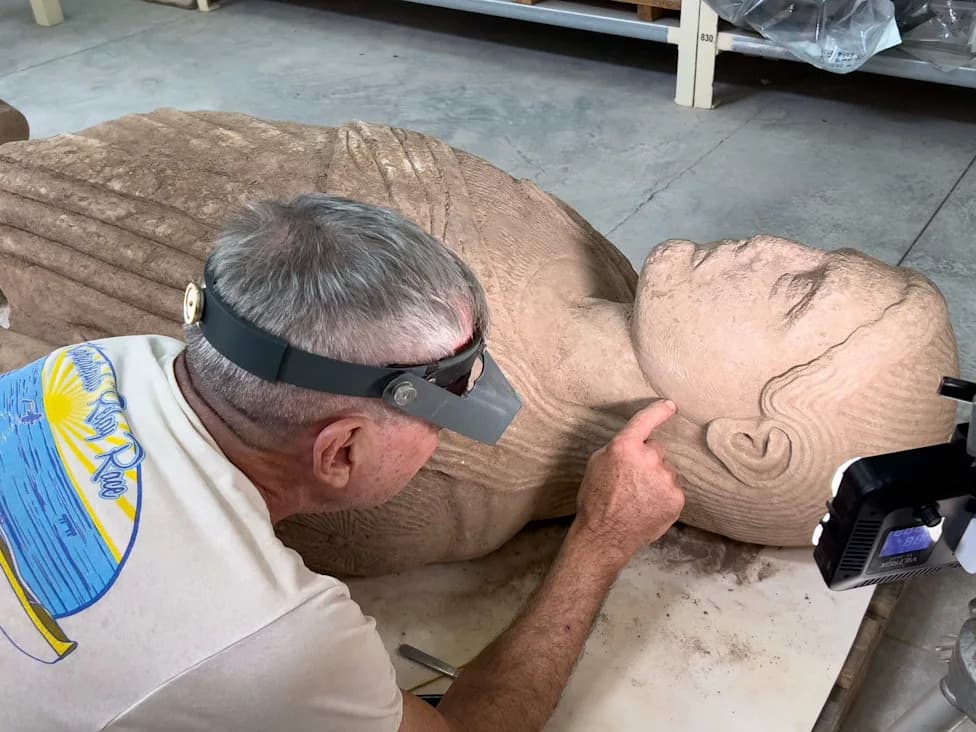
Archaeologists excavating the ancient city of Kastabala in southern Turkey have uncovered five finely carved stone reliefs shaped as theatrical masks, dated to the first century C.E. The masks were found in the theater district near a Roman-built auditorium that originally seated roughly 5,000 people.
A Theatrical Discovery With a Twist
The recent finds are part of a larger group of mask fragments — excavators recorded 36 mask pieces at the site this year alone — reinforcing the quarter's long-standing role as the city’s entertainment and civic hub. One of the newly revealed reliefs unusually depicts the face of an elderly philosopher, a subject rarely seen on stage masks.
"Masks on stage buildings rarely depict philosophers," said Faris Demir, an archaeologist at Osmaniy Korkut Ata University, as reported by Anatolian Archaeology. "This may indicate the space hosted philosophical lectures, literary recitations or public debates in addition to dramatic performances."
Crossroads of Styles and Cultures
Researchers note that the masks combine stylistic elements from both Eastern and Western artistic traditions, reflecting the cultural exchanges within the Roman Empire’s theatrical world. The reliefs and other architectural elements recovered from the stage building will help specialists plan an accurate restoration.
Layers of History at Kastabala
Kastabala — also historically known as Hierapolis and Pyramus — sits near the Ceyhan River and preserves archaeological layers from the Late Hittite era through the Hellenistic, Roman and Byzantine periods. Past excavations have revealed a sanctuary to Artemis Perasia (linked in ancient accounts to barefoot priestesses walking on hot coals), a sixth-century B.C.E. temple to the Luwian goddess Kubaba, a grand colonnaded boulevard, and a medieval fortress that documents later reuse of the site.
The History Blog and local reports place the city's founding at roughly 2,700 years ago in the Late Hittite period. Kastabala later became part of the Roman province of Cappadocia; the first-century theater dates to that period of Roman influence and urban investment.
Conservation and Public Access
Demir expressed optimism that continued excavation and conservation will allow specialists to restore the stage building and present it to the public. "By the end of this project," he said, "we will be able to restore the stage building and hand it down to future generations." The combination of theatrical artifacts and civic architecture makes Kastabala an important window into cultural life in a provincial Roman city.
Help us improve.