Dr Martin Ramirez won the Royal Society Publishing Photography Competition with a scanning electron microscope image titled Mesmerizing spider threads, showing two silk threads from the Australian net-caster spider. The SEM exposes rope-like twists and undulations linked to the silk’s notable strength and elasticity, properties probed in mechanical tests by Ramirez and Dr Jonas Wolff. Judges praised the image for combining scientific insight with striking visual form. The competition also recognised dramatic entries from solar astronomy, prairie‑chicken behaviour, Antarctic glacier research and Madagascan amphibian breeding.
You Won't Believe This Isn't Space: SEM Image of Spider Silk Wins Royal Society Photography Prize

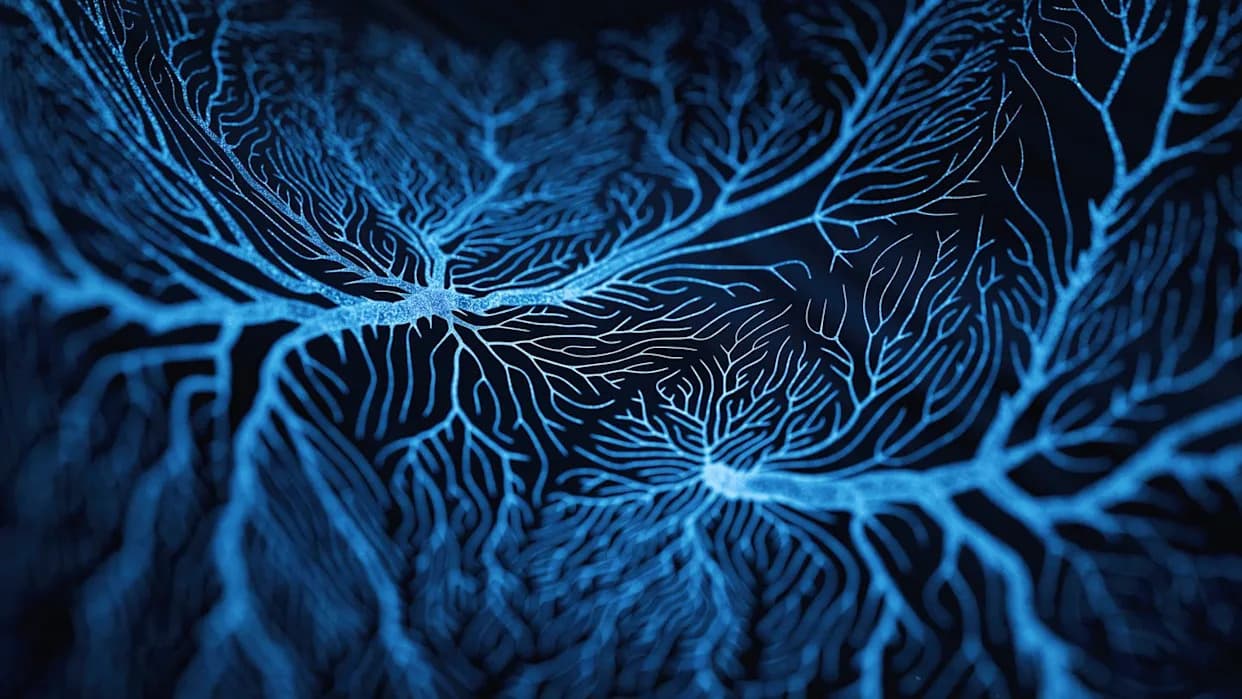
What looks like an alien landscape of twisting ridges and perfect symmetry is, in fact, two threads of spider silk — magnified by a scanning electron microscope and named this year’s overall winner in the Royal Society Publishing Photography Competition.
Mesmerizing spider threads was captured by Dr Martin Ramirez, a research scientist at CONICET (National Scientific and Technical Research Council of Argentina) affiliated with the Argentine Museum of Natural Sciences. Dr Ramirez studies spider systematics, evolutionary morphology and biogeography. The striking SEM (scanning electron microscope) image reveals rope-like twists and complex undulations in silk produced by the Australian net-caster spider — details invisible to the naked eye.
Net-caster spiders are ambush predators that hold a small web between their forelegs and fling it to ensnare passing insects. That hunting method requires silk with exceptional strength, elasticity and rapid recoil. To investigate those properties, Dr Ramirez and Dr Jonas Wolff (University of Greifswald) performed precise mechanical tests in Germany, dissecting fibers and measuring how far individual strands stretch. Samples were later imaged under an electron microscope in Buenos Aires, producing the high-resolution image that won the judges’ admiration.
Hugh Turvey, Chair of the Royal Photographic Society’s Science Committee and a competition judge, praised the entry: “This bold, graphic SEM of astonishing rope-like structures — with remarkable twists and complex undulations — evokes wonder and perfectly illustrates the meeting of artistic form and scientific function.”
Other Notable Winners
Dancing on the Edge of Fire — Imran Sultan (CIERA, Northwestern University): A Hydrogen-alpha view of the Sun captured near the peak of the 11-year solar cycle. Sultan used a Svbony SV503 80ED refractor, Daystar Quark H‑Alpha filter and a ZWO ASI533MC Pro camera. The final image was produced from approximately 1,720 frames (30 ms each) stacked and processed to reveal towering prominences and intricate chromospheric detail.
Prairie Chicken Jump Off — Peter Hudson (Penn State University): A dramatic freeze-frame of Greater Prairie Chickens (Tympanuchus cupido) performing lekking displays. Shot on a Sony A1 (1/8000 sec, f/4, ISO 800), the image captures aerial jumps and strikes that females observe when choosing mates, underscoring how female choice — not just male combat — shapes mating outcomes.
Scanning Glaciers in the Antarctic Winter — Michael Meredith (British Antarctic Survey): Photographs from a rare winter expedition aboard RRS Sir David Attenborough document glacier fronts and ocean conditions that influence global sea level and ecosystems. Taken on an iPhone 16 Pro Max with no post-processing, these images highlight how warming oceans increase glacier instability and calving.
Category Winner — Amphibian Galaxy — Filippo Carugati (University of Turin): Shot during fieldwork in Madagascar’s Maromizaha rainforest, this image shows a large gelatinous egg clutch (20–30 cm), likely of Guibemantis liber, lit from behind to reveal tadpoles and vivid internal colors. The effect gives the aggregation a cosmic, galaxy-like appearance; Carugati used a softbox and light levels adjustments in post.
The Royal Society Publishing competition, held in association with the Royal Photographic Society, celebrates images that illuminate scientific discovery and natural beauty. For the full list of winners, runner-ups and technical notes, visit the Royal Photographic Society website.
Help us improve.