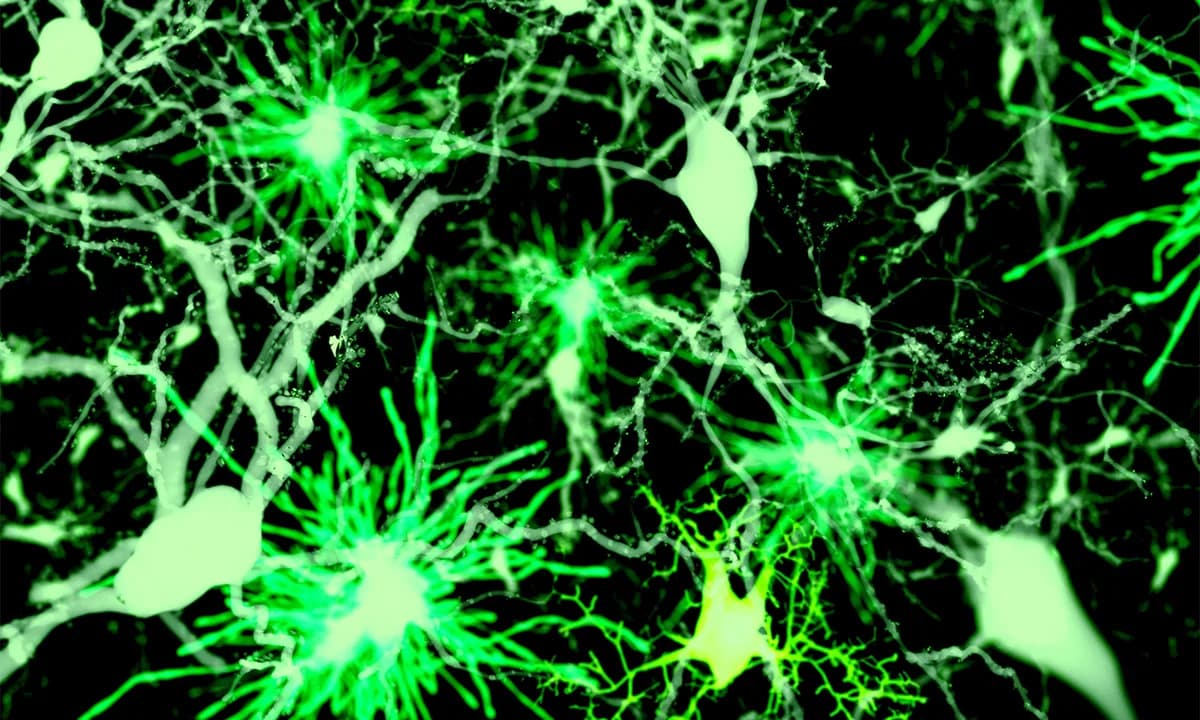
Researchers at Stanford developed computational scattered light imaging (ComSLI), a low-cost method that maps microscopic fiber networks by analyzing multi-angle light scattering. Using only a rotating LED and a microscope camera, ComSLI generates color-coded fiber-orientation maps at micron resolution and can be applied to archived slides. Applied to the hippocampus, the method revealed marked microstructural deterioration and fewer dense fiber crossings in Alzheimer's samples. The technique also renders fiber structures in muscle, bone and vasculature and could be rapidly adopted by many labs.
New Low-Cost Imaging Reveals Microscopic Fiber Networks Throughout the Human Body
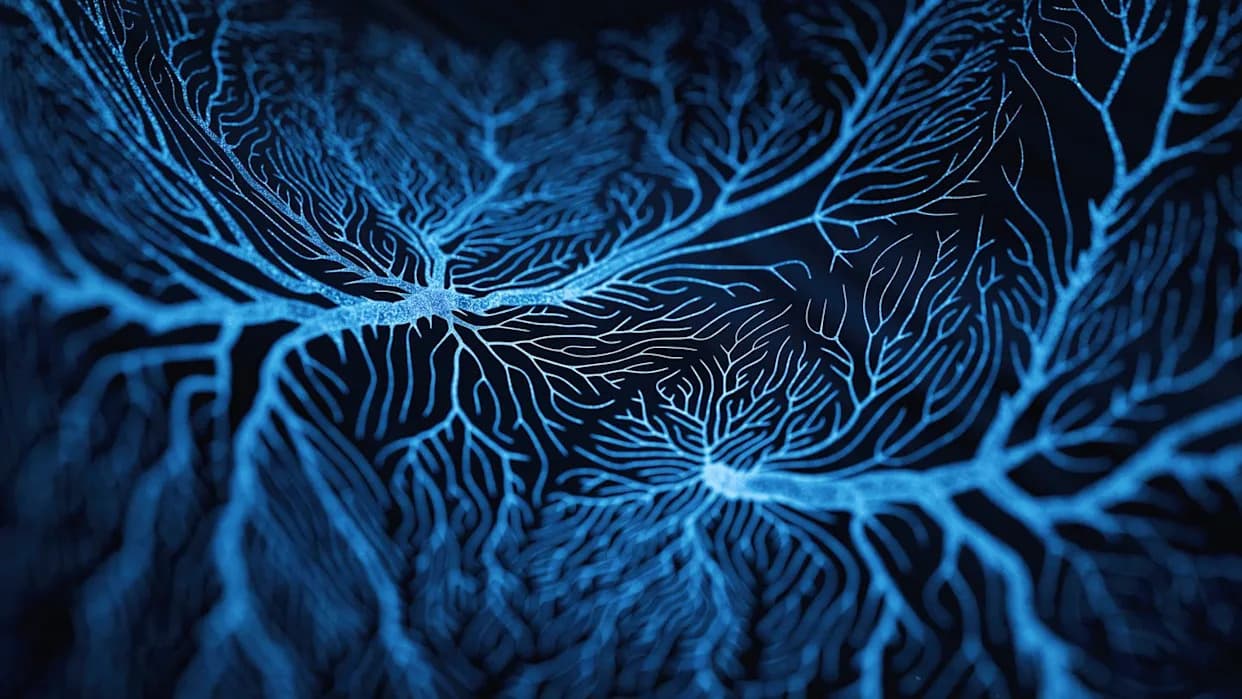
Experts Revealed Hidden Networks in Human Bodieskoto_feja - Getty Images
Scientists have introduced a practical, high-resolution method for mapping microscopic fiber networks embedded in human tissues. The technique—called computational scattered light imaging (ComSLI)—uses light scattering and algorithms to reconstruct fiber orientations at micron-scale resolution without specialized stains or costly instruments.
How ComSLI Works
ComSLI uses a simple rotating LED light source and a microscope camera to illuminate a tissue slide from multiple angles. Because microscopic fibers scatter light differently depending on their orientation, the system records multi-angle scattering patterns and feeds them into computational algorithms. These algorithms generate color-coded maps, called "microstructure-informed fiber orientation distributions," that reveal the layout and orientation of fiber networks in the sample.
Key Findings
Led by researchers at Stanford and published in Nature Communications, the study applied ComSLI to brain tissue, comparing healthy hippocampus samples with those from patients who had Alzheimer’s disease. The team observed "striking microstructural deterioration" in affected samples and a reduction in the dense fiber crossings that form crucial hippocampal connections. The method also rendered fine fiber structures in muscle, bone and the vascular system, demonstrating broad applicability across tissue types.
"This is a tool that any lab can use. You don't need specialized preparation or expensive equipment," said Michael Zeineh of Stanford, a co-author of the study. "What excites me most is that this approach opens the door for anyone, from small research labs to pathology labs, to uncover new insights from slides they already have."
Why It Matters
Because ComSLI relies on light scattering rather than special stains, it can be used on existing archived slides—even samples prepared decades ago—allowing researchers and pathologists to recover previously inaccessible micro-connectivity information. The authors suggest revisiting well-characterized brain archives and historical collections to reconstruct microstructural details that were once lost. The technique’s low hardware requirements mean it can be adopted quickly by many labs, accelerating research into how fiber microstructure contributes to physical and neurological diseases.
"Another exciting plan is to go back to well-characterized brain archives or brain sections of famous people, and recover this micro-connectivity information, revealing 'secrets' that have been considered long lost," said Marios Georgiadis, the study's lead author at Stanford. "This is the beauty of ComSLI."
Limitations and Next Steps
ComSLI's promise is high, but wider adoption will require independent validation across labs and integration with existing pathology workflows. Future work will refine the algorithms, expand tissue-type studies, and evaluate how well ComSLI findings correlate with clinical outcomes and other imaging modalities.
Help us improve.