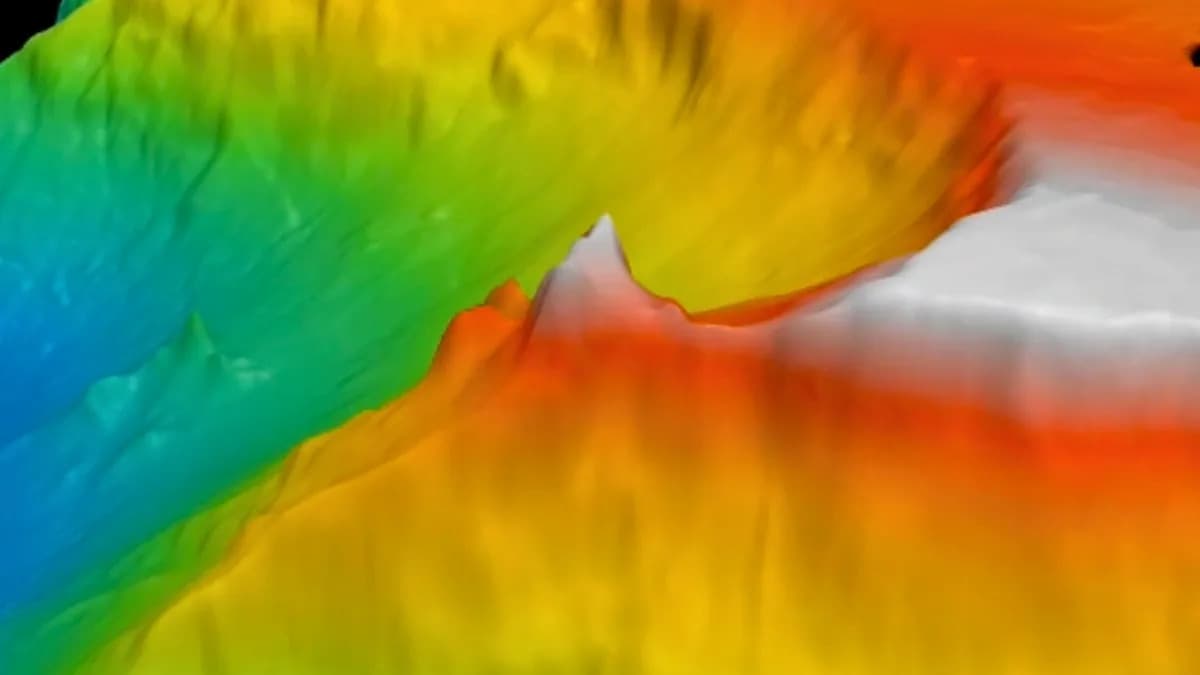
Geologists have completed the offshore geological mapping of Zealandia, documenting nearly two million square miles and finishing surveys of the northern two‑thirds. GNS Science researchers dredged seabed samples from the Fairway Ridge to the Coral Sea and dated rocks ranging from about 130 to 40 million years old. Their findings support a crustal stretching and thinning model—rather than strike‑slip breakup—that allowed ocean water to form the Tasman Sea and left about 95% of Zealandia underwater. The work provides the most complete geological map to date of this submerged continental fragment.
Zealandia Mapped: Scientists Complete Geological Survey of the ‘Hidden’ Eighth Continent

Geologists have completed the offshore geological mapping of Zealandia, the mostly submerged land mass long proposed as Earth’s eighth continent. The new survey documents nearly two million square miles and finishes mapping the northern two‑thirds of the region, turning Zealandia from a partial mystery into a well‑charted geological feature.
The research team from GNS Science, led by Nick Mortimer, dredged seabed rock samples from the Fairway Ridge to the Coral Sea. Scientists analyzed the recovered material geochemically and dated the samples, then combined those results with magnetic anomaly interpretation to map major geological units across North Zealandia.
What they found: the samples include pebbly and cobbly sandstone, fine‑grained sandstone, mudstone, bioclastic limestone and basaltic lava spanning multiple periods. Sandstones date to about 95 million years ago (Late Cretaceous); granite and volcanic pebbles were dated as old as ~130 million years (Early Cretaceous); and basalts are younger, around 40 million years old (Eocene).
The study links Zealandia’s evolution to the breakup of the ancient supercontinent Gondwana. Current interpretations indicate Zealandia began separating and subsiding roughly 80 million years ago, leaving only a small fraction of its crust above water—most visibly New Zealand and a few nearby islands—while about 95% of the continent now lies beneath the ocean.
Beyond rock ages and types, the researchers reconstructed the crustal deformation history. Their analysis supports a model in which extensive stretching thinned Zealandia’s continental crust and produced subduction‑style cracking that allowed ocean water to flood in and form the Tasman Sea. Continued stretching as Antarctica drifted away further thinned the crust until sections fragmented and subsided, producing Zealandia’s largely submerged state. This stretching model contrasts with previous strike‑slip breakup theories. The team estimates stretching direction varied by up to 65 degrees, a variation that may have enabled extreme crustal thinning.
By completing offshore reconnaissance mapping of the entire continent, the study provides the most comprehensive geological picture to date of Zealandia. While most of the land mass will likely never host land‑based populations, the new map clarifies an important chapter in Earth’s tectonic history and improves our understanding of continental breakup and subsidence processes.
Help us improve.