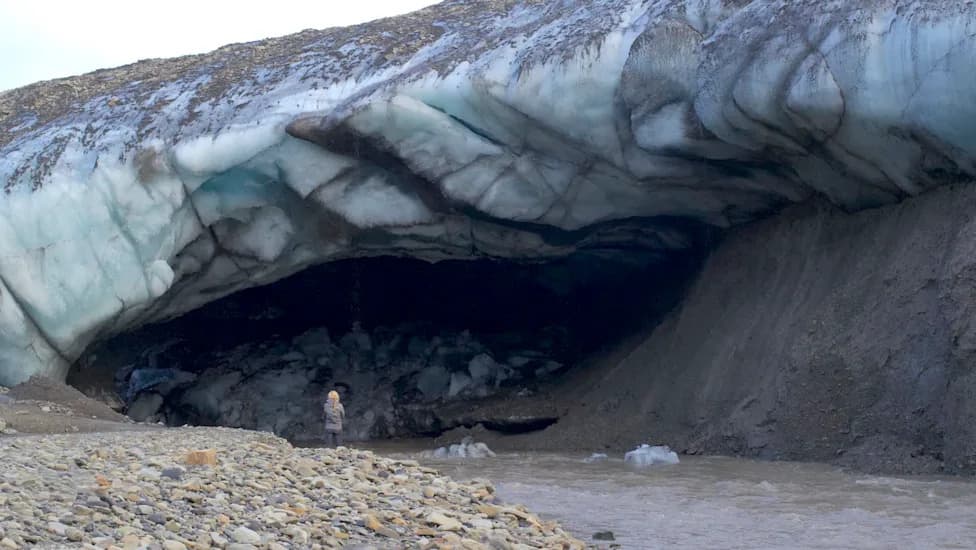
Field measurements in the Yukon show that boulders exposed by glacier retreat speed local snowmelt by radiating heat and altering snow structure. Using 3D laser scans, infrared imaging and drone photogrammetry, researchers documented how tighter grain packing and tiny voids around rocks increase melt. These fine-scale processes can change the timing and volume of downstream runoff and should be included in models and sensor planning for northern watersheds.
Boulders Speed Snowmelt in the Yukon — Small Rocks, Big Effects on Downstream Water
A new field study shows that boulders exposed by glacier retreat can accelerate local snowmelt, with implications for the timing and volume of water that reaches downstream communities.
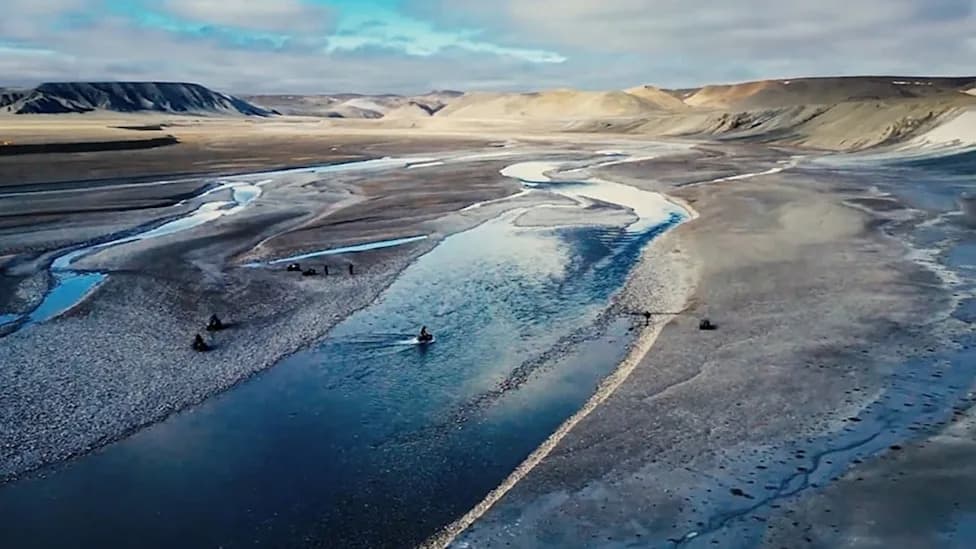
The research team, led by McGill University, conducted detailed field measurements in the Shár Shaw Tagà Valley in the Yukon. Using 3D laser scanning, infrared thermal imaging and drone photogrammetry, the scientists mapped snow geometry and temperature at high resolution and published their findings in the journal Cold Regions Science and Technology.
The researchers found that snow directly adjacent to boulders melts faster than snow farther away. Two linked mechanisms explain this pattern: the rocks radiate and conduct heat into the surrounding snow surface, and the snowpack near boulders develops subtle structural changes — tighter grain packing, small voids and microscopic undulations — that increase melt efficiency at very small scales.
These fine-scale observations are uncommon for remote, rugged terrain. By documenting how micro-scale features influence melt, the study provides evidence that small landscape elements can measurably alter streamflow timing and volume in watersheds as glaciers retreat and expose more rock.
Accurately representing these processes in hydrological and energy-balance models matters because mountain snowpacks supply seasonal freshwater to many downstream communities. Improved models that account for boulder effects can better predict when and how much meltwater will arrive, helping water managers plan for changing runoff patterns.
The study also demonstrates methods for bridging satellite observations with detailed ground data, supporting smarter placement of sensors and more targeted field campaigns in cold regions. Co-author Jeffrey McKenzie said the expanded measurements "help us understand the bigger processes and climate effects that shape the region."
While this work focuses on a specific valley in the Yukon, the mechanisms are broadly relevant across mountain landscapes where glacier retreat exposes rock. Future research should examine how widespread these boulder-driven effects are and incorporate them into watershed-scale predictions.
Help us improve.