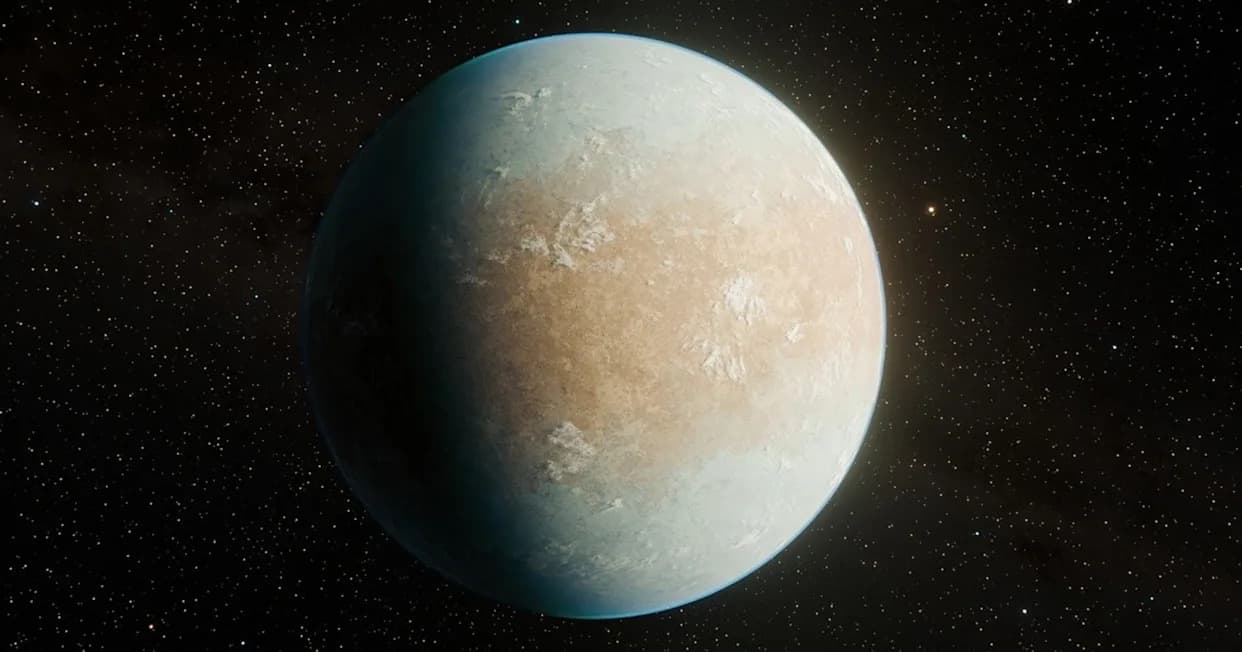
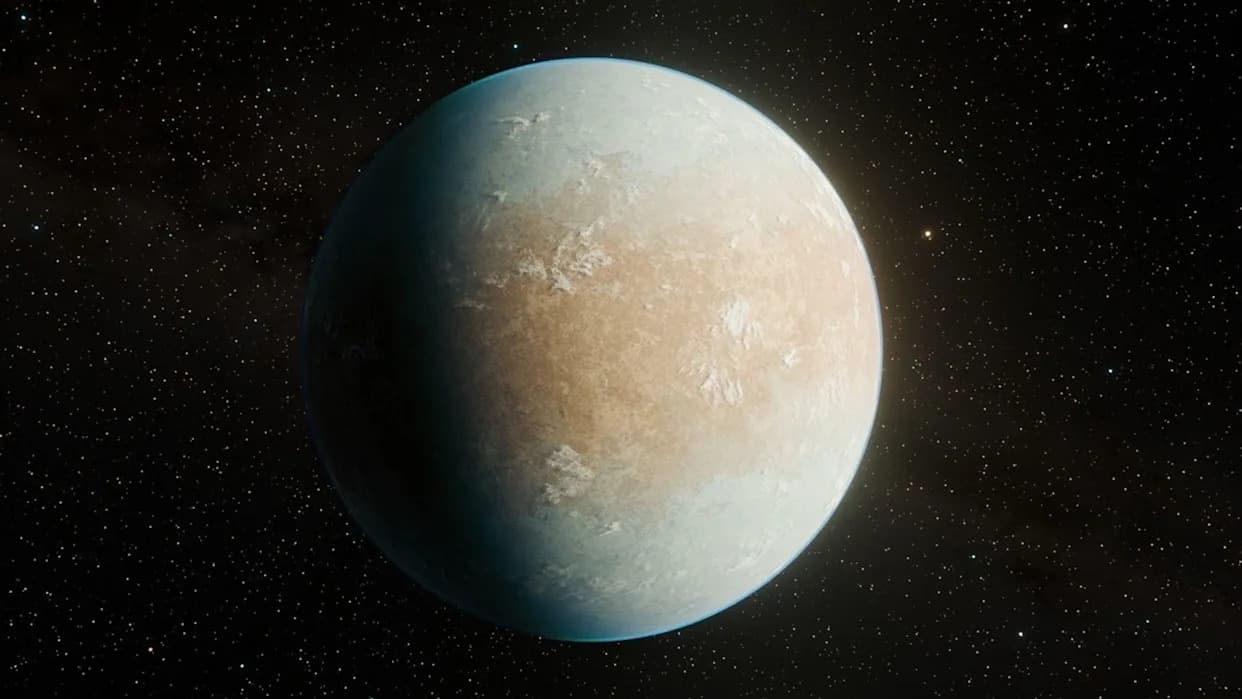
Researchers at UC Irvine present evidence for GJ 251 c, a likely rocky super‑Earth orbiting an active M‑dwarf about 18 light‑years away. The planet candidate lies in the habitable zone and was identified via small radial velocity shifts measured with HPF and NEID. While statistical models support the detection, direct imaging with upcoming 30‑meter‑class telescopes like the TMT will be needed to confirm and characterize the world.
Nearby Super‑Earth Candidate GJ 251 c Could Be Directly Imaged by Next‑Gen Telescopes

A team led by researchers at the University of California, Irvine reports evidence for GJ 251 c, a likely rocky super‑Earth orbiting an active M‑dwarf roughly 18 light‑years from Earth. The planet candidate lies in its star's habitable zone — a range of distances where temperatures could allow liquid water to exist on the surface — and its properties make it a compelling target for future direct imaging.
How it was found
The detection is based on precise radial velocity measurements taken with two high‑precision spectrographs: the Habitable‑zone Planet Finder (HPF) and NEID. As a planet tugs on its host star, it induces tiny periodic shifts in the star's spectrum. The team used those subtle signals, along with statistical modeling, to identify a periodicity consistent with a planetary companion several times the mass of Earth.
Why the system is challenging
GJ 251's host star is an active M‑dwarf, prone to starspots and flares that can produce signals similar to planetary radial velocity signatures. To address this, the researchers relied on HPF's infrared sensitivity — infrared observations can suppress some stellar activity signals that are stronger at visible wavelengths — and combined those data with NEID observations and careful statistical analysis to distinguish the planetary signal from stellar noise.
"What makes this especially valuable is that its host star is close by, at just about 18 light‑years away. Cosmically speaking, it's practically next door," said co‑author Paul Robertson, associate professor of physics and astronomy at UC Irvine.
Next steps: direct imaging
Although the models produce strong statistical confidence that GJ 251 c is a genuine exoplanet candidate, direct imaging would provide the definitive confirmation and enable atmospheric characterization. The candidate sits at an angular separation where planned 30‑meter‑class ground telescopes should be able to resolve faint planets from their bright host stars. In particular, the Thirty Meter Telescope (TMT), a planned giant observatory with University of California involvement, is expected to have the angular resolution and instrumentation to attempt direct imaging of systems like GJ 251.
"TMT will be the only telescope with sufficient resolution to image exoplanets like this one. It's just not possible with smaller telescopes," said lead author Corey Beard, now a data scientist at Design West Technologies and a former graduate student in Robertson's group. "While the detection is statistically significant, uncertainties remain due to instrument and analysis limitations. We need next‑generation telescopes — and community investment — to confirm and study this candidate."
Collaboration and support
The work brought together researchers from UC Irvine, UCLA, Pennsylvania State University, a Dutch university, and the University of Colorado Boulder. The project received support from the National Science Foundation's HPF exoplanet survey and from NASA/NSF NN‑EXPLORE and NASA ICAR programs.
For now, GJ 251 c stands out as a nearby, likely rocky super‑Earth in the temperate zone of a common stellar type and a clear test case for what the next generation of ground‑based telescopes can achieve in the search for potentially habitable worlds.
Help us improve.