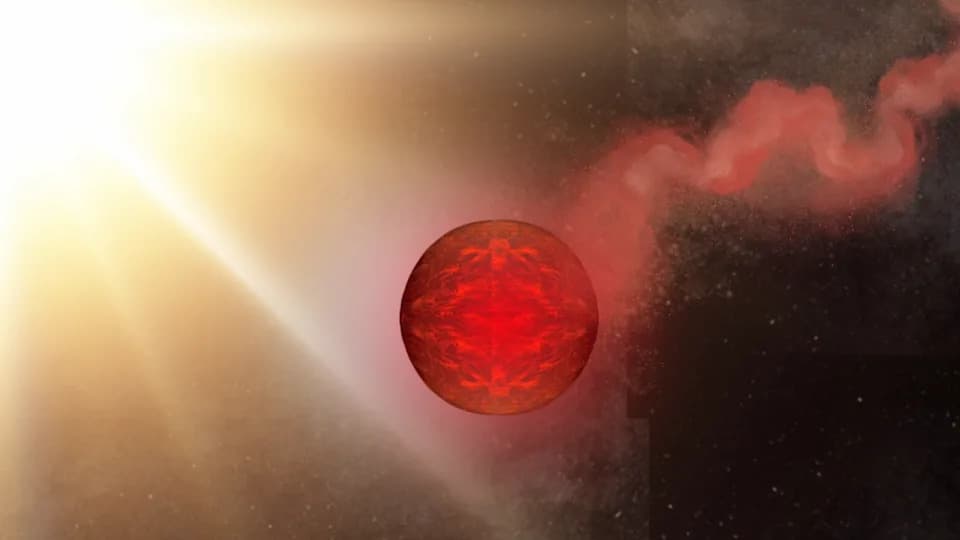
Astronomers have identified a candidate rocky world, HD-137010 b, roughly 150 light-years away that may be about 1.2× Earth’s mass and orbits a K-dwarf every 355 days. There is an estimated 51% chance it lies inside its star’s habitable zone, but it receives under one-third of Earth’s stellar flux and likely has equilibrium temperatures near −68 to −85°C. A CO2-rich atmosphere could permit liquid water, while Earth-like CO2 levels might drive a global "snowball". The finding comes from a single Kepler transit; confirmation will likely require missions such as ESA’s PLATO.
Frozen 'Earth' Candidate Discovered 150 Light-Years Away — Could It Hold Liquid Water?
Scientists Reveal a Frozen Bizarro Earth Only 150 Light-Years Away
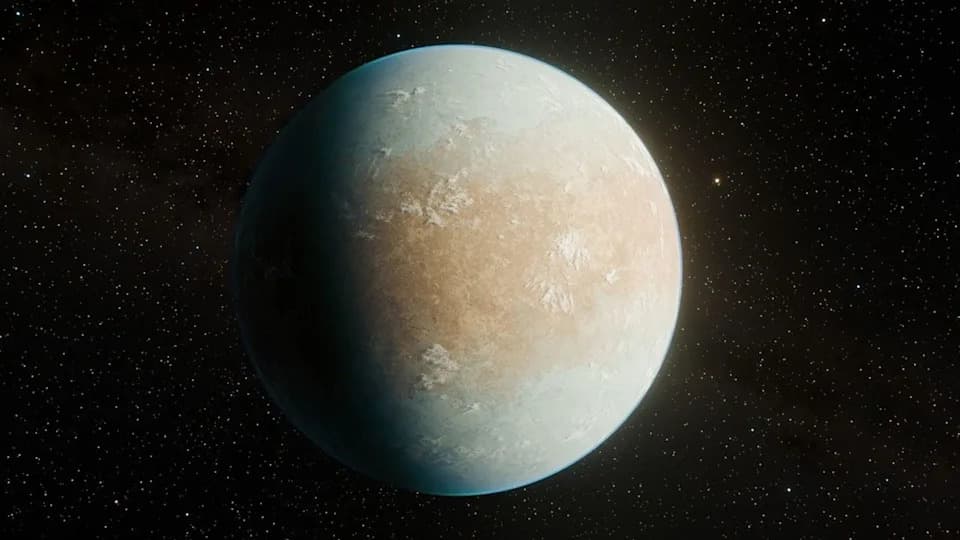
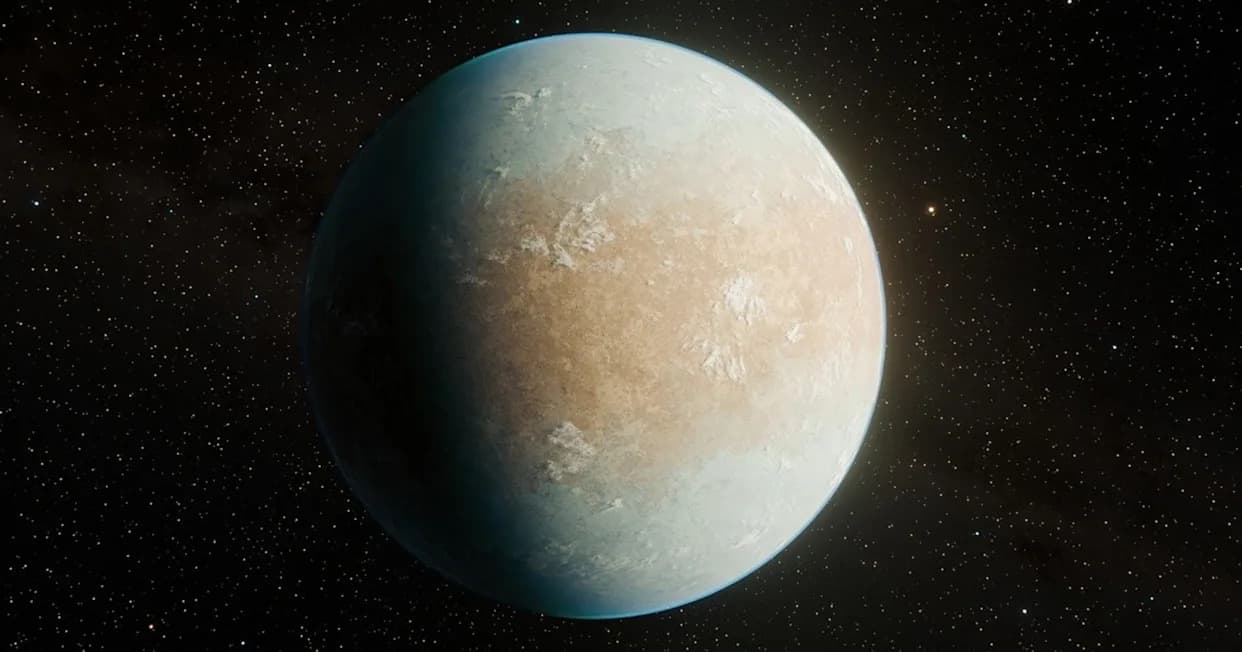
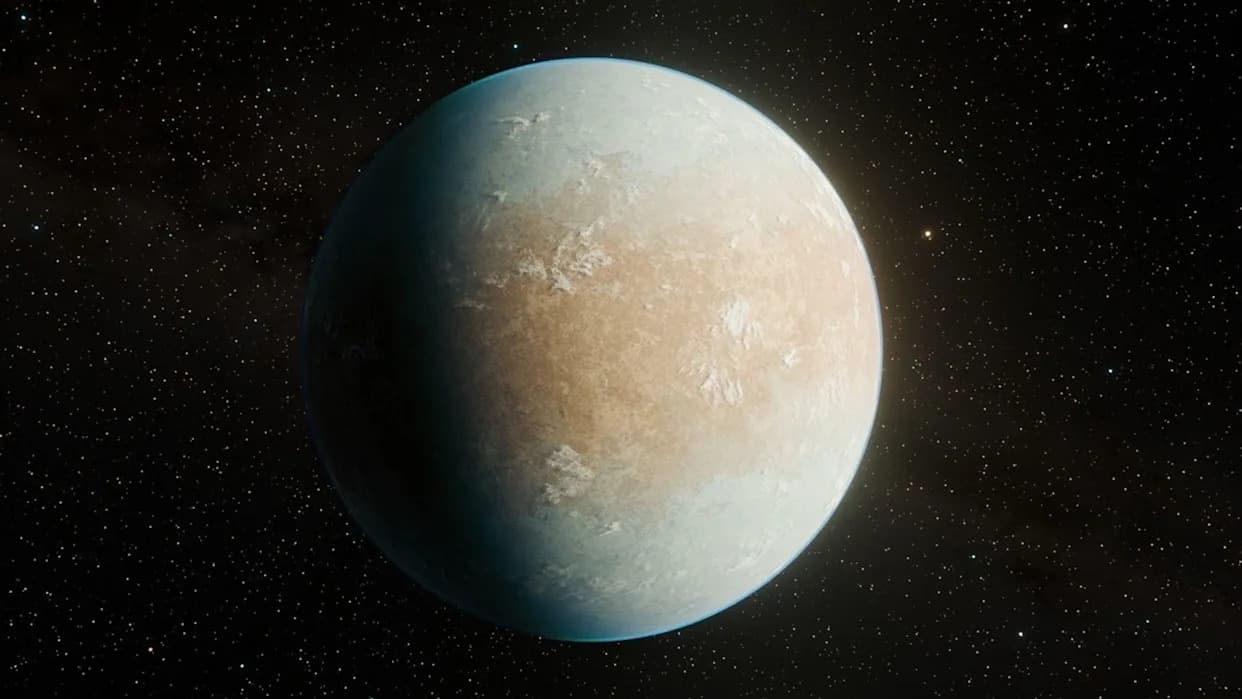
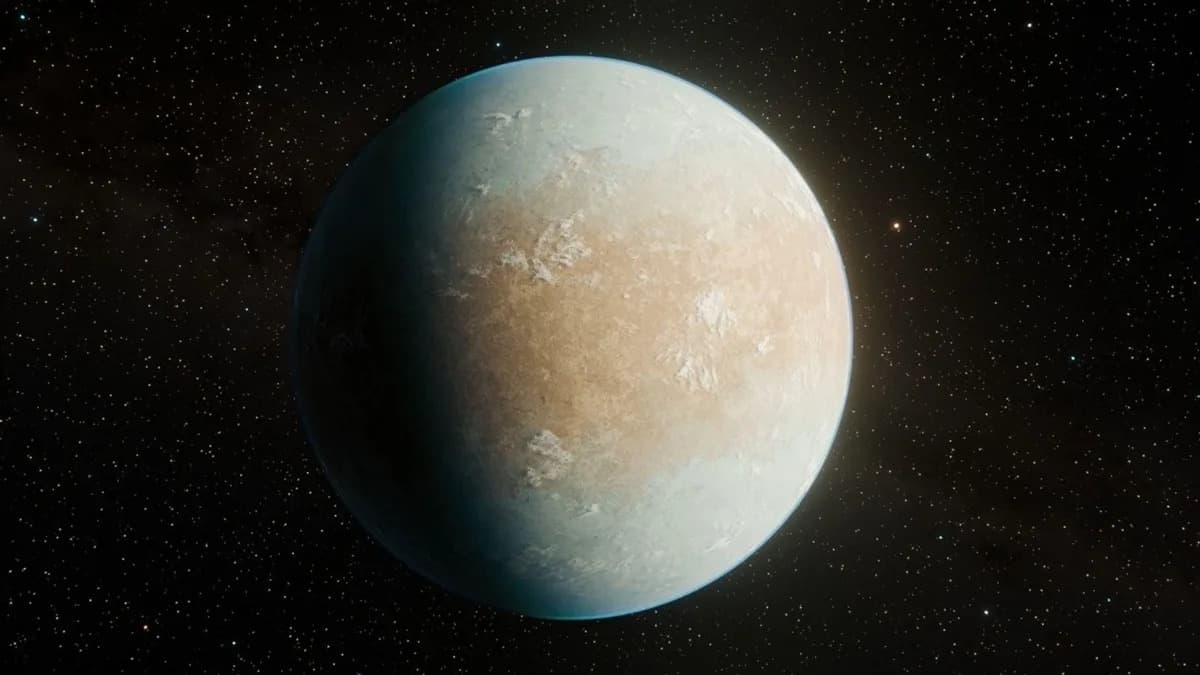
A team of astronomers has reported the discovery of a chilly, Earth-sized exoplanet candidate less than 150 light-years away. Designated HD-137010 b, the object appears slightly larger than Earth and is estimated to have roughly 1.2 times our planet’s mass. It completes an orbit around a mellow, orange K-type star in about 355 days, giving it a year similar in length to Earth's.
Discovery and Detection
The candidate was identified in data from NASA’s retired Kepler space telescope using the transit method, which detects tiny dips in a star’s brightness when a planet crosses in front of it. In this case astronomers observed a single transit, which is notable because Earth-like orbital periods typically require many years of monitoring to catch multiple transits and confirm a planet.
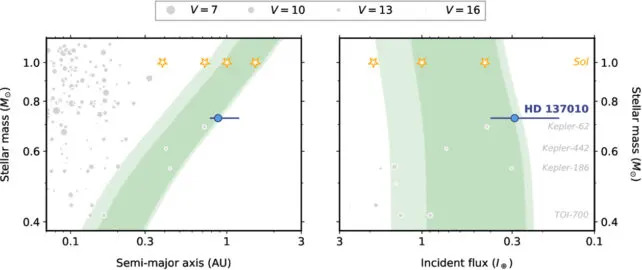
Plotting known rocky worlds around a range of stars shows the rarity of habitable zone (in green) Earth-like planets. On the right, the graph plots incident flux, or the amount of starlight a planet receives. The stars at the top of each graph are the rocky planets in the solar system. (Venner et al.,ApJL, 2026.)
Host Star: A Long-Lived K Dwarf
HD-137010 is classified as a K dwarf, with roughly 70% of the Sun’s size and mass. Because K dwarfs burn hydrogen more slowly than Sun-like G-type stars, they remain on the main sequence far longer—so long that the star’s expected main-sequence lifetime exceeds the current age of the Universe. Its cooler, dimmer nature affects the energy received by any orbiting planets.
Habitability and Climate
Based on HD-137010 b’s 355-day orbit, researchers estimate about a 51% probability that the planet lies just inside its star’s habitable zone—the region where liquid water could persist on the surface. However, the planet receives under one-third of the stellar energy Earth gets from the Sun. Simple equilibrium models place its likely surface temperature between −68°C and −85°C (−90°F to −121°F), colder than Mars in many scenarios.

Subscribe to ScienceAlert's free fact-checked newsletter
Atmosphere composition is the key uncertainty. The researchers note that a moderately CO2-rich atmosphere could provide enough greenhouse warming to allow liquid surface water in some cases. Conversely, if CO2 levels are similar to Earth's, HD-137010 b might enter a global "snowball" state, with widespread ice increasing its albedo and pushing temperatures toward ~−100°C.
"This is the first planet candidate with Earth-like radius and orbital properties transiting a Sun-like star bright enough for substantial follow-up observations," the team writes.
System Architecture and Next Steps
Current data show HD-137010 b as an isolated candidate, but the team notes that other planets could exist in the system—either interior or exterior to this orbit—potentially creating a solar-system-like architecture. Because confirmation requires more transits or complementary observations, definitive verification will likely wait for next-generation facilities such as the European Space Agency’s PLATO mission or other precise photometric and spectroscopic campaigns.
Why This Matters
HD-137010 b highlights that temperate, Earth-sized planets around Sun-like stars can be detected even from single-transit events, expanding the techniques available to find potentially habitable worlds. While it remains a candidate pending follow-up, the system offers a promising target for future study into climatic outcomes on cold, Earth-sized planets and the limits of habitability.
Publication: The discovery and analysis are reported in The Astrophysical Journal Letters.
Help us improve.