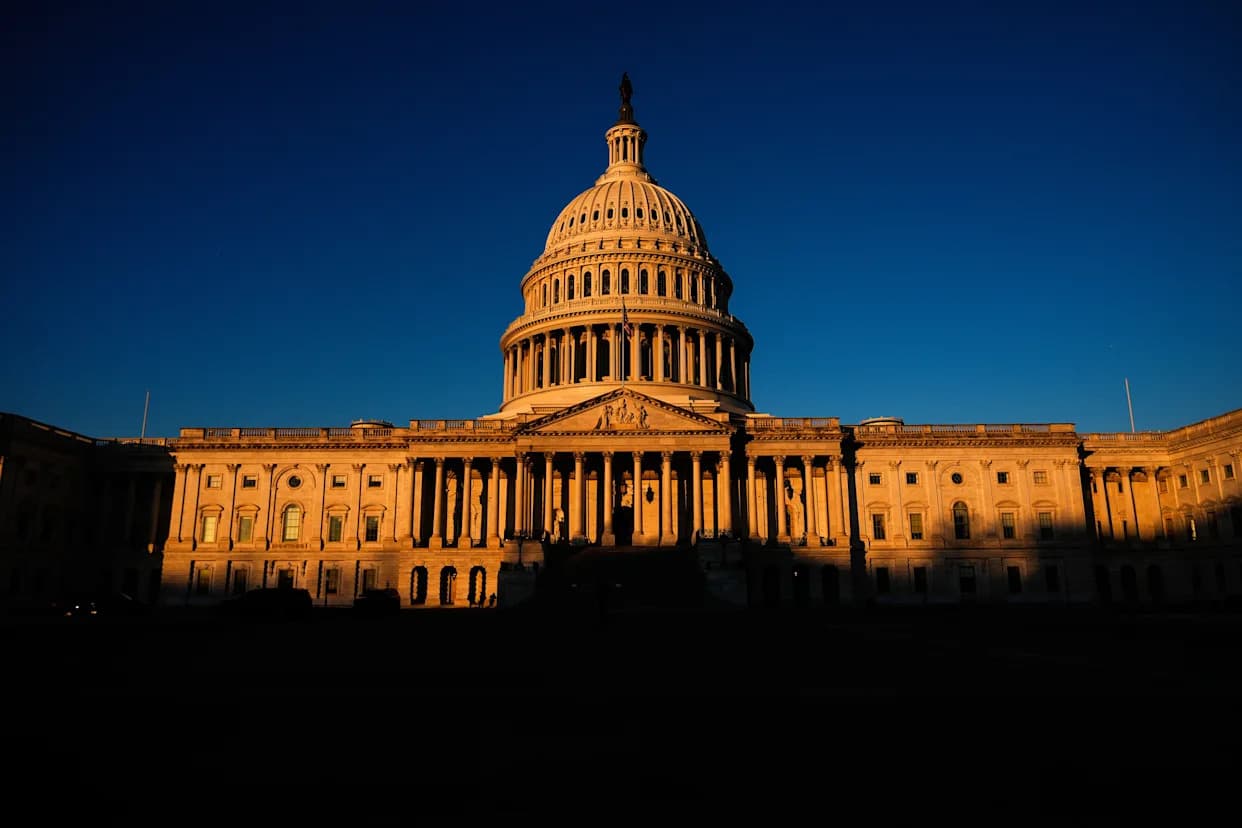
The 18th Congressional District in Houston has lacked steady representation since Rep. Sheila Jackson Lee died in July 2024, leaving roughly 800,000 residents without a continuous voice in the U.S. House. A November special election briefly seated Jackson Lee's daughter, while the party choice for the full term, Sylvester Turner, died 61 days after taking office. A delayed special primary, ongoing legal challenges to a mid-decade redistricting plan, and a January 31 runoff that could be followed quickly by another primary have created confusion and concern. Local leaders warn the disruption will harm vulnerable residents who rely on federal programs.
Like a pawn in a game: How Houston's 18th District went 13 months without steady representation

For more than three decades, Rep. Sheila Jackson Lee was the familiar, persistent voice of Texas' 18th Congressional District, known for close ties to the community and advocacy for Black and low-income Houstonians. Since her death in July 2024, the district of roughly 800,000 residents has been without a steady, long-term representative in the U.S. House.
What happened
The vacancy set off a chain of events that left the district effectively unrepresented for much of the next 18 months. In June 2024 Jackson Lee announced a pancreatic cancer diagnosis and said she would be occasionally absent from Congress. She died in July 2024. In a November special election to finish her term, her daughter Erica Lee Carter won and served until the term ended on January 3, 2025.
On the same night county Democrats selected former Houston mayor Sylvester Turner to be the party's nominee for the next full term. Turner, who had previously disclosed treatment for bone cancer, took office in January 2025 but died on March 5, just 61 days after assuming the seat. A month after Turner’s death, the governor scheduled a special primary for November 4. On November 4 the top two vote-getters, Amanda Edwards and Christian Menefee, advanced to a runoff set for January 31.
Impact on residents
Residents and local leaders say the absence of continuous representation has real consequences. The 18th includes many historically African American neighborhoods and a growing Hispanic population. More than 150,000 people in the district are enrolled in Medicaid and about 293,000 households receive SNAP benefits. Important House votes on major domestic-policy measures have taken place while the seat remained vacant, meaning constituents had no consistent advocate during decisions that affect benefits and services.
'The congressional 18th is being used like a pawn in a game,' said Joetta Stevenson, president of the Greater Fifth Ward super neighborhood. 'We are historically an African American community. We have a huge population of Hispanics in this community. We have people in need, and without federal representation, we are all going to suffer.'
Redistricting and legal uncertainty
The political uncertainty has been compounded by a mid-decade redistricting drive led by the governor and state House Republicans. A new map enacted this year would reshape the 18th and absorb much of the current 9th District, while shifting other districts to favor Republican prospects in 2026. Two judges on a three-judge panel recently invalidated that map, finding evidence of racial discrimination in the redraw. The state appealed and the Supreme Court has paused the panel's ruling while it reviews the case.
That legal limbo creates another problem: if the new map is allowed to stand, the winner of the January 31 runoff would be an incumbent for only about five weeks before facing a March primary in a reconstituted district. That primary could pit the runoff winner against Rep. Al Green, whose home would be placed in the new 18th. Green has said he plans to run where his home and longtime constituents are located.
'It's just absolute confusion and mayhem,' said Christian Menefee. 'A lot of my campaign isn't even to get people to vote for me, it's to get people to understand what the hell is going on.'
Local leaders warn of disengagement
Community activists and local Democratic leaders say repeated elections, shifting maps, and the appearance of political gamesmanship risk voter fatigue and disengagement. Amanda Edwards warned that confusion and chaos can drive voters to stay home, especially when timing and district lines keep changing.
Others lament the loss of institutional memory when long-serving, locally engaged lawmakers leave office without a clear transition. 'We are so far behind because we didn't get a knowledge transfer from Sheila,' said Fred Wood, a Democratic precinct chair. 'We are so far behind because we didn't get a knowledge transfer from Sylvester Turner.' Local organizers say rebuilding those relationships and briefing new officeholders will be necessary to restore steady advocacy for the district's most vulnerable residents.
Outlook
The January 31 runoff will determine who fills the seat for now, but the district's political future could shift again depending on the outcome of the pending legal fight over redistricting. With the House majority narrow and every seat politically consequential, the prolonged vacancy and continuing uncertainty have national as well as local implications.
Help us improve.