
Summary: 2025 widened divisions inside the Democratic Party and created a group of high-profile political losers whose missteps will influence the 2026 landscape. Progressive momentum produced primary challenges to leaders such as Hakeem Jeffries and Katherine Clark, while Gavin Newsom’s national prominence raised questions about his executive record. Renewed scrutiny of Joe Biden’s legacy and Chuck Schumer’s handling of a protracted shutdown intensified debate over Democratic leadership and strategy.
The Biggest Political Losers of 2025: How Democratic Missteps Reshaped the 2026 Battlefield

Senate Minority Leader Chuck Schumer, D-N.Y., right, and House Minority Leader Hakeem Jeffries, D-N.Y., walk speak to members of the media outside the West Wing at the White House in Washington, Monday, Sept. 29, 2025, in Washington.
2025 exposed deep fissures within the Democratic coalition and produced a clear roster of high-profile political setbacks that are already reshaping the terrain ahead of 2026. From an emboldened progressive wing pressing establishment figures to national leaders who squandered political capital, the year left a string of cautionary examples for a party out of power.
Progressives Push Back — Moderates Brace For 2026
Progressive activists and elected officials enjoyed heightened visibility in 2025, pressing for a sharper contrast with Republican policies and signaling a desire to remake the party’s agenda. New voices — including New York Mayor-elect Zohran Mamdani and Representative Alexandria Ocasio-Cortez — energized the left flank and pointed to more ambitious proposals for government programs.
That energy produced primary threats to House Minority Leader Hakeem Jeffries (D-N.Y.) and House Whip Katherine Clark (D-Mass.). Progressive challengers criticized both leaders for tempering their response to the Republican administration. Moderates have warned that intra-party fights risk alienating swing voters in the political center as Democrats prepare for the midterms.
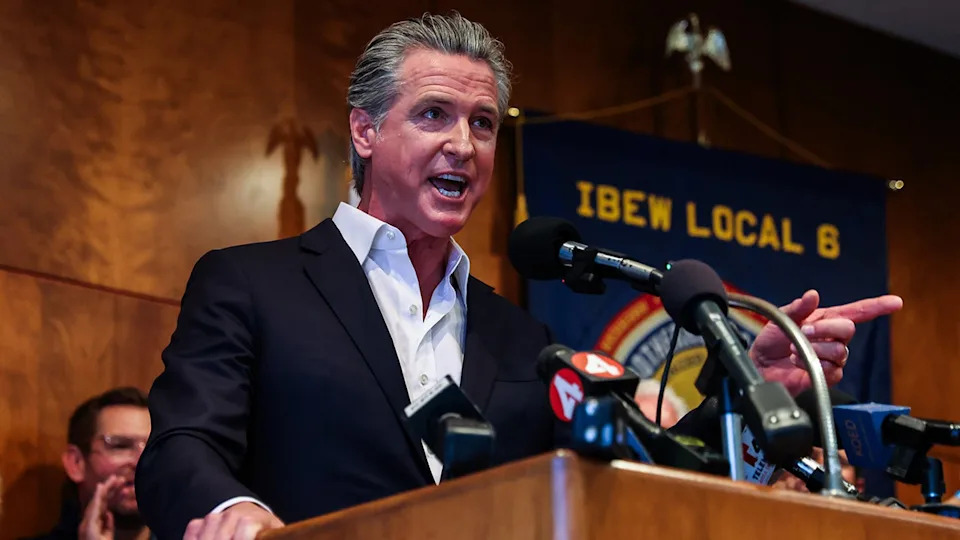
California Gov. Gavin Newsom speaks during a campaign event in support of Proposition 50 in San Francisco, Monday, Nov. 3, 2025.
Gavin Newsom’s National Profile — Momentum and Limits
California Governor Gavin Newsom burnedish his national profile by positioning himself as a prominent critic of Republican policies and by pursuing a high-profile redistricting plan intended to reduce Republican seats. The move elevated his standing among national Democrats but drew mixed reactions from allies who questioned whether mirroring partisan tactics was politically wise.
Newsom’s critics argue he lost valuable time in 2025 to demonstrate a sustained executive record that would convince voters he can translate popularity into governing achievements — a potential liability if he intends to seek higher office in the coming years.
New Scrutiny of Biden’s Legacy
One year after leaving office, former President Joe Biden’s legacy faced renewed scrutiny. The Republican administration’s early executive actions produced a quick, visible change in border encounters, undercutting a prominent Biden-era claim about border enforcement.
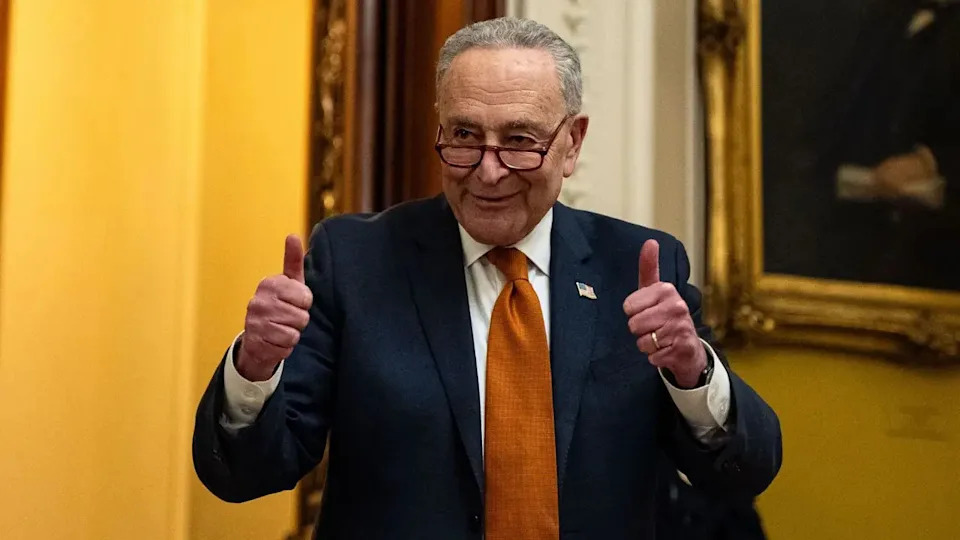
Senate Majority Leader Chuck Schumer gives a thumbs up as he walks out of the Senate Chamber after speaking on the floor of the Senate on Dec. 20, 2024.
Meanwhile, congressional inquiries and investigative reporting raised questions about how much authority Biden delegated to aides and how his team managed public messaging amid concerns about his age and fitness for office. Those developments deepened Democrats’ internal debates over messaging and succession while offering Republicans material to question Democratic transparency.
Chuck Schumer’s Tough Year
Senate Minority Leader Chuck Schumer (D-N.Y.) emerged as one of the most politically damaged figures in 2025. He drew heavy criticism for the handling of a 43-day government shutdown that ended with few gains for Democrats and for apparent difficulty keeping the caucus united. Some critics accused Schumer of trying to thread a needle between appeasing progressive demands and finding a winning Senate strategy — and failing at both.
Schumer also faced scrutiny for evasiveness when asked about local races, including the New York City mayoral contest and his stance toward progressive nominee Zohran Mamdani. As the year closed, doubts persisted about his ability to lead the Senate Democratic caucus into the next electoral cycle.
Outlook: The end of 2025 left Democrats confronting strategic questions about leadership, messaging and the balance between invigorating the base and appealing to swing voters. How the party reconciles progressive energy with broader electoral strategy will be one of the defining political dramas heading into 2026.


