
The sudden death of Rep. Doug LaMalfa (R‑Calif.) during emergency surgery has further tightened the Republican majority in the House, already slim after the resignation of Marjorie Taylor Greene. With current vacancies, Republicans hold a vulnerable 218–213 edge; special election outcomes and health‑related absences could change the balance. Constitutional rules require special elections to fill House seats, making a rapid mid‑Congress switch unlikely but not impossible. Lawmakers say the majority’s fate feels “day‑to‑day.”
Day-to-Day: Rep. Doug LaMalfa’s Sudden Death Tightens GOP’s Razor-Thin House Majority

Rep. Doug LaMalfa, R-Calif., died Tuesday.
In 1991, during a three-game series at Chavez Ravine, legendary Dodgers announcer Vin Scully described Andre Dawson as “day-to-day” with a bruised knee — then paused and added, “Then again, aren’t we all?” That offhand reflection on life’s fragility frames the mood on Capitol Hill this week after the sudden death of Rep. Doug LaMalfa (R-Calif.).
LaMalfa’s Death and a More Precarious Majority
LaMalfa, 65, died this week during emergency surgery after an aortic aneurysm, a loss that stunned colleagues across party lines. “It really shook us,” House Speaker Mike Johnson (R-La.) said. Rep. Tom McClintock (R-Calif.), whose district borders LaMalfa’s, described him as “the kindest man I ever knew,” stressing that he meant “the kindest.”

Rep. Marjorie Taylor Greene, R-Ga., resigned from Congress, leaving yet another vacancy and further thinning Republicans' already scant majority.
LaMalfa’s passing is the seventh death among House members since April 2024; the previous six were Democrats. Combined with the recent resignation of former Rep. Marjorie Taylor Greene (R-Ga.), the GOP’s working edge in the House has narrowed further.
What The Numbers Mean
Counting the two latest vacancies, Republicans currently have a 218–213 advantage with 431 seated members and four open seats. If a Democrat wins the pending Texas special election runoff between Christian Menefee and Amanda Edwards, the balance would be 218–214 with 432 seated members and three vacancies. On paper the margin appears to be four, but in practice the majority is far more fragile: Republicans can lose only a single vote on the floor and still pass legislation without Democratic support. Losing two votes would create a 216–216 tie; by House rules, tied measures fail.

Speaker of the House Mike Johnson, R-La.
The fragility of that margin was underscored as news arrived that 80‑year‑old Rep. Jim Baird (R-Ind.) was hospitalized after a car accident. Baird is expected to recover but is not on the Hill this week to vote. Rep. Tim Burchett (R‑Tenn.) captured the mood bluntly: “We are one flu season away from losing the majority.” The Centers for Disease Control and Prevention has warned the U.S. is experiencing its worst flu season since 1997–98 and this week reported a new flu variant.
Why Mid‑Congress Flips Are Rare
A key constitutional constraint shapes the prospects for a swift turnover: governors cannot appoint replacements to the House. Unlike Senate vacancies, House seats must be filled by special election, and those contests can take months to schedule and complete. Historically, the House has rarely changed hands mid‑Congress because of its size and the time required to fill vacancies.
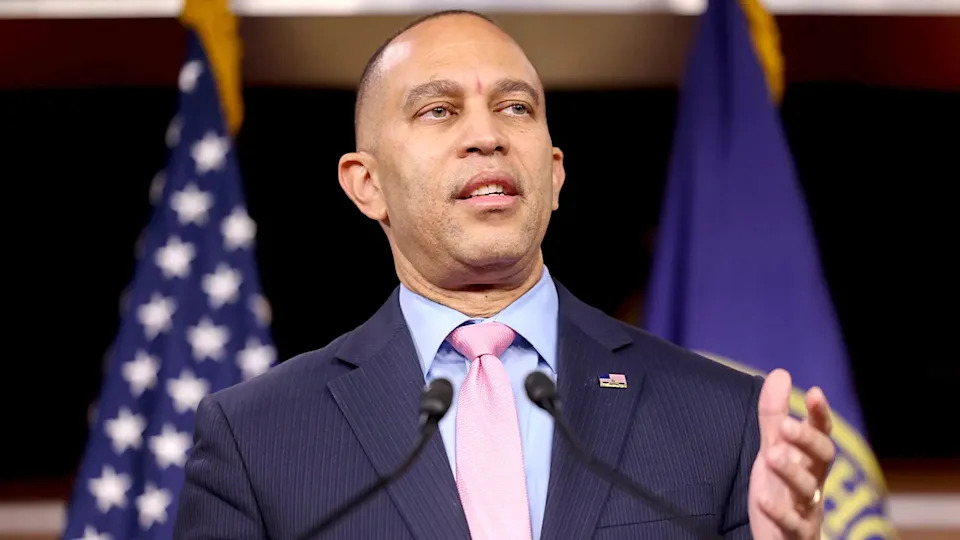
House Minority Leader Hakeem Jeffries, D-N.Y., called LaMalfa a "great member of Congress."
Speaker Johnson noted, “We’ve been working with a razor‑thin majority since I became speaker … at many points in the last year, we had a one‑ or two‑vote majority.” Asked about worries that more resignations or health events could flip control, he replied philosophically about focusing on the day and not worrying about tomorrow.
Calendar, History and the 1930s Anomaly
There is an unusual historical precedent that highlights how calendar timing can matter. Before the 20th Amendment changed the congressional calendar, new Congresses convened in December — roughly 13 months after the November election. After the 1930 midterms, a long interregnum and a rash of deaths among Representatives‑elect allowed Democrats to win enough subsequent special elections to seize control from Republicans before the new Congress actually convened. Modern scheduling and faster communication make such an outcome unlikely today, but the episode is a reminder that timing can be consequential.
What’s Ahead
Several special elections are on the horizon. A contest to fill Marjorie Taylor Greene’s seat is set for March 10. A special election to replace LaMalfa is expected in the spring or summer, and other special contests are already scheduled in various states. Those outcomes, along with any additional resignations or health‑related absences, will determine whether the GOP can sustain its narrow control.
As Vin Scully’s aside to Andre Dawson — “Aren’t we all?” — suggests, the political arithmetic in Washington is, for now, day‑to‑day. Lawmakers and citizens alike are reminded of how quickly circumstances can change.
Lawmakers are mourning LaMalfa, who was respected across the aisle and remembered in remarks by leaders including House Minority Leader Hakeem Jeffries (D‑N.Y.), who called him “a great member of Congress” and led a moment of silence at a forum about the Jan. 6 attack.
Help us improve.


