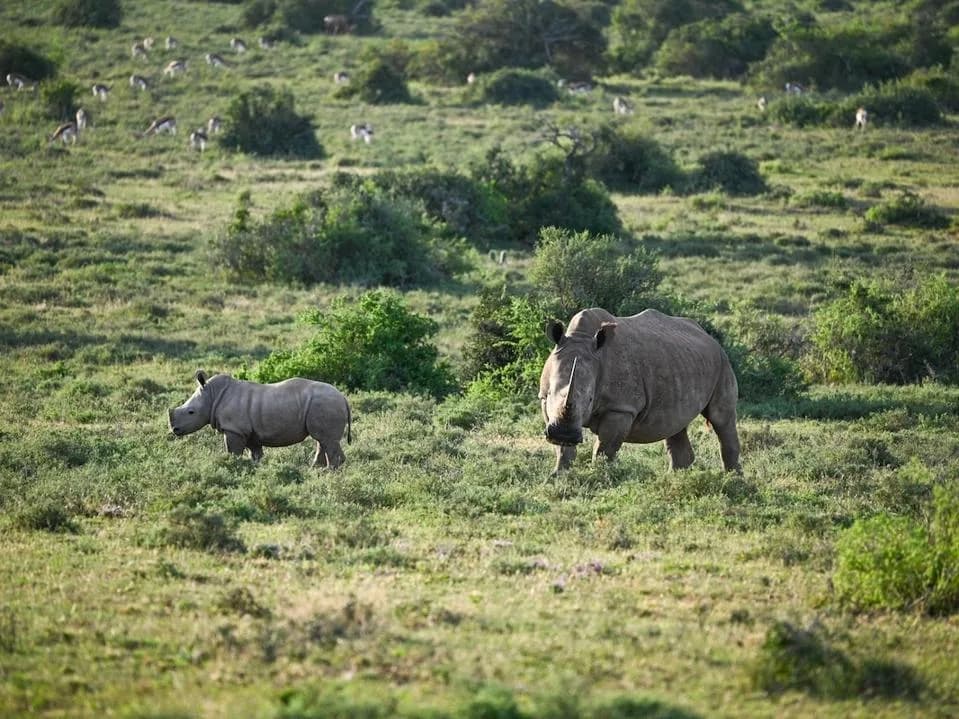
BIOPARC Valencia announced the birth of a northern white rhino calf on Nov. 4 after a 491-day pregnancy, the result of an 18-year conservation program at the park. The attentive mother and lively newborn are being closely monitored and will gradually join the other rhinos. The park will publish a shortlist of names and invite the public to vote.
Rare Northern White Rhino Calf Born at BIOPARC Valencia After 491-Day Pregnancy — Win for 18-Year Conservation Effort

BIOPARC Valencia on Spain’s east coast has welcomed a rare northern white rhino calf born on Nov. 4 after a 491-day pregnancy — nearly a year and a half. The birth caps an 18-year program at the park and forms part of wider international conservation efforts for this critically endangered subspecies.
Birth and early care
The park announced the arrival publicly on Nov. 6. Zoo staff say the mother is attentive and the calf is lively. Keepers are maintaining strict vigilance during these crucial first days, monitoring both animals closely while they remain in their enclosure before gradual integration with the other rhinos.
“On day 491 of gestation, BIOPARC Valencia witnessed the exciting and live birth of its first northern white rhino (Ceratotherium simum cottoni),”
In a follow-up update marking the calf’s two-week milestone, the park shared photos showing steady development under maternal care. The young rhino is currently exploring indoor facilities and will begin venturing onto the outdoor savanna in stages as it prepares to join the conservation group at the park.
Name and public participation
The calf has not yet been named. BIOPARC Valencia said it will soon publish a shortlist of name options and invite the public to vote for a favorite.
Why this matters
White rhinos are the planet’s second-largest land mammals and historically live in two distinct African regions. Although their skin is gray, the species name “white” likely comes from the Afrikaans word wyd, meaning “wide,” a reference to the animal’s broad, square lips that early English speakers may have misread as “white.”
There are two subspecies of white rhino: the southern white rhino (which recovered in number after near-extinction and now exists in larger, protected populations) and the northern white rhino, the latter of which is considered critically endangered. Births like this one at BIOPARC Valencia represent an important milestone for conservationists working to stabilize and recover vulnerable rhinoceros populations.
Source: BIOPARC Valencia
Help us improve.