Summary: Astronomers report that asteroid 2022 RD2, an Arjuna‑class near‑Earth object, could be temporarily captured as a mini‑moon around 2043–44 for several months before returning to a more chaotic orbit. The Madrid team's simulations show a Lyapunov time under 20 years, meaning its path becomes unpredictable quickly; some runs produce potential Earth‑impact trajectories beginning around 2080. NASA's CNEOS also lists the object but estimates collision odds below 0.1 percent and notes the asteroid is roughly the size of a three‑story building. Continued observations are needed to refine these projections.
Tiny Asteroid 2022 RD2 Could Become a Mini‑Moon in 2043–44 — Then Drift into Low‑Probability Impact Paths

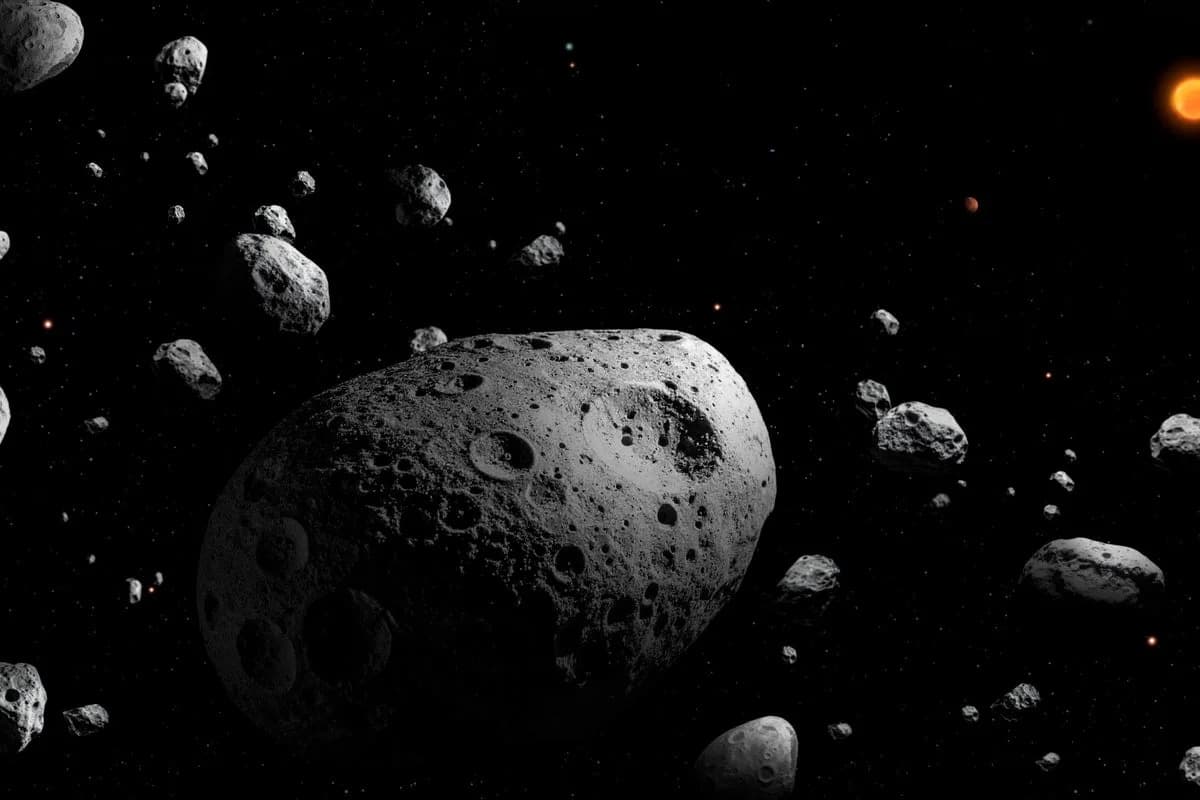
A small near‑Earth asteroid, 2022 RD2, may be briefly captured by Earth’s gravity as a temporary "mini‑moon" in 2043–44 and — after leaving Earth’s neighborhood — could later evolve onto more unpredictable trajectories that include a very small chance of collision decades from now.
What scientists found
Researchers in Madrid, led by brothers Carlos and Raúl de la Fuente Marcos of Universidad Complutense de Madrid, analyzed the asteroid in a paper published in Research Notes of the American Astronomical Society. Their simulations show 2022 RD2 follows a highly unstable orbit, with a Lyapunov time of under 20 years — a measure indicating the orbit becomes chaotic and hard to predict on short timescales. Because the asteroid approaches Earth at unusually low relative speed, our planet could temporarily trap it, producing a short‑lived satellite or "mini‑moon."
Possible temporary capture
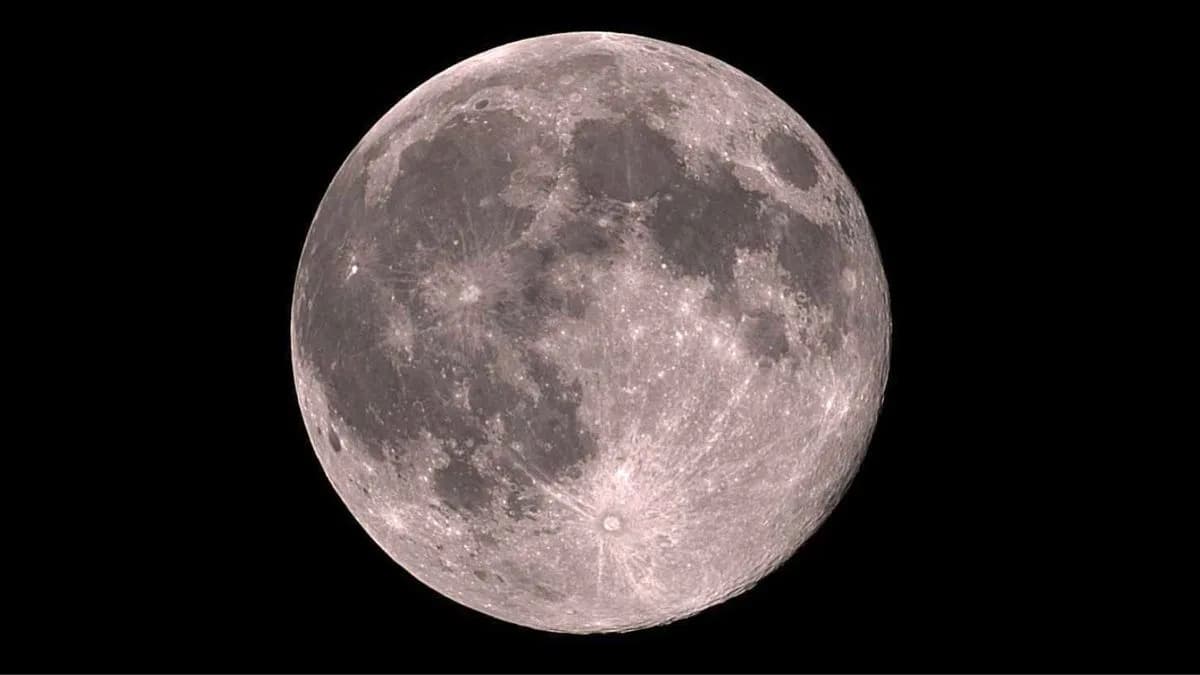
The Madrid team finds that 2022 RD2 could be captured into a temporary orbit around Earth sometime between 2043 and 2044, remaining bound for several months under standard capture criteria: a close approach, a drop in relative speed, and an interval during which Earth’s gravity dominates its motion. After that interval the asteroid would escape and resume a more erratic solar orbit.
Impact risk and NASA assessment
Some of the Madrid group’s model runs produce trajectories that intersect Earth beginning around 2080, effectively turning the object from a near‑Earth body into a potential impactor within a human lifetime. NASA’s Center for Near‑Earth Object Studies (CNEOS) also lists 2022 RD2 on its risk table but projects any potential impact dates later than the Madrid team’s earliest runs and estimates the collision probability at under 0.1 percent. Navigation engineer Davide Farnocchia noted that the asteroid is small—roughly the size of a three‑story building—so any impact would not create major regional damage.
Carlos de la Fuente Marcos: "These objects are fascinating because their Earth‑like orbits make them easier to reach, and they may be fragments from recent lunar impacts. But their short visibility windows make them difficult to study in detail."
Why Arjunas matter
2022 RD2 belongs to a rare class of near‑Earth objects called Arjunas: bodies that travel around the Sun on orbits very similar to Earth’s and sometimes drift by at unusually low speeds. Their accessibility makes them attractive targets for scientific missions or future resource prospecting, and studying them could shed light on solar system dynamics and possible links to lunar ejecta.
Although some small objects detected near Earth later turn out to be spacecraft hardware, the Madrid team regards 2022 RD2 as almost certainly natural. The authors emphasize that while their models do not definitively predict a future collision, they cannot yet rule it out. Continued observations over coming years will be essential to refine the asteroid’s trajectory and the timing and duration of any temporary capture.
Bottom line: 2022 RD2 is a small, dynamically unstable Arjuna that could become a short‑lived mini‑moon in the mid‑2040s and carries a very low but nonzero long‑term impact risk; scientists will monitor it to improve future predictions.
Help us improve.