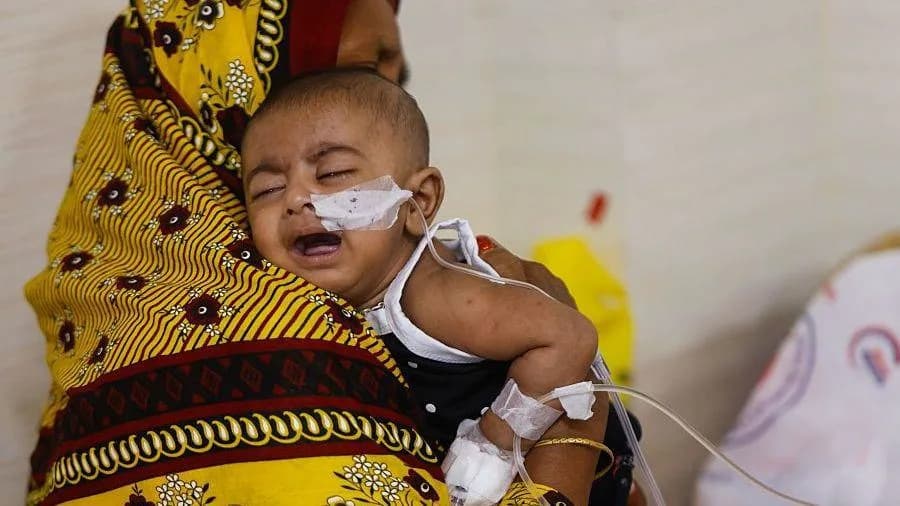
Argentina's childhood vaccination coverage fell sharply in 2024, with fewer than half of some five- and six-year-old cohorts receiving key vaccines, according to a health ministry data analysis by the Argentinian Paediatric Society. All vaccine series examined were below the 95% threshold for herd immunity. Experts attribute the collapse to access barriers driven by major healthcare budget cuts, reduced outreach, and rising post-pandemic vaccine mistrust. Authorities warn the decline risks the return of eliminated diseases; Argentina is already seeing increases in hepatitis A, measles and a whooping cough outbreak linked to child fatalities.
Argentina's Child Vaccination Rates Plummet to Historic Lows, Raising Risk of Disease Resurgence

Argentina's childhood and adolescent vaccination coverage fell to historic lows in 2024, according to an analysis by the Argentinian Paediatric Society (SAP) of health ministry data. Experts warn the decline could allow diseases once controlled or eliminated to re-emerge.
Key findings
The SAP analysis found that fewer than half of five- and six-year-olds received several essential vaccine doses in 2024, and every vaccine series reviewed was below the 95% coverage level typically considered necessary for herd immunity. Only 46% of five-year-olds received the MMR (measles, mumps and rubella) vaccine in 2024, down from about 90% in 2015–2019. Polio booster coverage for five-year-olds fell from 88% to 47%, and protection against whooping cough, diphtheria and tetanus dropped from 88% to 46% over the same period.
Impact on infants and early childhood
The decline is especially worrying among infants. The SAP estimates that coverage of the third dose of the pentavalent vaccine and the inactivated polio vaccine—both administered around six months—fell by an average of 10 percentage points compared with pre-pandemic levels. That shortfall could mean more than 115,000 infants did not complete the recommended schedules protecting them from diphtheria, hepatitis B, polio and whooping cough.
“We are facing a scenario of collective immunological fragility. The current figures not only compromise individual immunity, but also put public health as a whole at risk,” said Dr Alejandra Gaiano, a paediatric infectious disease specialist at the SAP.
Causes
Experts point to access barriers as the primary driver of the decline, compounded by Argentina’s deepening economic crisis and steep cuts to public spending under President Javier Milei. Since taking office in December 2023, the administration has reduced the healthcare budget, which SAP says has fallen by about 48% in real terms. The result has been reduced clinic hours, fewer media and outreach campaigns, and cuts to door-to-door and school-based vaccination drives that previously helped maintain high coverage.
“At one time, outreach activities were carried out—vaccinators would go door to door and vaccinations were offered in schools,” Gaiano said. She added that many parents also now face greater difficulty affording travel or taking time off work to attend clinics.
The SAP cautioned that changes in how some municipalities recorded immunisations in 2023 likely contributed in part to the apparent fall in coverage, but said this would not have had a substantial impact and that levels remain critically low.
Vaccine confidence and disease signals
Vaccine mistrust that emerged during the Covid-19 pandemic has also influenced uptake. “Argentina previously had almost no anti-vaccine groups; the pandemic generated some mistrust of the Covid vaccine which has spread to other vaccines,” Gaiano said. Elizabeth Bogdanowicz, an SAP infectious disease specialist, noted it has become common for fewer than 70% of children to have received their mandatory vaccines in some areas.
Public-health experts warn the low coverage could lead to the re-emergence of diseases such as hepatitis A, whooping cough, measles and polio. Argentina has reported a large number of hepatitis A cases this year and an uptick in measles. The country is also confronting a whooping cough outbreak: cases in 2025 are three times higher than the previous year, and the SAP reports five child deaths linked to the outbreak so far.
The ministry of health was approached for comment.
Help us improve.