The US-backed $1.6m trial testing hepatitis B vaccine timing for newborns in Guinea-Bissau has been halted after Africa CDC raised serious ethical concerns about withholding a proven vaccine. Yap Boum said the study will only proceed if redesigned to meet ethical standards, and Africa CDC is supporting Guinea-Bissau officials in that process. Experts condemned the original design as exploitative, while the Danish research team defends its hypotheses about vaccines’ nonspecific effects. Guinea-Bissau plans universal newborn vaccination by 2027.
US-Funded Hepatitis B Newborn Trial in Guinea-Bissau Halted After Ethical Outcry
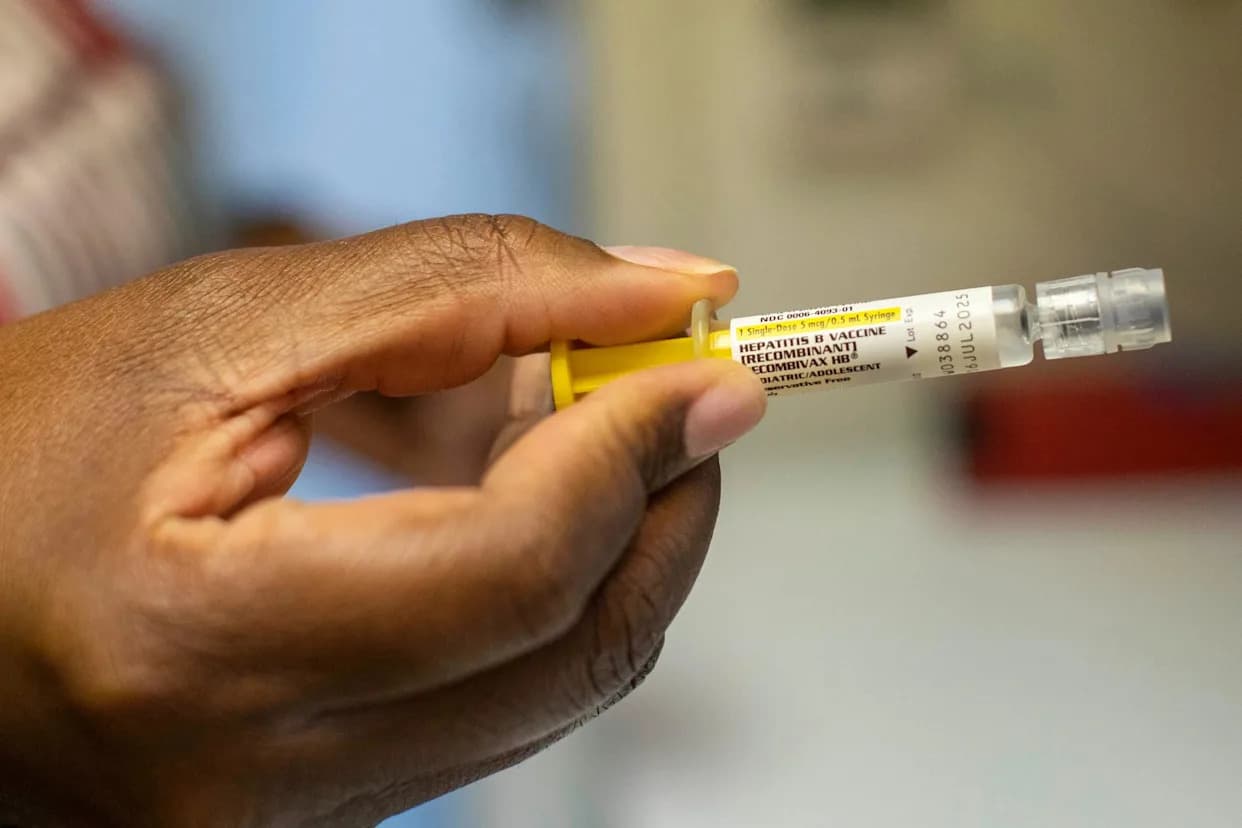
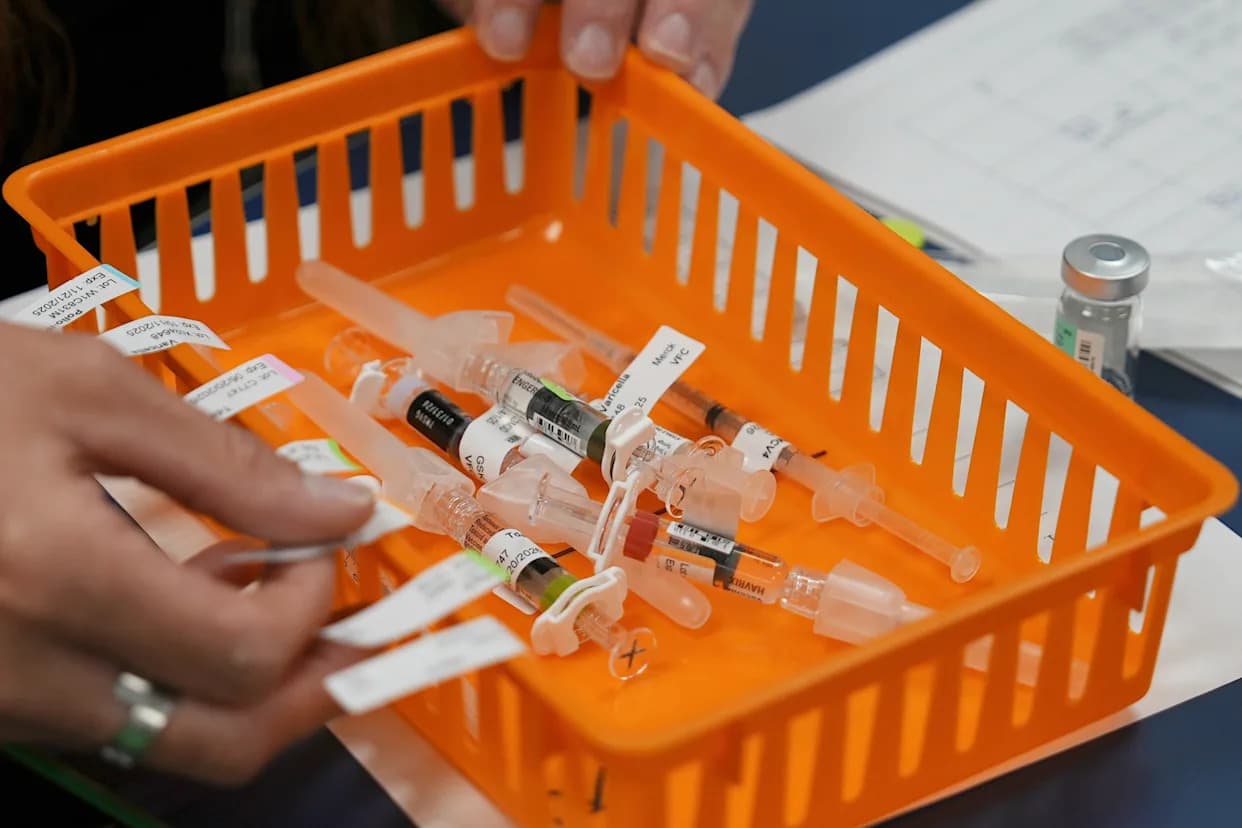
A hepatitis B vaccine in Atlanta, Georgia, on 29 September 2023.Photograph: Alyssa Pointer for The Washington Post via Getty Images
The controversial US-funded trial testing the timing of the hepatitis B vaccine in newborns in Guinea-Bissau has been cancelled, Africa Centres for Disease Control and Prevention (Africa CDC) senior official Yap Boum announced at a press briefing.
“The study has been cancelled,” Boum said, explaining that the $1.6m project—funded under the oversight of Robert F. Kennedy Jr., the HHS secretary and a longtime vaccine skeptic—provoked widespread anger because it appeared to withhold a vaccine known to prevent hepatitis B in a country with a very high disease burden.
Why the Trial Was Halted
Boum said Africa CDC supports research that can inform policy for the continent but only when it adheres to accepted ethical norms. “The way the study was designed was a big challenge,” he said, adding that the trial raised “critical questions on the ethics of the trial.”
A leaked protocol published by Inside Medicine intensified scrutiny. An HHS official later told the Guardian that the leaked protocol was not final and is being revised, indicating the trial would not proceed under the terms described in the leaked document.
Local Context and Political Disruption
Guinea-Bissau, which experienced a coup in November and has replaced many top officials including at the health ministry, reportedly remains in discussions with US partners about how any trial could be conducted ethically. Africa CDC said it has assembled a support team to help ensure any future study meets ethical regulations.
Expert Reaction
Prominent vaccine expert Paul Offit welcomed the cancellation. “The good guys won,” he said, calling the decision “extremely heartening” and criticizing the trial design for potentially denying life-saving vaccination to half of participating infants. Offit suggested the $1.6m could instead be used to vaccinate as many newborns as possible at birth.
“You can’t treat children like this, you can’t treat people like this,” Offit said.
Boghuma Titanji, an assistant professor at Emory University who studies vaccine misinformation in Africa, called the proposed study “damaging” and warned of long-term harms to public trust. She argued that randomized trials in Africa are necessary but should be led by African scientists and driven by local priorities.
Design Concerns and Scientific Debate
Critics highlighted that, as reported, the trial would randomize newborns so that roughly half might receive the hepatitis B vaccine at birth while the other half would not—raising ethical concerns in a setting where the vaccine is proven to prevent chronic infection and its long-term complications.
The Danish research team behind the study has defended the project, citing hypotheses about vaccines’ nonspecific effects on overall child health. That line of research is contested: other Danish scientists re-analysed prior studies and reported no statistically significant nonspecific effects in a new preprint that has not yet been peer-reviewed.
Questions were also raised about the Danish team’s publication record and political ties. Some critics compared the trial’s ethics unfavorably to historical abuses—an analogy invoked by opponents to highlight the sensitivity of withholding proven interventions.
Public Health Stakes
Hepatitis B remains common in Guinea-Bissau: estimated prevalence cited in reporting places about 18% of adults and roughly 11% of children under one year infected. Infants infected early in life are at much higher risk of chronic liver disease, including cirrhosis and liver cancer.
Currently the country recommends the hepatitis B vaccine at six weeks because of supply limitations; health authorities plan to move to universal birth-dose vaccination in 2027 when more doses are expected to be available.
Next Steps
Africa CDC and Guinea-Bissau officials say any trial would only proceed after redesign to meet ethical standards and receive robust oversight. The HHS official signalled an intent to revise the protocol quickly, but provided no firm timeline. The research team did not provide further comment following the cancellation announcement.
Bottom line: The trial is halted for now. Any future study must be redesigned to resolve significant ethical concerns, and greater transparency and local leadership will be essential to rebuild trust.
Help us improve.