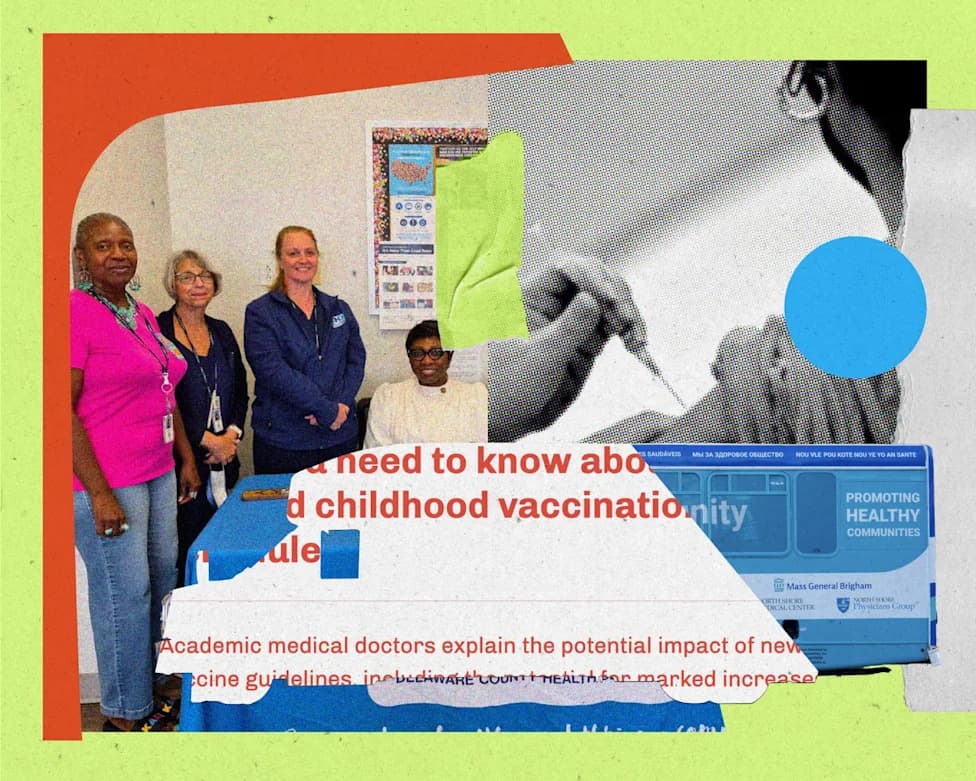
Federal advisory panels revised childhood vaccine guidance, moving several previously universal recommendations into risk-based or "shared clinical decision-making" categories. Pediatricians warn the language could increase parental confusion and vaccine hesitancy just as child immunization rates are falling and some diseases are reemerging. Medical groups, including the American Academy of Pediatrics, have asked Congress to investigate the changes, while clinicians say they will continue to recommend evidence-based vaccines and counsel families.
Pediatricians Warn New U.S. Vaccine Guidance Could Increase Hesitancy and Put Kids at Risk

FILE - Vaccines are prepared for students during a pop-up immunization clinic at a school in Louisville, Ky., on Thursday, Aug. 8, 2024. (AP Photo/Mary Conlon, File)
Doctors across the country say recent federal changes to childhood vaccine guidance are creating confusion among parents and could lead to fewer children being immunized — with potentially serious consequences.
Two practices, two different effects. Dr. Molly O’Shea, who treats children at two pediatric offices in Michigan, says she is seeing rising skepticism about vaccines in both locations. In one, in a largely Democratic neighborhood, more parents are choosing alternative schedules that space out shots. In the other, in a Republican area, some families have stopped vaccinating their children entirely.
What changed
Federal advisory panels recently revised recommendations so that several vaccines that were previously universally recommended for children are now advised either only for high-risk groups or through “shared clinical decision-making” between clinicians and families. The vaccines affected include those for hepatitis A, hepatitis B, rotavirus, respiratory syncytial virus (RSV), seasonal influenza, and meningococcal disease. The COVID-19 vaccine was moved into the shared clinical decision-making category last year.
Why doctors are alarmed
Pediatricians say the new language — especially the phrase shared clinical decision-making — is being misinterpreted by many parents as meaning the vaccines are optional or only needed by a small, select group. "It sends a message to a parent that there’s only a rarefied group of people who really need the vaccine," O’Shea said. "It creates uncertainty about the value and necessity of vaccines in that category."
“We’re worried the fire’s out of control,” said Dr. Steven Abelowitz, founder of Ocean Pediatrics in Orange County, California, citing rising hospitalizations from measles and pertussis in some areas.
Leading medical organizations, including the American Academy of Pediatrics and more than 200 public health and patient advocacy groups, have asked Congress to investigate why the schedule was changed and whether the decision-making process ignored credible scientific evidence.
What 'shared clinical decision‑making' means — and doesn’t
The Advisory Committee on Immunization Practices (ACIP) explains that shared clinical decision-making recommendations are not blanket endorsements for everyone in a specific age group. Instead, they are intended to prompt an individualized discussion between a health care provider and a patient or parent/guardian about the potential benefits and risks.
Practically, that can mean more time spent in one-on-one conversations with clinicians and fewer quick, staff-run vaccine visits or drive-up flu clinics — changes pediatricians warn could make it harder for some families to get shots. Health care providers in this process may include physicians, nurse practitioners, physician assistants, registered nurses and pharmacists.
Surveys by the Annenberg Public Policy Center found many Americans do not fully understand what shared decision-making entails — for example, that it can imply a vaccine may benefit some people but not others, and that pharmacists are considered health care providers who can advise on vaccination.
Impact and response
Although federal advisory recommendations are not the same as state mandates — states still decide school vaccine requirements — national guidance influences clinical practice, insurance coverage, vaccine access and public perception. Pediatricians say they will continue to recommend evidence-based vaccines and counsel families, and many major medical groups are maintaining earlier recommendations.
Parents like Megan Landry, whose 4-year-old son Zackary is a patient of O’Shea, say they will continue following trusted medical advice. "Vaccines are a really effective and well-studied way" to protect individual children and community health, she said.
Still, physicians worry that the change in federal language could accelerate an erosion of trust in medical experts and contribute to lower vaccination rates, which public health officials say could result in more preventable illness and deaths among children.
Sources: Interviews with pediatricians; ACIP guidance; letter from the American Academy of Pediatrics and allied organizations; Annenberg Public Policy Center survey data.
Help us improve.