California is seeing an early uptick in influenza activity linked to a new H3N2 subclade (K), detected in wastewater and clinical tests across the Bay Area, L.A. and Orange counties. British data suggest this season's vaccine still reduces pediatric hospitalizations substantially, but its effectiveness against the new subvariant is uncertain. Public health officials warn hospitalizations often rise after Christmas and that children under 10 may be disproportionately affected; vaccination and early antiviral treatment are strongly recommended.
Early Flu Surge in California: New H3N2 Subvariant Raises Concern for Young Children

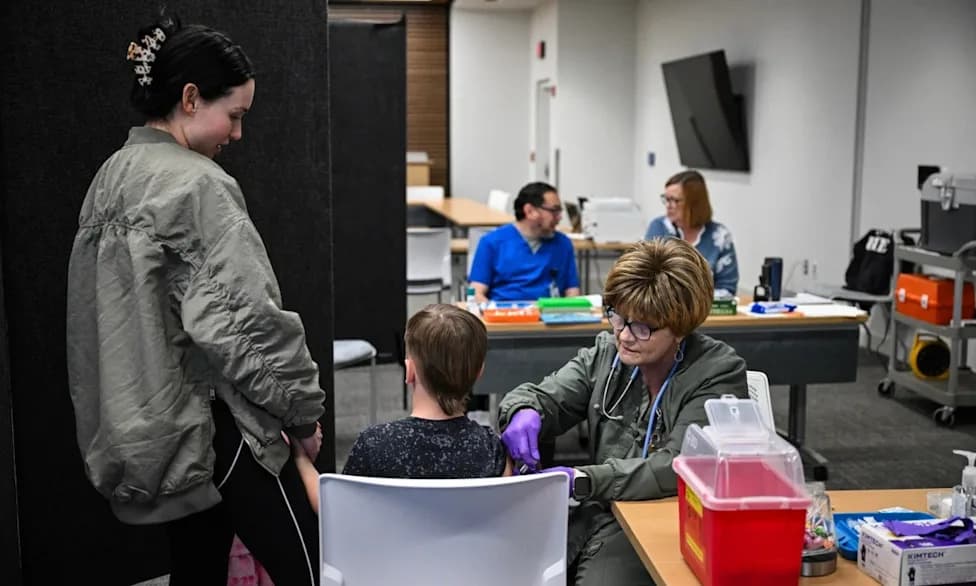
A pharmacist prepares the flu and COVID-19 vaccine at a CVS in Huntington Park on Aug. 28, 2024.(Christina House / Los Angeles Times)
California is experiencing an earlier-than-usual rise in influenza activity driven in part by a recently identified H3N2 subvariant (subclade K). Wastewater surveillance and clinical test positivity are rising across the Bay Area, Los Angeles County and Orange County, and hospital visits for flu are increasing.
What’s Driving the Early Rise
Public health authorities say subclade K emerged after vaccine strain selection this year, and it has been linked to earlier and more active flu seasons in parts of the Northern Hemisphere. WastewaterSCAN and local health departments have detected higher flu signals in San Francisco sewage and in wastewater across San José, Sunnyvale and Palo Alto.
"We are at the point now where we're starting to see a sharp rise in flu cases. This is a few weeks earlier than we usually experience," said Dr. Elizabeth Hudson, regional physician director of infectious diseases at Kaiser Permanente Southern California.
Vaccine Effectiveness
It is not yet certain whether subclade K will significantly reduce vaccine protection. Recent data from Britain indicate this season’s vaccines are about 70%–75% effective at preventing hospitalization in children and roughly 30%–40% effective in adults. The U.S. Centers for Disease Control and Prevention says these results suggest vaccination remains an effective tool to prevent severe illness.
Why Children Are a Concern
Health officials warn the season may hit children particularly hard, mirroring experiences in Australia, where an early and intense season disproportionately affected young children. So far, three pediatric flu-associated deaths have been reported nationally this season. By comparison, the 2024–25 season saw 280 pediatric flu deaths — the highest since 2009–10 — and at least 38,000 total estimated flu deaths.
Complications and Risk Factors
Among the most common and serious complications reported previously were shock or sepsis, pneumonia, acute respiratory distress syndrome (ARDS), seizures and brain injury. Data show about half of children who died last season had underlying conditions, and 89% were unvaccinated.
What Parents Should Watch For
Early antiviral treatment (for example, oseltamivir/Tamiflu) can reduce severe outcomes when started promptly. The CDC reported that many children who died during the last severe season never received antiviral medication. Seek medical attention immediately if a child shows any emergency warning signs, including:
- Difficulty breathing or fast, labored breathing
- Bluish lips or face
- Ribs pulling in with each breath (retractions)
- Chest pain or severe muscle pain that prevents walking
- Dehydration (no urine for eight hours or no tears when crying)
- Seizures
- Fevers above 104°F that are not controlled with medication
- Fever in newborns younger than 12 weeks
Data Snapshot & Public Health Advice
Since Oct. 1, the CDC estimates at least 1,900 flu-related deaths, 49,000 hospitalizations and 4.6 million illnesses nationwide. Vaccination rates are lagging: an estimated 40.8% of children aged 6 months to 17 years had been vaccinated by early December, down from pre-pandemic coverage. Public health agencies urge everyone aged 6 months and older to get vaccinated; it takes about two weeks for protection to develop.
Bottom line: Flu activity is rising early in California, a new H3N2 subvariant may affect vaccine performance, and young children could be at elevated risk. Vaccination, early diagnosis and prompt antiviral treatment remain the best defenses.
Help us improve.