Canadian public-health officials warn that recent actions by some U.S. health authorities, particularly under Health Secretary Robert F. Kennedy Jr., have damaged trust in U.S. institutions as reliable sources on vaccination. Changes at the CDC and disputed website language have raised alarms among Canadian experts who fear increased misinformation. Canada also faced a major measles resurgence, losing elimination status after more than 5,000 cases, amid falling vaccination rates, access problems and social-media driven falsehoods. Experts urge stronger domestic surveillance, clearer public-health communication and action on homegrown causes of distrust.
Canadian Officials Warn U.S. Health Agencies Are No Longer Reliable Sources on Vaccines

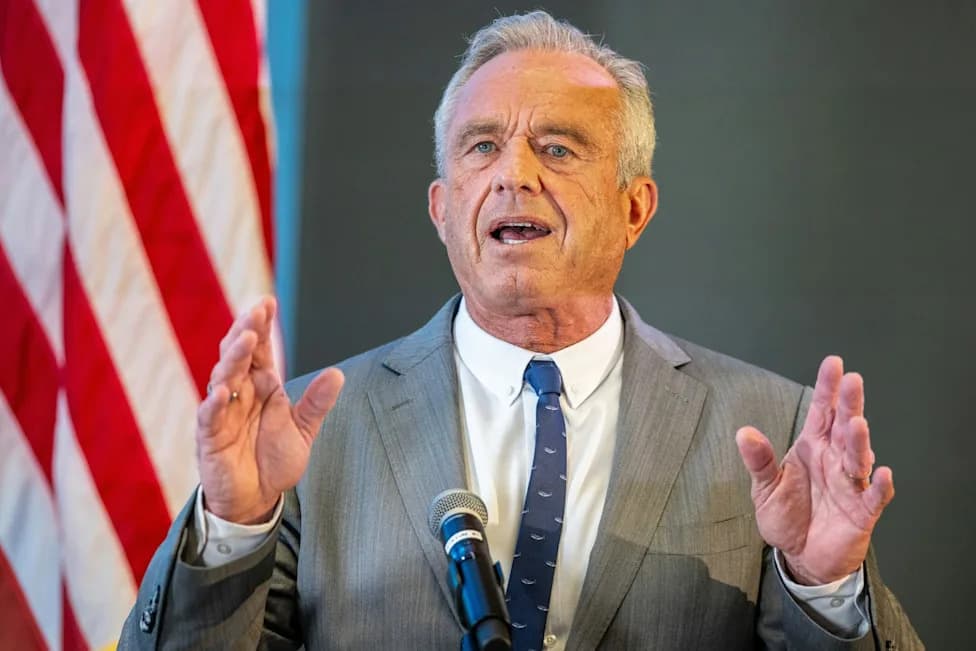
Robert F Kennedy Jr has made several controversial decisions during his tenure as US health secretary.Photograph: Evan Vucci/AP
Canadian public-health officials and experts are sounding the alarm that recent actions by some U.S. health institutions have undermined their credibility as reliable sources of vaccine information — with potential consequences for public confidence in Canada.
“I can’t imagine a world in which this misinformation doesn’t creep into Canadians’ consciousness and leads to doubt,”said Dawn Bowdish, an immunologist and professor at McMaster University in Ontario.
What Sparked Concern
Concerns intensified after U.S. Health Secretary Robert F. Kennedy Jr. appointed a panel that in December voted to remove a longstanding recommendation from the U.S. Centers for Disease Control and Prevention (CDC) that all newborns receive the hepatitis B vaccine. In November, the CDC reportedly updated its website to suggest that “studies have not ruled out the possibility that infant vaccines cause autism,” a formulation that many leading public-health experts have criticized as inaccurate.
Impact on Canada
Canadian officials say moves by U.S. agencies toward ambiguous or misleading statements make it harder to counter vaccine hesitancy at home. Health Minister Marjorie Michel told the Canadian Press in December that she no longer sees some U.S. health and science institutions as reliable partners:
“I cannot trust them as a reliable partner, no.”She also told CBC News that some Canadians could be influenced by statements from U.S. officials.
Domestic Challenges: Measles Outbreak and Access Issues
Canada closed out a difficult year for measles after losing its elimination status in November following more than 5,000 reported cases nationwide. Physicians and public-health experts have pointed to falling childhood vaccination rates, reduced access to family doctors and a surge in misinformation since the COVID-19 pandemic as key drivers of the outbreak.
Meta’s ongoing ban on news sharing in Canada — the result of a dispute with the federal government over legislation — has also reduced the visibility of reliable public-health messaging, experts warn.
Surveys and Public Sentiment
A 2021 national survey on childhood immunization found that 2.1% of two-year-olds in Canada had received no vaccinations, up from 1.7% in 2019; parents cited safety concerns or doubts about effectiveness. A December poll by Leger Healthcare found 74% of Canadians still have confidence in vaccines, but hesitancy has risen, driven mainly by social-media misinformation and broader distrust of government. The poll also reported that 17% of those lacking vaccine confidence say they get information from U.S. government websites.
Expert Recommendations
Dr. Kumanan Wilson, a physician and professor at the University of Ottawa, urged Canada to strengthen collaboration with other public-health systems globally and to build robust domestic health surveillance:
“If we build this system, it’s not only going to be great for Canada. We can provide really valuable information to the world.”
By contrast, McMaster health economist Michel Grignon warned that much of Canada’s vaccine mistrust stems from domestic issues — long-term erosion of social safety nets, pandemic-related social fractures and events such as the 2022 trucker protests — and that the federal government should address these homegrown causes of distrust.
Looking Ahead
Public-health leaders say Canada must both shore up its own information systems and address access and social factors that drive hesitancy, while continuing to challenge misinformation wherever it appears — whether at home or across the border.
Help us improve.