Communities bordering Bwindi Impenetrable National Park are planting medicinal, fuelwood and craft trees along the park boundary to reduce harvesting inside the forest. The initiative—supported by Change a Life Bwindi, the Batwa community and the Uganda Wildlife Authority—aims to restore degraded land, boost biodiversity and provide resources locally. Bwindi holds about 450 mountain gorillas, nearly half of the global population, and the efforts were highlighted during World Gorilla Day on Sept. 24.
Communities Plant Trees Around Bwindi To Protect Mountain Gorilla Habitat
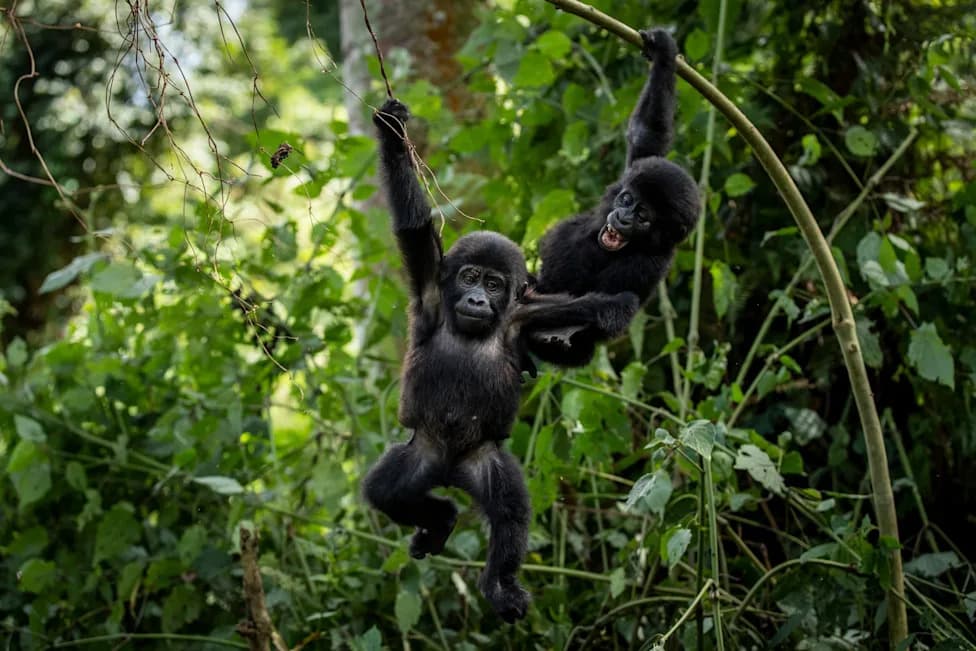
FILE - Two one-year old baby mountain gorillas swing from branches as they play together in the forest of Bwindi Impenetrable National Park in southwestern Uganda Saturday, April 3, 2021. (AP Photo, File)
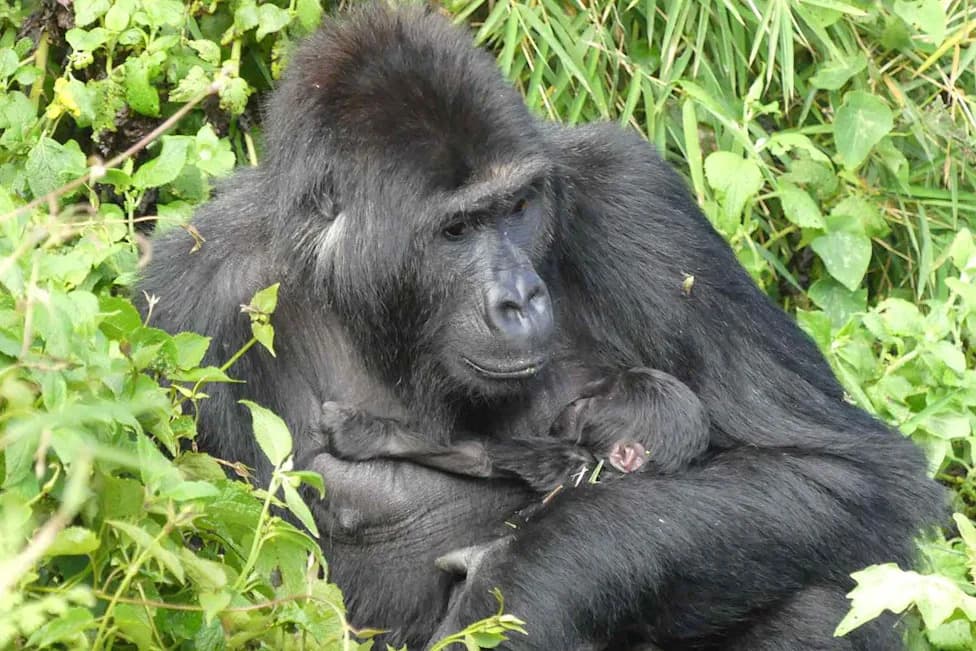
BWINDI, Uganda — In the dense, tangled foliage at the edge of Bwindi Impenetrable National Park, mountain gorillas continue their daily lives as visitors trek into their forest home. But while the gorilla population has grown, the amount of forest available to them has not.
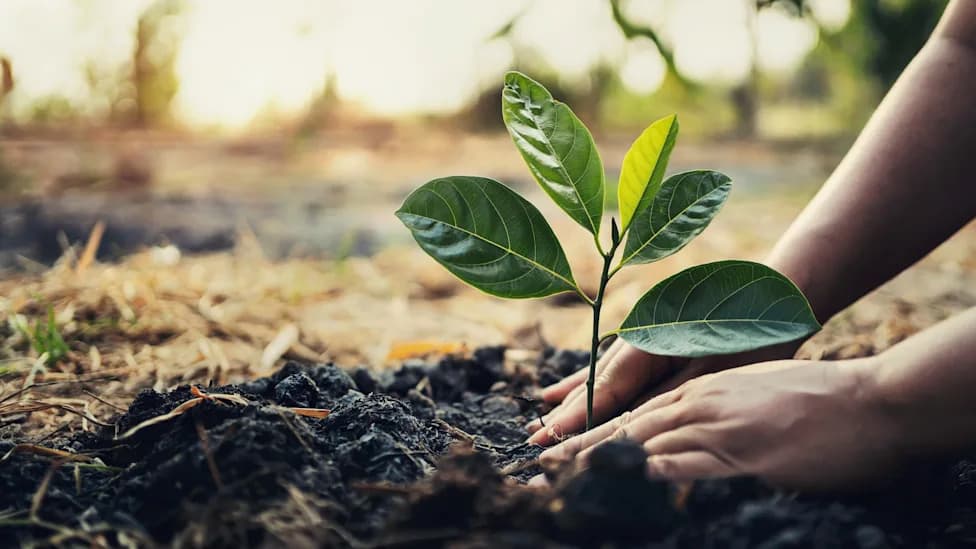
To ease pressure on this critical habitat, communities living near the park have launched tree-planting initiatives along Bwindi’s boundary. Residents are planting medicinal species, fuelwood trees and useful timber for crafts so they can harvest resources outside the protected forest rather than from inside it.
Local Action, Practical Benefits
Change a Life Bwindi, a local organization, supplies seedlings and helps restore degraded land while boosting biodiversity. "Being a neighbor to the park, I understand that the number of gorillas is increasing, but the forest habitat is not increasing," said Christina Katushabe, the group's founder.
Members of the Batwa, an Indigenous community that has guided the project, help select tree species valued for medicine, timber and firewood. The Uganda Wildlife Authority also distributes seedlings, including medicinal trees that people might otherwise harvest from inside Bwindi.
"Residents can harvest what they need in their communities without tampering with the habitat for the gorillas," said Joseph Muhindo, assistant tourism and hospitality officer with the Uganda Wildlife Authority.
Conservation Gains and Community Livelihoods
Bwindi is home to roughly 450 mountain gorillas—nearly half the world’s remaining population. A 2018 survey estimated the global population of mountain gorillas at just over 1,000, a notable recovery for a subspecies once listed as critically endangered; the IUCN now classifies them as endangered.
Tourism has played a major role in that recovery. Visitors who trek into Bwindi to see habituated gorilla families generate revenue and jobs for nearby communities. Locals also sell handmade crafts to tourists, and planting useful trees near villages helps protect both livelihoods and habitat.
School programs are part of the campaign: students plant trees that their families can later use, fostering a culture of stewardship. "Now we are going to protect the forest, so that our gorillas can stay well," said Davis Musinguzi, a student at Ruhijja Seed Secondary School.
The tree-planting activities were organized as part of community conservation events for World Gorilla Day, observed each year on Sept. 24, and reflect a practical, locally led approach to reducing human pressure on a globally important species.
Help us improve.