Red pandas — nicknamed "bamboo bears" — have suffered a nearly 50% population decline over the past two decades and are listed as Endangered by the IUCN. Specialized for life in cool, high-altitude Himalayan forests, they depend on bamboo and intact, connected canopy habitat. Major threats include habitat loss and fragmentation, snares and poaching, disease from free-roaming dogs, and climate-driven shifts in bamboo. Conservation centers on restoring corridors, empowering local communities, anti-poaching patrols and careful coordination between in-situ and ex-situ programs.
Adorable 'Bamboo Bears' Are Losing Their Mountain Homes — The Fight to Save Red Pandas
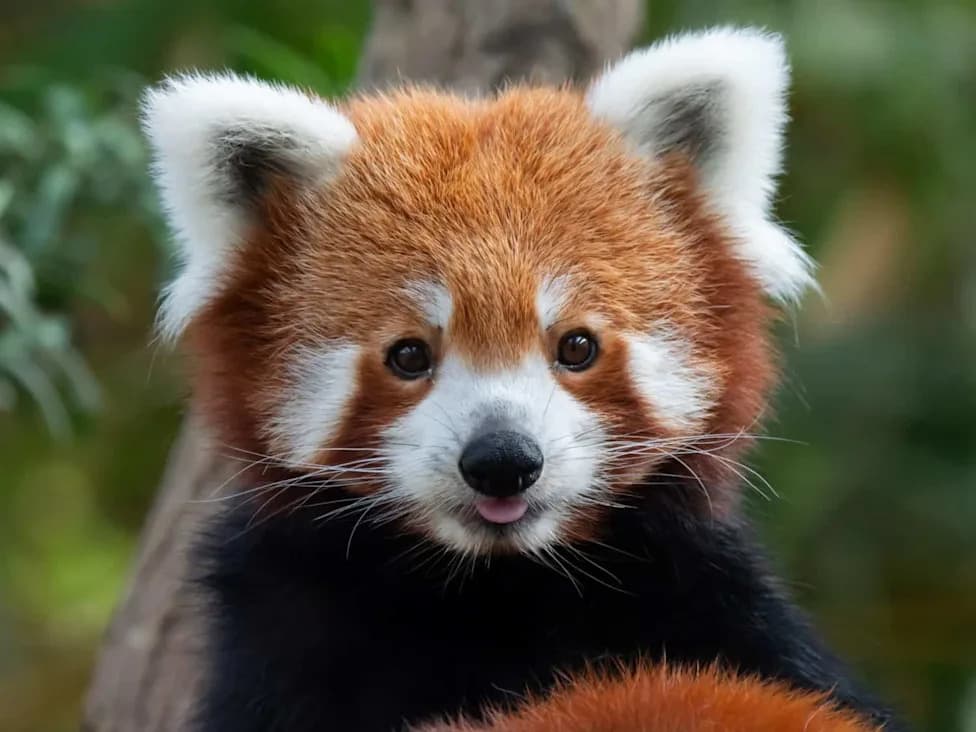
Endangered Red Panda in Captivity© Hyserb/Shutterstock.com
International Red Panda Day (the third Saturday in September) is a reminder that these charming, bushy-tailed climbers — often called "bamboo bears" — face an urgent conservation crisis. With reddish fur, ringed tails and expressive faces, red pandas are beloved worldwide, but their mountain forest homes are shrinking fast.
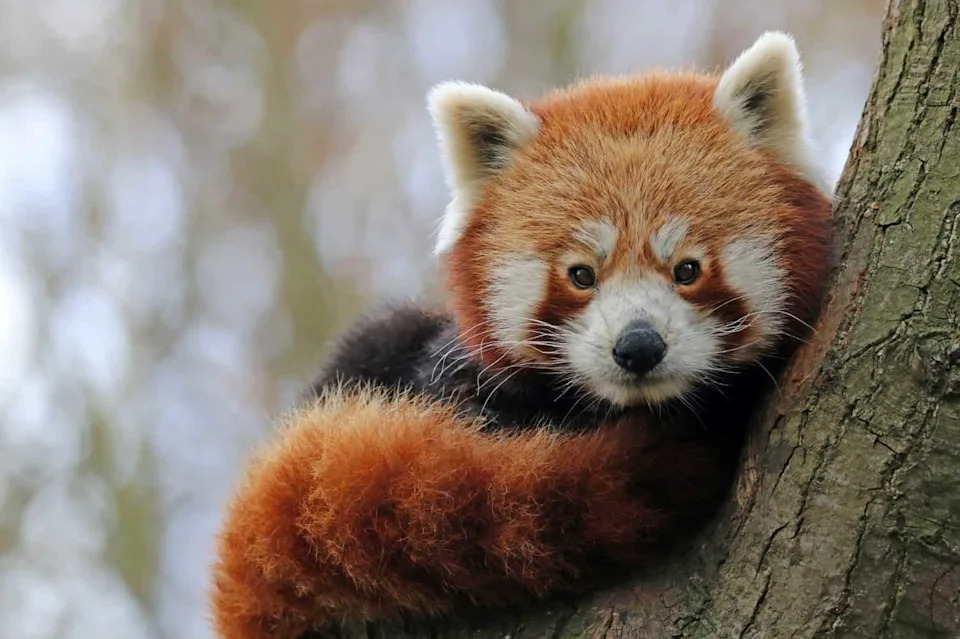
The IUCN Red List categorizes red pandas as an Endangered species.©Edwin Butter/Shutterstock.com
Why Red Pandas Matter
Red pandas (Ailurus fulgens) are ecological indicators and seed dispersers for high-altitude Himalayan forests. Their well-being reflects the health and connectivity of the mountain ecosystem shared with species such as snow leopards, pangolins and Himalayan black bears. Protecting red pandas therefore safeguards a broader biodiversity hotspot.
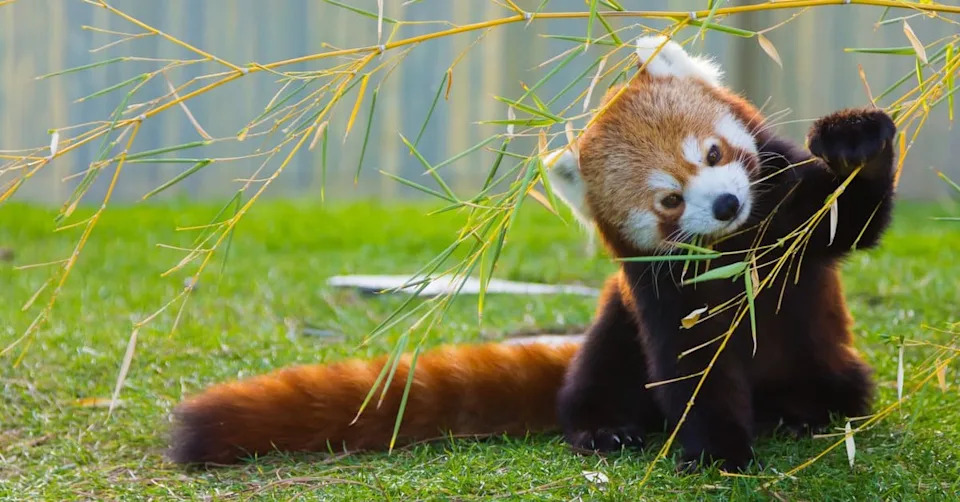
Red pandas must eat thousands of bamboo leaves every day to get enough nutrition.©Jose Angel Astor Rocha/Shutterstock.com
Two Distinct Subspecies
Scientists recognize two subspecies: the Himalayan red panda (A. f. fulgens), found in Nepal, Bhutan, northern India and parts of China, which tends to have lighter fur and fainter tail rings; and the Chinese red panda (A. f. styani), in southwestern China and northern Myanmar, typically slightly larger and darker with more distinct tail rings.
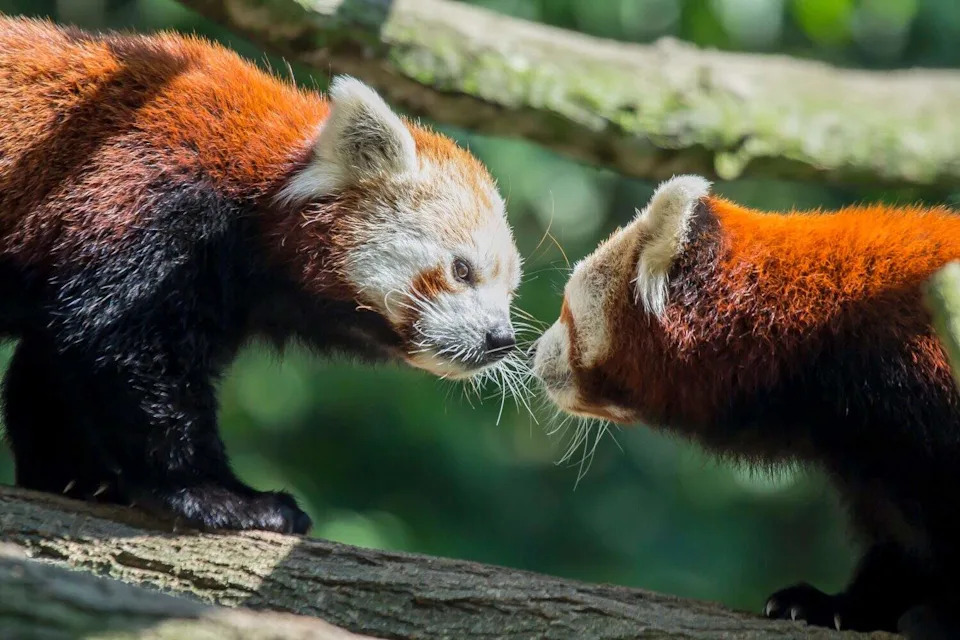
Red pandas have many names, such as red cat-bear, lesser panda, firefox, and red bear-cat.©Zoo_freeride/Shutterstock.com
Adaptations for a Life in the Canopy
Although classified in the order Carnivora, red pandas are specially adapted to cold, high-altitude canopy forests (roughly 7,000–15,000 feet). They have semi-retractable claws, furred footpads for traction, flexible ankles that let them climb headfirst down trunks, and an enlarged wrist bone that acts like a false thumb for gripping bamboo. Their long, ringed tails provide balance and warmth.
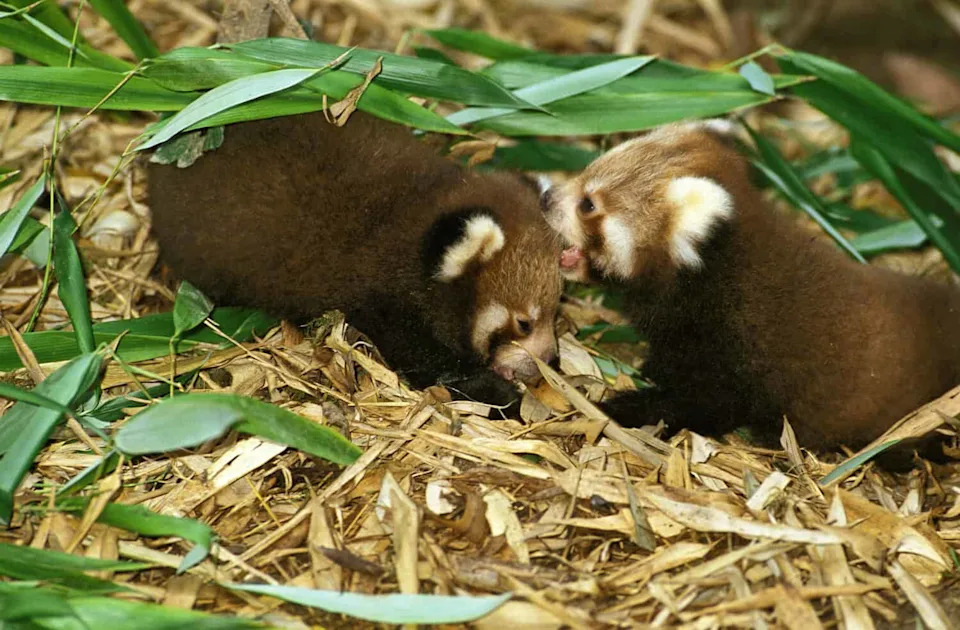
Red panda cubs stay in their mother's den for the first three months of life.©slowmotiongli/Shutterstock.com
Diet, Behavior and Reproduction
Bamboo makes up about 85–95% of a red panda's diet, supplemented by fruits, roots, eggs and small insects. An individual may eat up to 20,000 bamboo leaves a day yet digests less than 25% of it, forcing them to consume roughly 20–30% of their body weight daily. They have a slow metabolism and are mainly crepuscular and nocturnal, conserving energy by resting during the hottest daylight hours.
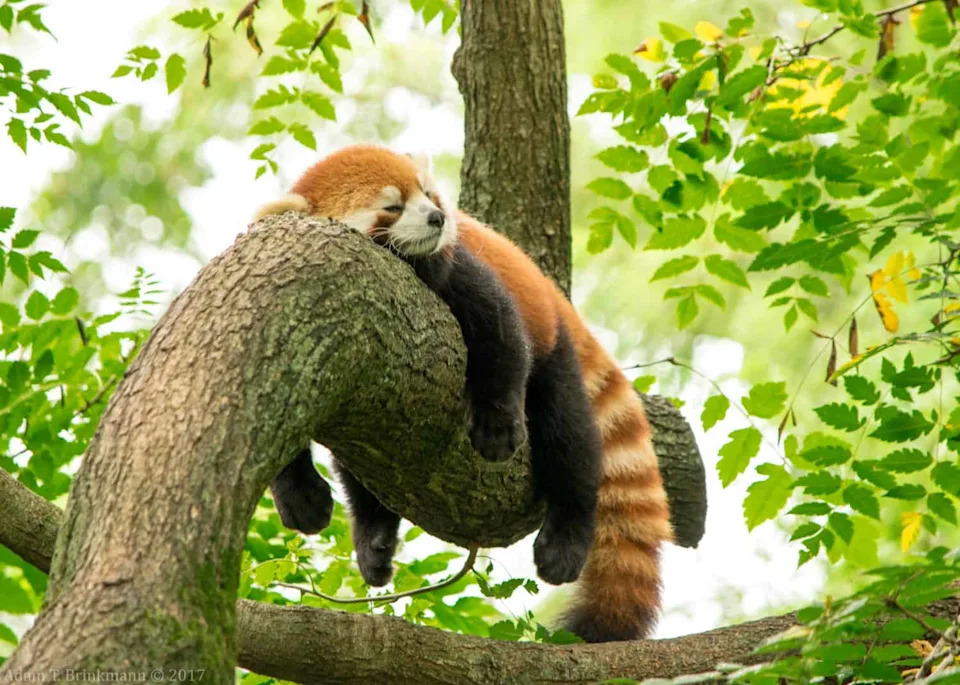
Red pandas often drape their bodies across tree branches and sleep up to 17 hours each day.©Adam Brinkmann/Shutterstock.com
Adults are mostly solitary outside the breeding season, each maintaining a territory of roughly one square mile. Females raise young alone, nesting in tree hollows, rock crevices or dense bushes and carrying cubs in their mouths between den sites. Cubs stay in the den for the first three months and often depend on their mother for up to 18 months.
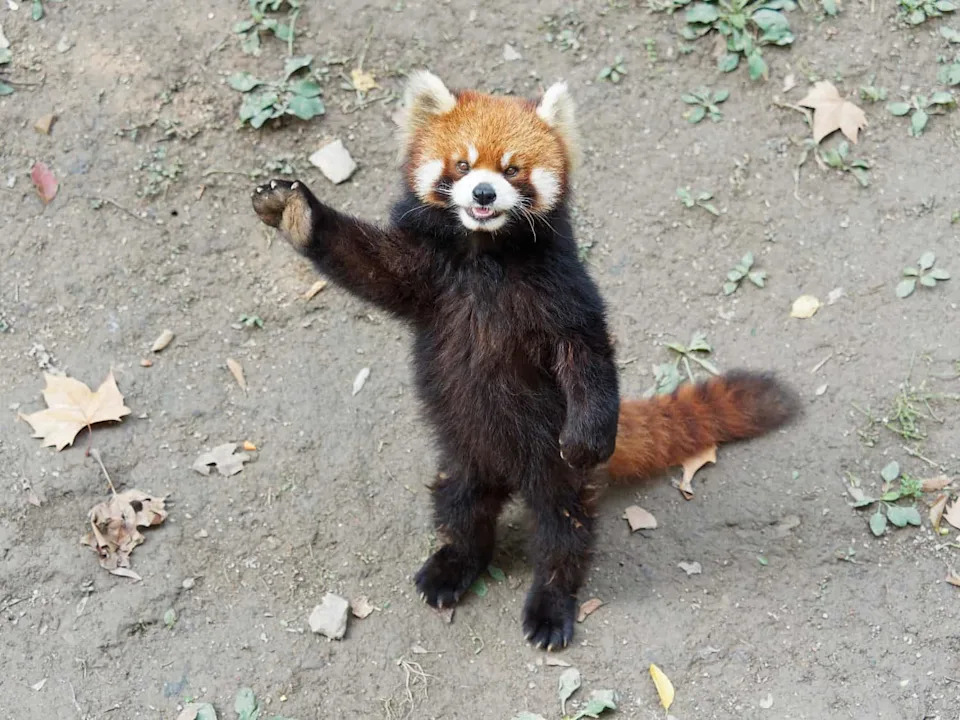
Red pandas stand on their hind legs to appear larger.©atiger/Shutterstock.com
Main Threats
Red pandas have lost nearly half their wild numbers in about two decades. The IUCN lists them as Endangered, with estimates suggesting fewer than 10,000 and possibly as few as 2,500 individuals remain. The primary threats are habitat loss and fragmentation from logging, agriculture, infrastructure (roads, dams, mines), and fuelwood collection. In Nepal, habitat is divided into more than 400 isolated fragments and about 70% of red panda habitat falls outside formal protected areas.
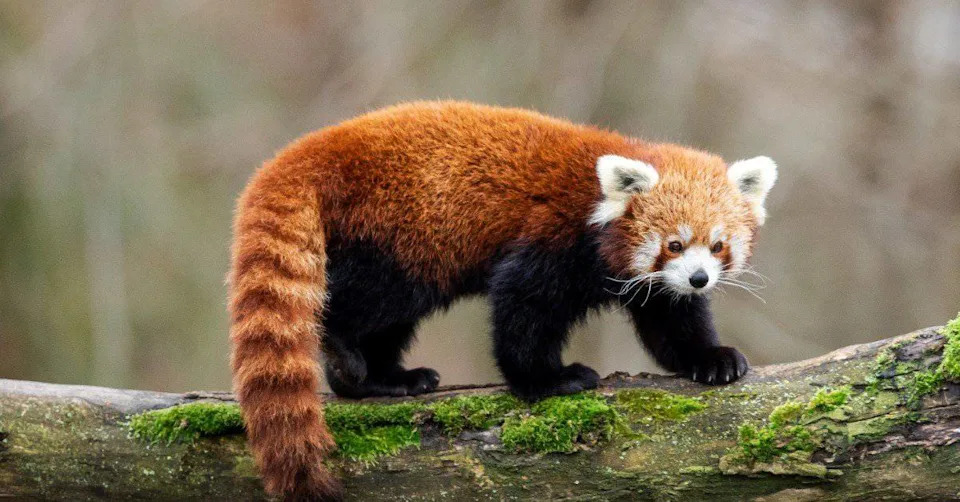
Red pandas use many different sounds to communicate, including squeals, hisses, grunts, and even a quack-like huff.©iStock.com/AB Photography
Other threats include illegal hunting and live capture for the fur and exotic pet trades, accidental capture in snares set for other wildlife, attacks and disease transmission from free-roaming dogs, and climate change that pushes bamboo higher up slopes, shrinking suitable habitat for heat-sensitive red pandas.
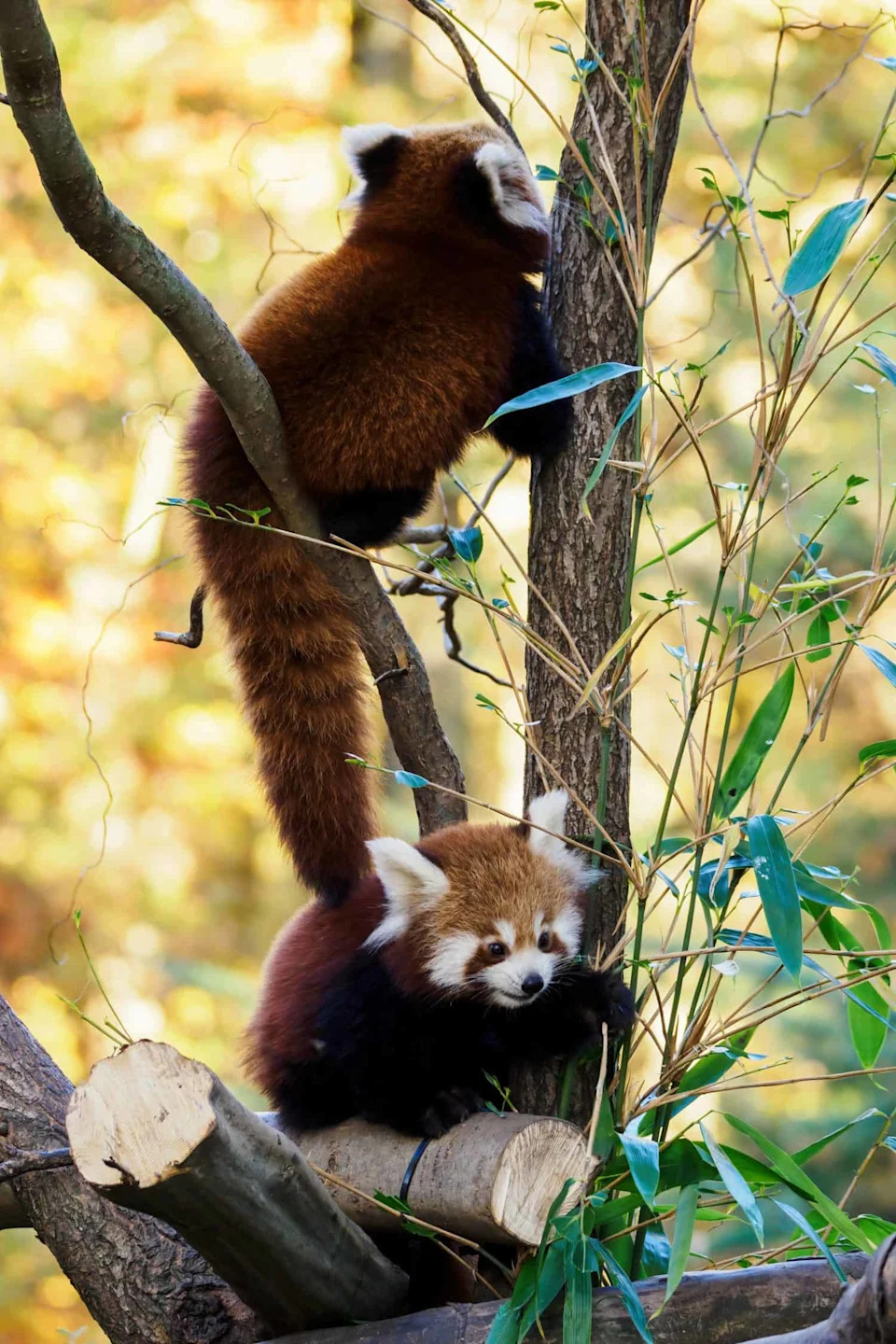
Measuring 12 to 20 inches, a red panda's tail is nearly as long as their entire body.©Lapis2380/Shutterstock.com
Conservation Actions Underway
Conservation focuses on protecting and reconnecting forest habitat, community engagement, anti-poaching efforts and targeted restoration. Corridor projects such as the Panchthar-Ilam-Taplejung (PIT) Corridor aim to link fragmented forests across borders. Reforestation campaigns like "Plant a Red Panda Home" restore degraded land with native trees, and programs promoting eco-tourism, organic farming and fuel-efficient cookstoves reduce pressure on forests.
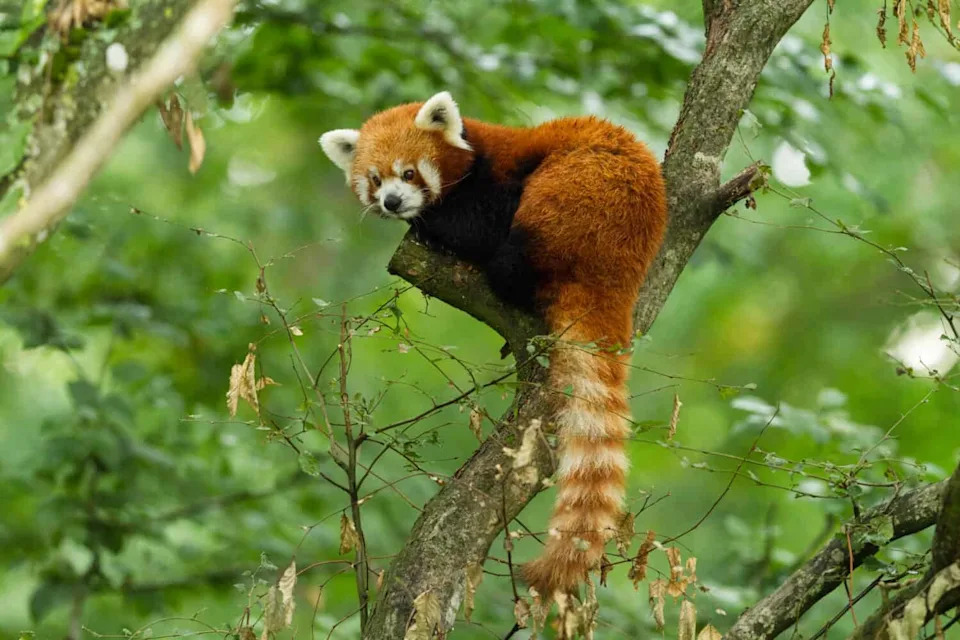
Red pandas usually grow 22 to 24.6 inches long and weigh 8 to 17 pounds.©AB Photographie/Shutterstock.com
Anti-poaching patrols remove snares, and many initiatives hire local people to monitor habitat, collect data and run education campaigns. Protected areas such as India’s Singalila National Park and China’s Wolong Reserve provide refuges.
Global zoo networks coordinate managed breeding under the Global Species Management Plan (GSMP) across associations including AZA and EAZA, using software (ZIMS) to manage transfers and genetics. Some captive-breeding efforts have supported reintroductions (for example, Darjeeling Zoo released nine captive-born red pandas into Singalila National Park), although captive programs remain controversial.
Controversies and Risks of Captivity
Critics caution that captive breeding cannot replace wild habitat protection. Concerns include stress from limited vertical space compared with mountain canopies, daytime visitor encounters that disrupt natural crepuscular behavior, escapes and welfare incidents (reported escapes in Australia, Poland and the U.S., and a 2022 cold snap at Longleat Safari Park that tragically killed two cubs). Effective conservation prioritizes intact, connected wild habitats alongside carefully managed ex situ programs that clearly support wild recovery.
How You Can Help
Support local and international conservation groups such as the Red Panda Network and Rainforest Trust, donate to habitat restoration projects, promote responsible ecotourism, and raise awareness about the impacts of snares and the exotic pet trade. Small actions can strengthen community-led protection and help reconnect the fragmented forests red pandas depend on.
Bottom line: The red panda’s survival depends on protecting and reconnecting mountain forests, stopping poaching and snares, managing threats from free-roaming dogs, and partnering with local communities to build sustainable livelihoods that benefit both people and wildlife.
Help us improve.