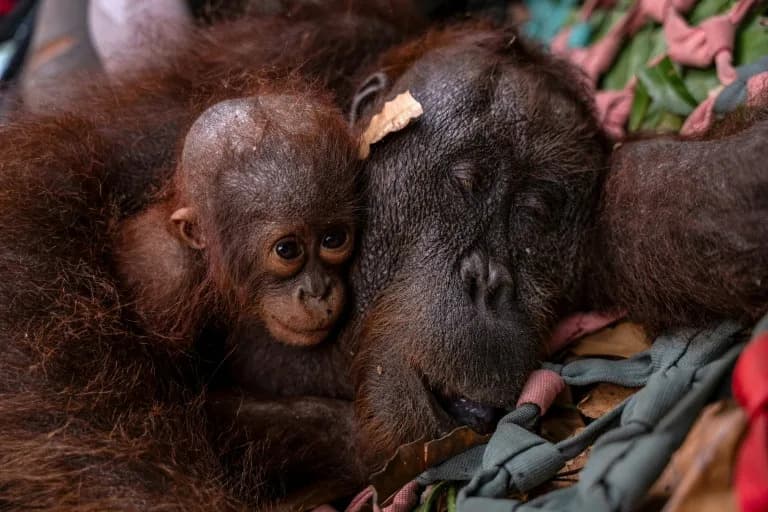
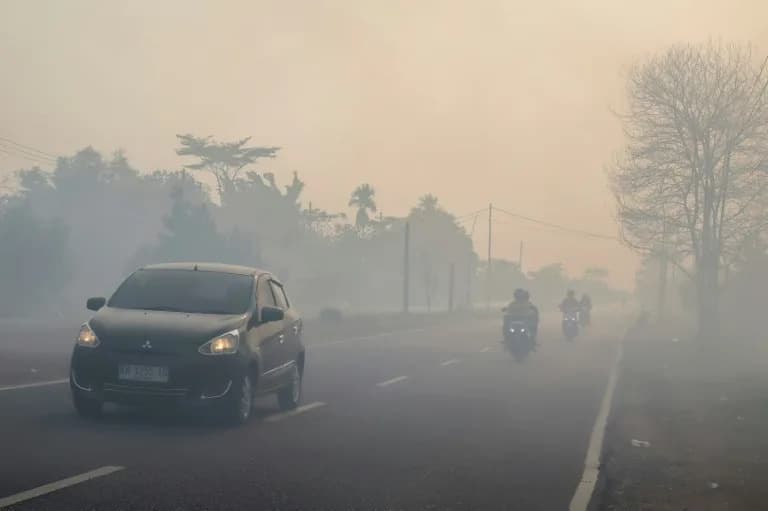
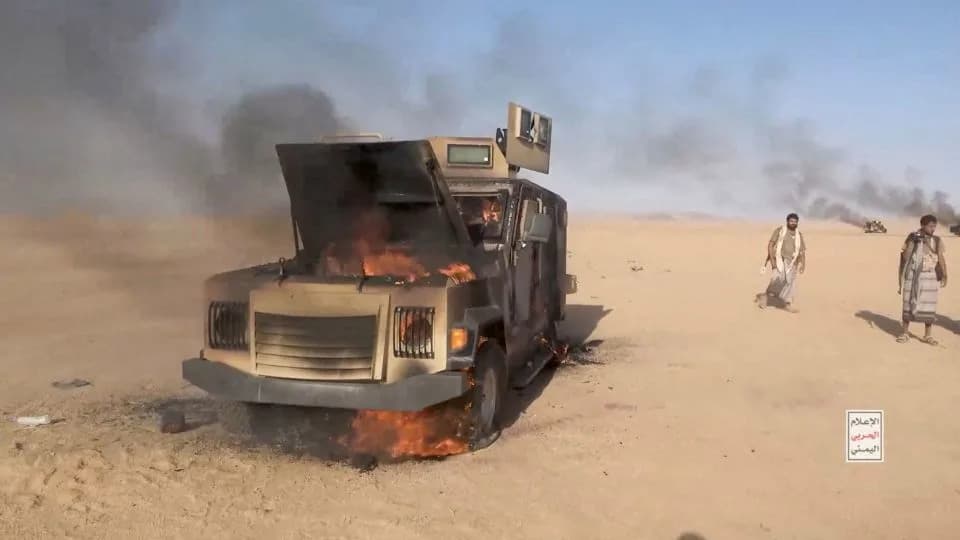
Eighteen orangutans have been rescued and moved to conservation centres after severe wildfires in Indonesia fragmented their forest habitat. The most recent rescues included two mother–infant pairs (Mama Nopi & Nopi; Mama Noni & Noni) and two juveniles (Naufal and Nopan), now at the YIARI rehabilitation centre. Many fires are believed to be set for land clearing and have been intensified by a strong El Niño drying peatlands. Conservation groups warn habitat loss is pushing orangutans into plantations and communities, increasing risks of injury, starvation and disease.
18 Orangutans Rescued as Indonesia’s Wildfires Ravage Forests
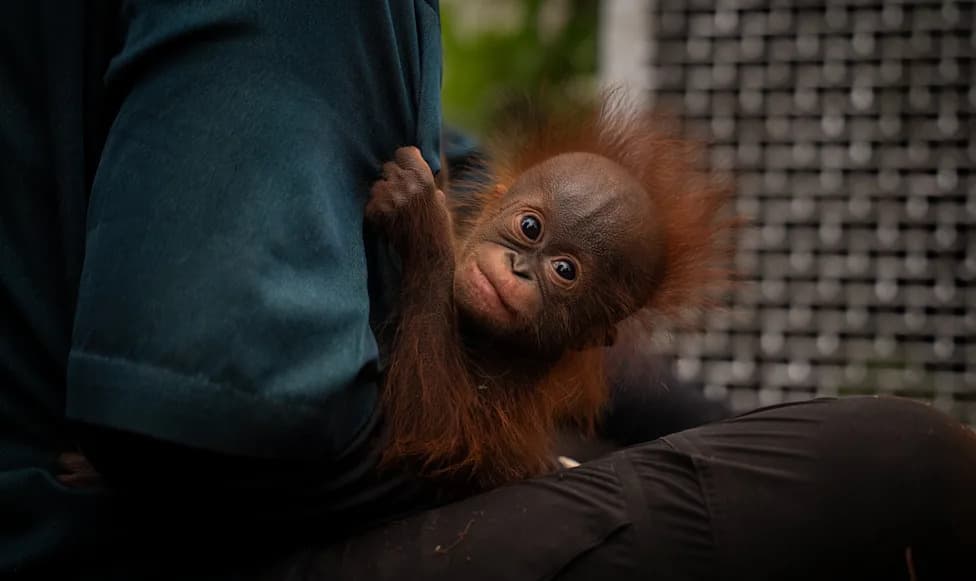
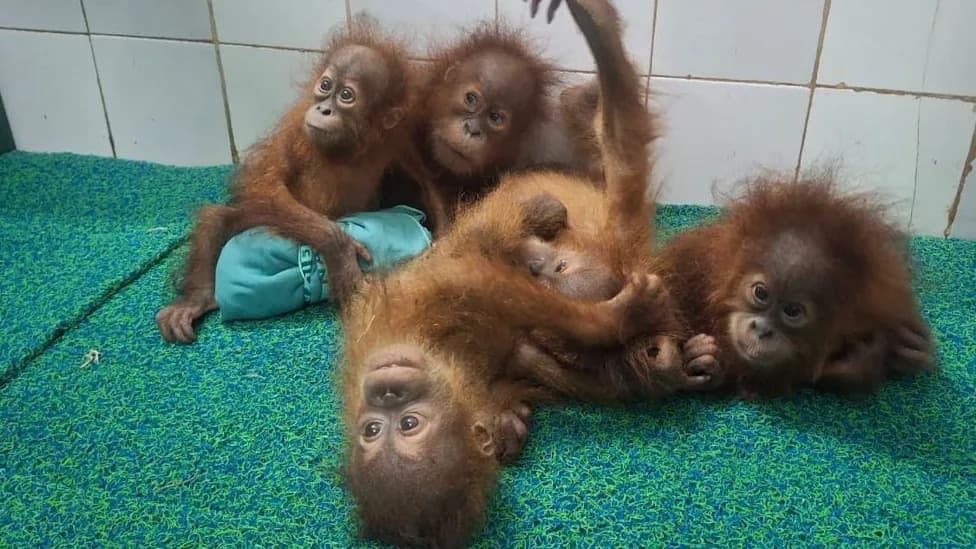
(BKSDA/YIARI/Int. Animal Rescue via SWNS)
Eighteen orangutans have been rescued and taken to conservation centres after devastating wildfires tore through large areas of forest in Indonesia, officials say. The rescues underline growing pressure on wildlife as flames and smoke fragment habitat and drive animals closer to human settlements.
Latest Rescues and Where They Are Now
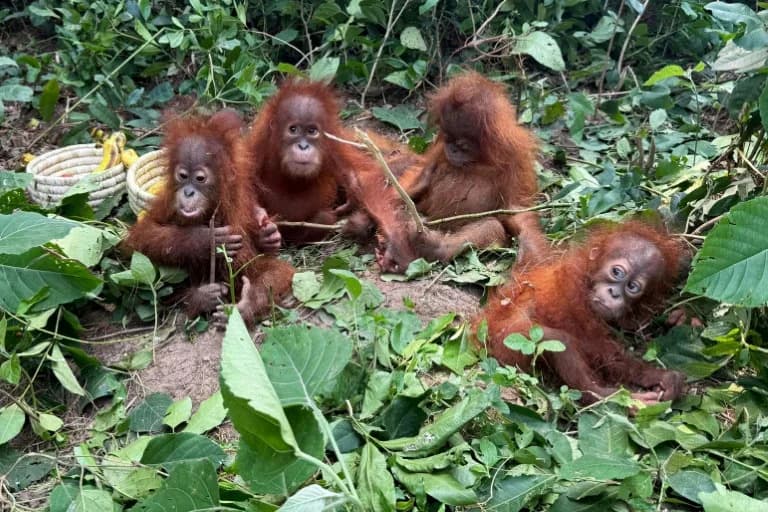
Rescue operations were carried out by teams from the West Kalimantan Natural Resources Conservation Agency (BKSDA) in collaboration with the Yayasan Inisiasi Alam Rehabilitasi Indonesia (YIARI). The six most recent arrivals include two mother–infant pairs—Mama Nopi and her offspring Nopi, and Mama Noni and her offspring Noni—along with two juveniles, Naufal and Nopan. All six were transported to the YIARI Orangutan Rescue and Rehabilitation Center for medical checks and ongoing monitoring.
Why These Fires Are So Severe
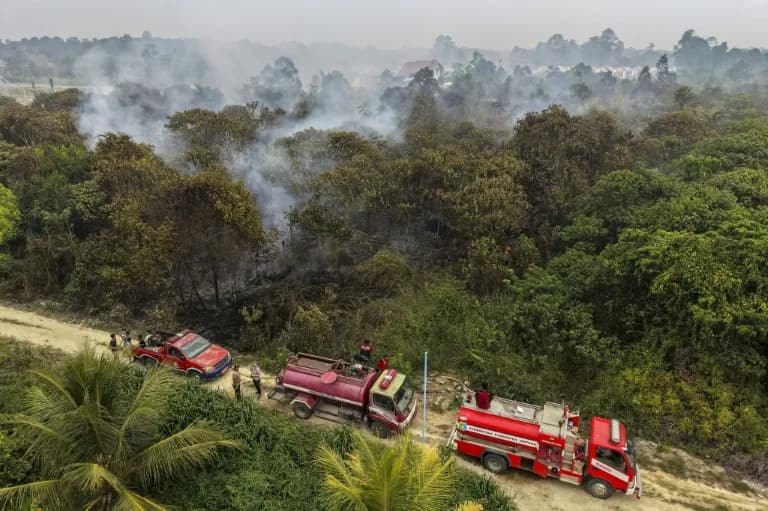
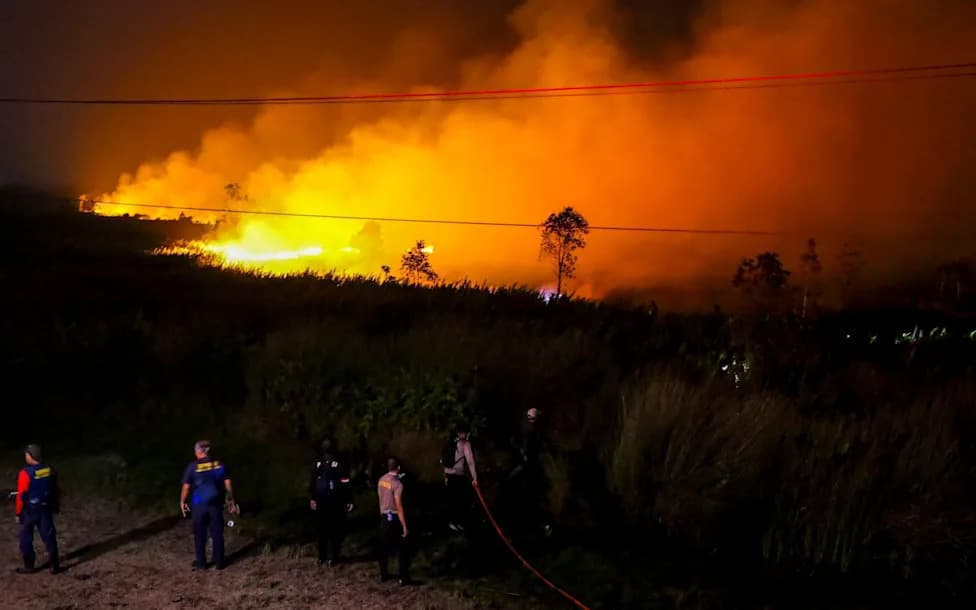
Many of the blazes are believed to have been deliberately started to clear land for agriculture and plantations. A strong El Niño event has worsened the situation by producing exceptionally dry conditions and drying out peatlands, which burn intensely and are difficult to extinguish.
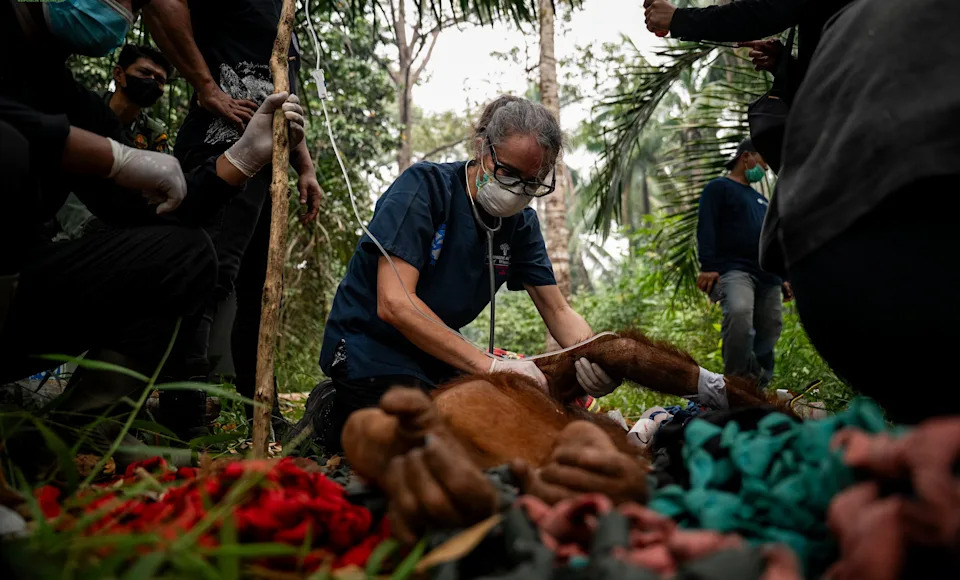
(BKSDA/YIARI/Int. Animal Rescue via SWNS)
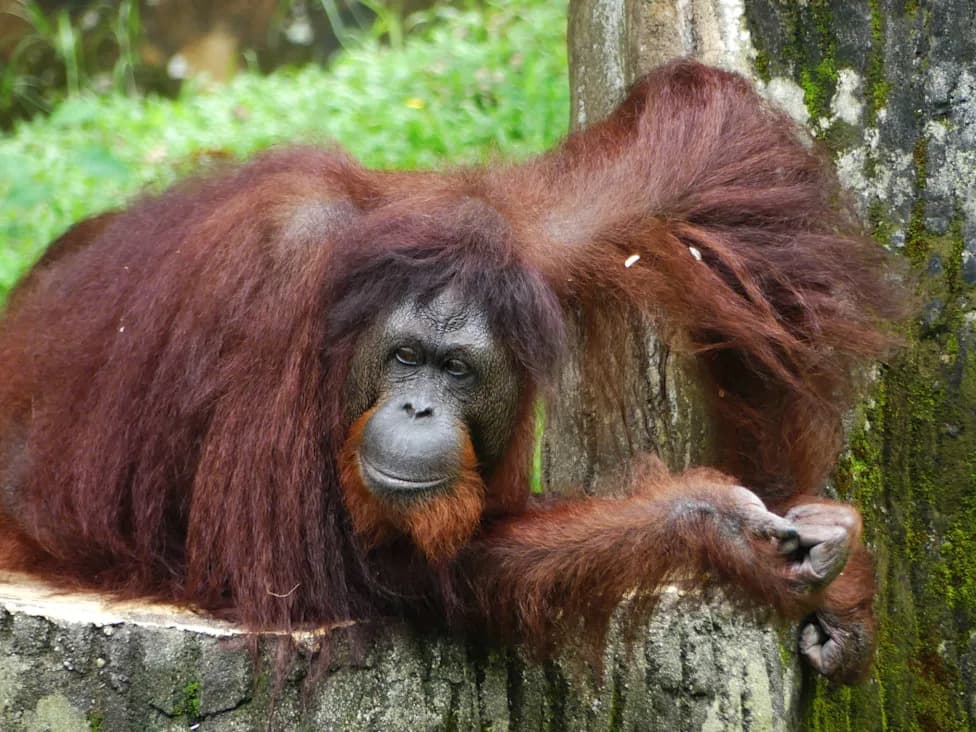
“This is a tragic and deeply distressing time for Indonesia's orangutans,” said Gavin Bruce, CEO of Sussex-based International Animal Rescue (IAR), a UK partner of YIARI. “When flames destroy and fragment the forest, orangutans lose not only their homes, but also access to food, shelter and the safe routes they need to survive.”
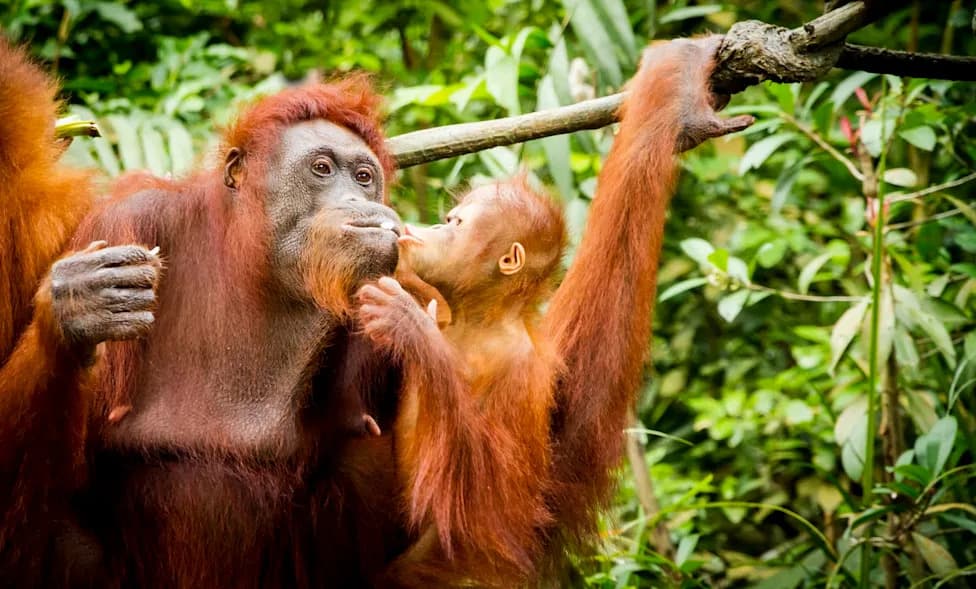
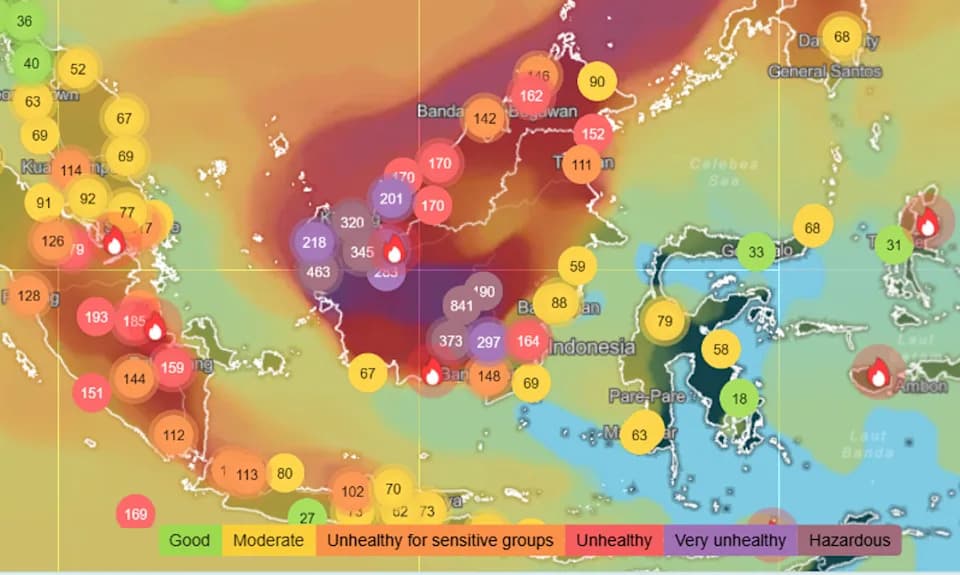
Bruce warned that displaced orangutans—forced into plantations and nearer to communities—face increased risks of injury, starvation and conflict with people. Thick smoke also poses serious respiratory risks to both wildlife and local communities; rescuers have reported orangutans with severe respiratory problems.
What Happens Next
Rescue teams will continue to monitor fire activity and habitat conditions in the animals' areas of origin. Once conditions are safe and suitable habitat is available, authorities and conservation partners will assess and identify potential release sites for the orangutans to return to the wild.
IAR and YIARI have worked together for more than 20 years to locate and rescue animals at risk. While the recent rescues bring some relief, conservationists say the scale of the emergency—18 orangutans rescued in a single month—highlights the urgent need to protect remaining forests and prevent further fires.
Help us improve.