Xi Meets Trump spotlights a shifting global landscape in which China is expanding influence by funding infrastructure, shaping institutions like BRICS and exporting technology. Beijing offers practical alternatives to the Western development model—public finance, state-led infrastructure and affordable AI/cloud solutions—without yet displacing U.S. military and institutional power. The result may be a more multipolar world in which states have greater freedom to choose, though whether that system will be fairer or simply more China-centric remains uncertain.
Xi Meets Trump: How China Is Rewriting Global Choices — Not Necessarily Replacing America

President Donald Trump shakes hands with China's President Xi Jinping at the Great Hall of the People in Beijing on May 14, 2026. —Kenny Holston-Pool-AFP-Getty Images
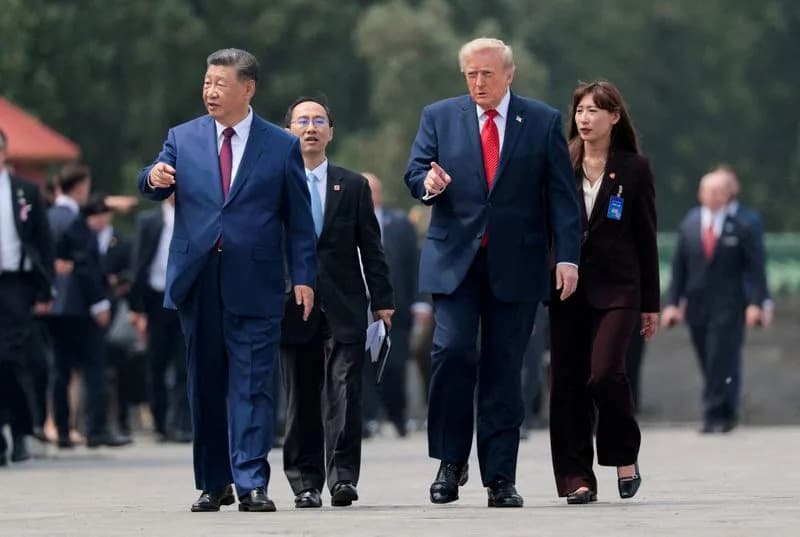
On Thursday, President Xi Jinping will meet President Donald Trump at the White House. Much has changed since Xi's 2015 visit with President Barack Obama: the United States and China now occupy different positions in a world growing more fragmented and multipolar. As the two leaders confer, the central question is becoming clearer: who is shaping the rules, norms and infrastructure that govern the international order?
The reality is more complex than a simple handover of power. The United States remains the single most powerful country, yet China is increasingly acting like an architect of global arrangements.
China’s Tools: Institutions, Infrastructure and Technology
Beijing is building institutions, proposing diplomatic initiatives, setting technological standards and financing infrastructure projects across the globe. Its influence extends beyond traditional diplomacy: China offers developing states alternative development paths and mobilizes leading technology firms as instruments of influence. Rather than replicating the U.S. model of security alliances and military guarantees, Beijing is knitting together trade networks and alternative financial mechanisms while promoting a deliberately different vocabulary for international relations.
China does not have a guaranteed, turnkey plan to supplant the U.S. as global hegemon, nor is there clear evidence that other states would willingly adopt a fully China-led system. Instead, Beijing’s approach is subtler: it seeks deeper influence over the institutions, norms and technical rules that govern global interaction. China wants not only a decisive vote at the table but also a role in drafting the rules of the game.
Opportunity and Limits
This ambition comes at a moment when Washington, despite its material advantages, appears less inclined to shoulder long-standing burdens of global leadership. Domestic polarization, the current administration’s skepticism toward some international commitments, and an often erratic foreign-policy posture have cast doubt on American stewardship.
Yet China is not stepping into a vacuum. The United States remains deeply embedded in the alliances, institutions and technologies that underpin its primacy. Beijing is winning space to influence the order, but it has not displaced the foundational power that created much of it. Instead, China is fashioning parallel options that allow states to reduce dependence on the American-led system.
The Development Argument: Roads, Rails — And Digital Ecosystems
Perhaps the most consequential element of China’s vision is its alternative proposition for development. Beijing asks a pointed question: what if countries do not have to follow the Western path to modernization?
For roughly eighty years, development discourse emphasized a broadly Western model—aid tied to market reforms and political liberalization. China presents a different example: its own rise rested in part on large infrastructure investments financed by public capital and state-backed loans. The old Chinese maxim about "getting richer by building roads" has shaped Beijing’s external strategy; it has committed to funding and promoting abroad the physical infrastructure that powered its own rise.
Many developing countries have been receptive. China’s Global Development Initiative places development at the center of foreign engagement. Despite longstanding critique of the Belt and Road Initiative, that program has been a practical vehicle for funding and constructing overseas infrastructure. Beijing often makes its case not through governance manifestos but by delivering tangible assets—roads, railways and ports.
Over the past decade, the Chinese state and state-owned enterprises have channeled roughly $634 billion into physical infrastructure worldwide, alongside about $419 billion in direct nonfinancial investments in developing countries. In parts of Latin America—historically viewed by Washington as its strategic backyard—access to Chinese development finance and markets has produced measurable gains.
These ties are likely to endure when financing carries conditions that advance Beijing’s interests, including privileged access to critical minerals and other resources. Still, the era of outsized overseas spending is becoming harder to sustain as China grapples with domestic economic headwinds.
Technology: The New Infrastructure of Influence
Influence today is often woven into the infrastructure of everyday economic life rather than asserted primarily through military force. As development becomes more technologically embedded, a country that adopts Chinese cloud services or digital platforms risks integrating into a Chinese-led ecosystem for decades.
Artificial intelligence provides a clear example of technology’s geopolitical power. China is rapidly exporting AI capabilities worldwide, including lower-cost, open-weight models that many developing countries can deploy without relying exclusively on American tech giants. The tech competition is increasingly about which digital standards, platforms and supply chains countries choose. If economies build around U.S. technologies, Washington retains structural advantages: access to data, influence over standards and deep commercial integration. If countries adopt Chinese technologies instead, Beijing gains a subtler but long-lasting influence.
At the heart of China’s strategy is a persistent tension: Chinese technology and finance can expand a partner country’s options and capabilities, but they may also deepen dependence on China. In many cases governments select Chinese systems for affordability and practicality rather than ideological alignment; a state may deploy Chinese platforms while maintaining security ties with the United States.
China therefore does not require full political alignment to succeed. It may be enough for other states to become less dependent on the West. Beijing’s objective need not be to prove its model superior—only to demonstrate credible alternatives. The cumulative effect could gradually rebalance elements of the global order.
Institutions and Influence
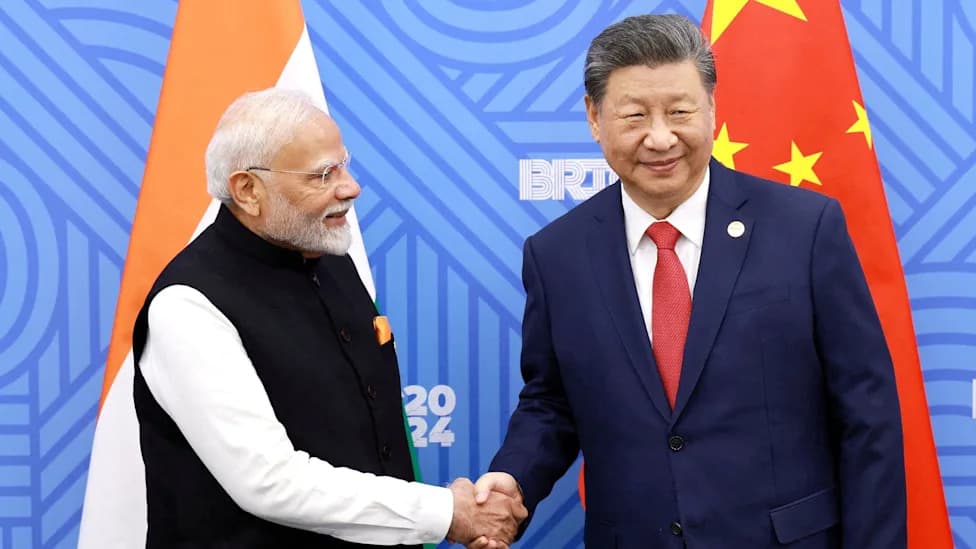
Before his Washington visit, President Xi undertook a series of visits to countries often overlooked by American presidents—Bishkek, Cairo and New Delhi. Those stops highlighted networks Beijing has nurtured and institutions that some Western governments view warily, notably the Shanghai Cooperation Organization (SCO) and BRICS.
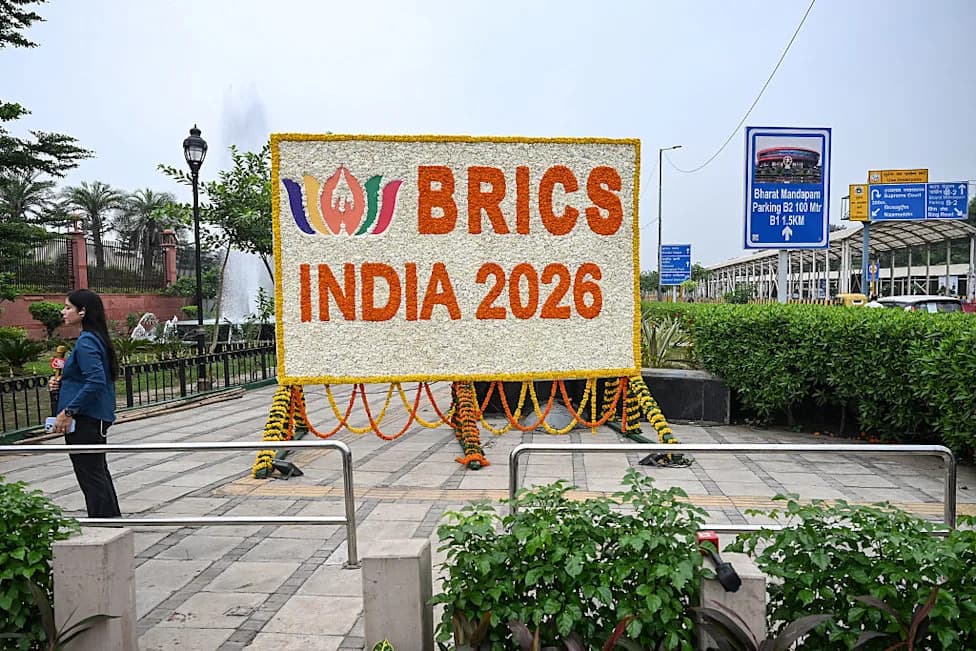
BRICS has evolved from an informal gathering of emerging economies into a broader political forum that now attracts countries from the Middle East, Africa and beyond. It would be wrong to cast BRICS as a monolithic anti-American bloc: members have divergent interests, and countries like India resist joining any explicitly anti-Western alliance. Still, the group’s expansion signals a shift: more states want access to institutions where the Group of Seven does not set the terms.
The Group of Seven remains an exclusive club that shares a set of political values and governance standards. China does not insist that others abandon Washington-led institutions; rather, it builds parallel arrangements that coexist alongside them. That distinction matters.
Consequently, the emerging international order is unlikely to split neatly into a binary of Chinese and American camps. Most countries will continue to use the dollar, trade with the United States and participate in Western-led institutions while also engaging with BRICS, borrowing from Chinese-backed funds or joining the SCO. For many governments, the chief appeal is the freedom to choose among competing sources of capital, technology and diplomatic backing.
What Comes Next?
Beijing’s advocacy of multipolarity aims to broaden options rather than simply replace one hegemon with another. By creating new institutions and initiatives, China accelerates a diffusion of power away from Western centers. For Beijing, being an architect of the international order does not necessarily mean displacing America; it means ensuring Washington no longer has sole authority to set the rules.
Yet a paradox endures. Beijing opposes an order dominated by a single power, but fragmentation of that order tends to increase China’s relative influence. As China’s sway grows, other states will rightly question whether Beijing’s vision seeks a fairer system or simply a redistribution of power that favors itself.
Xi’s meeting with President Trump will be scrutinized for tariffs, technology restrictions and strategic rivalry. Beneath those headlines, however, is a deeper contest over how the international order should function: who writes the rules, who sets the standards, and which options governments around the world can realistically pursue.
Bottom line: China is not trying to inherit the world the United States built. It is trying to reshape how that world works by broadening the choices available to other states—and in doing so, it is quietly rewriting key elements of global power.
Help us improve.