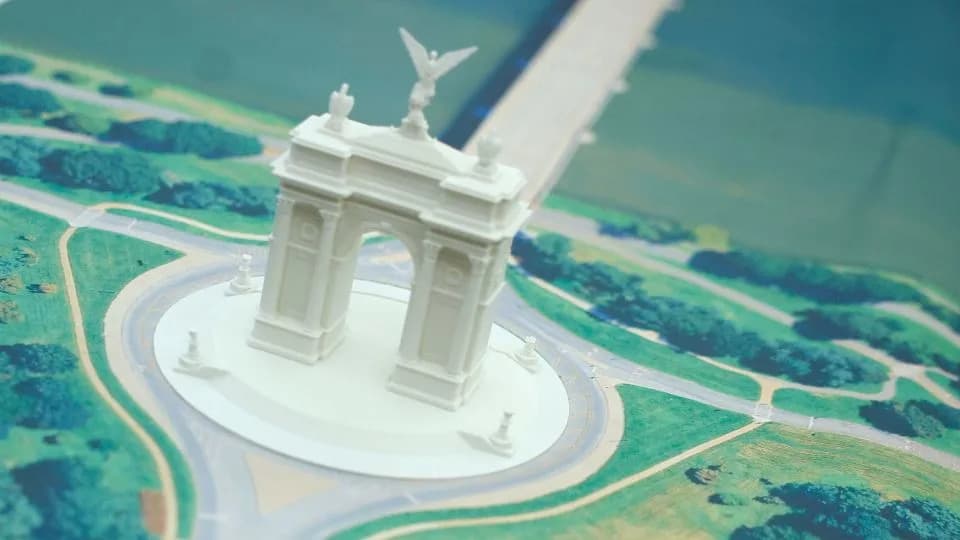
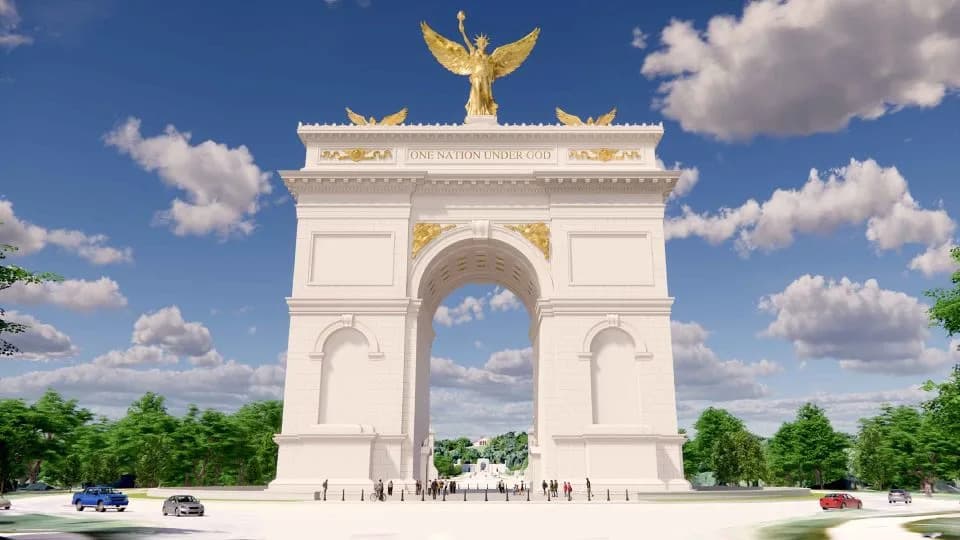
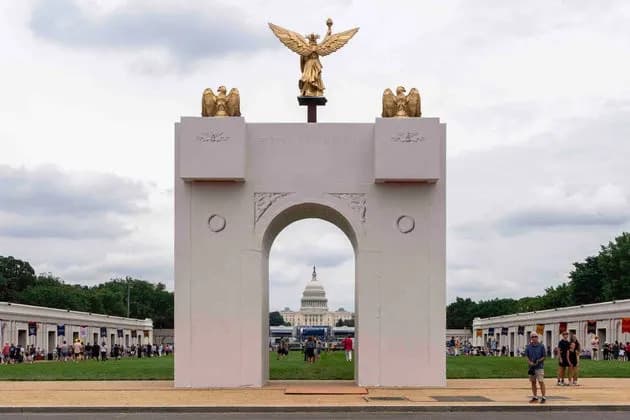
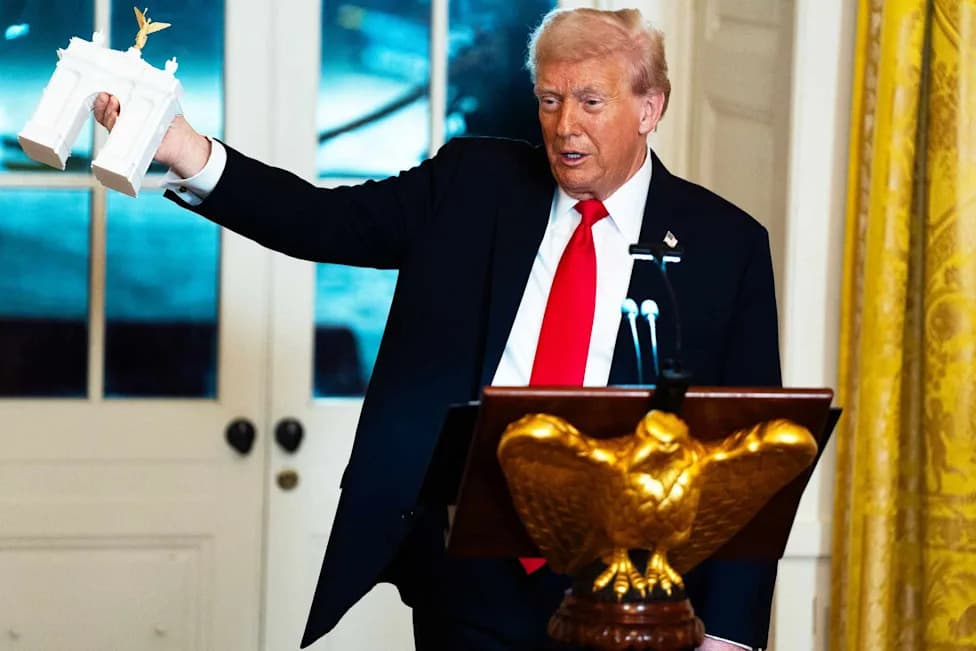
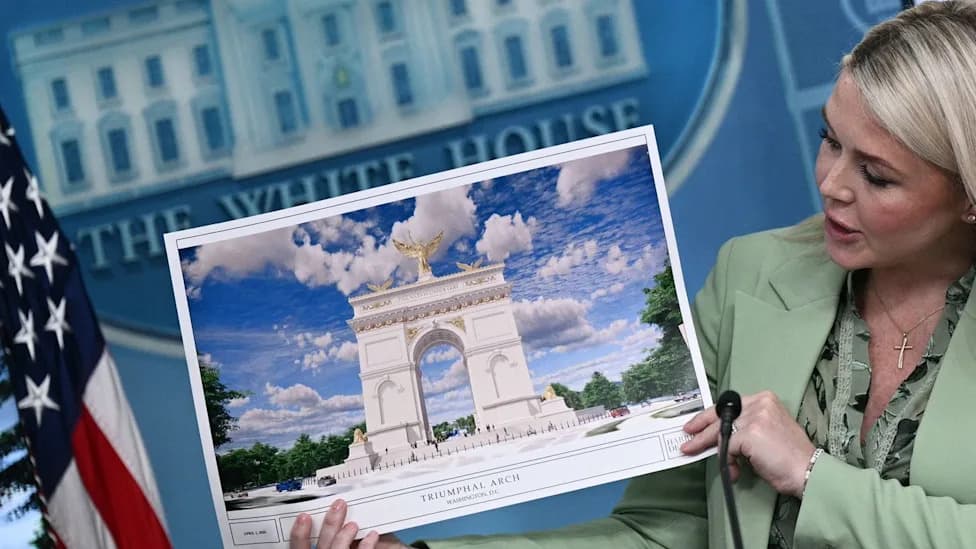
Excavation crews have begun work at Memorial Circle on Columbia Island for the proposed 250‑foot "Great Triumphal Arch," a project the administration says is covered by a 1925 authorization tied to the Arlington Memorial Bridge. Interior Secretary Doug Burgum announced the planned excavation and defended the arch as a civic landmark. Opponents, including a coalition of Democrats and Senator Angus King, contend new congressional approval is required. Critics say the arch is one of several costly, legacy‑focused projects undertaken during Trump's second term.
Excavation Underway for Trump's Controversial 250‑Foot 'Triumphal Arch' — Fight Over Authority and Legacy Intensifies
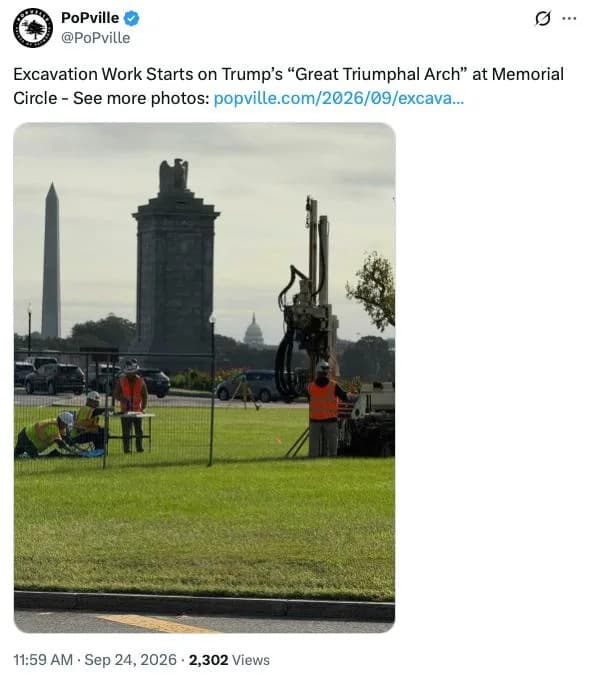
Screenshot of a tweet
Excavation work has begun at Memorial Circle on Columbia Island for the site proposed for former President Donald Trump's 250-foot "Great Triumphal Arch," where crews were photographed Thursday behind fencing with a small drilling rig, according to images published by Popville.
Interior Secretary Doug Burgum announced earlier this month on X that the Department of the Interior was "preparing to start, over the next two‑week period, the excavation work necessary for the Great Triumphal Arch and Military Observation Deck." He defended the project as bringing a landmark arch to Washington, D.C., noting that many world capitals feature monumental arches.
"Over 70 major cities/capitals around the world, from London, Paris and Rome to Madrid, Athens and New Delhi, all showcase beautiful arches... Now after 125 years of waiting, the most powerful capital in the world will be home of the most spectacular and beautiful arch of them all!" — Doug Burgum (posted on X)
Legal and Historical Dispute
The administration asserts it does not need new congressional authorization to begin the roughly $250 million project, citing a broad 1925 authorization related to construction of the nearby Arlington Memorial Bridge and its surrounding features. But reporting from The Washington Post earlier this year found historical documents showing the original 1925 plan called for smaller columns flanking the bridge rather than a towering triumphal arch.
Opponents — including a coalition of Democrats and some independent lawmakers — maintain that new congressional approval is required before the executive branch may proceed. "This is a straightforward issue of who's in charge," Maine Senator Angus King told The Washington Post in March, expressing separation‑of‑powers concerns.
Location, Symbolism, and Reaction
If constructed, the arch would be sited between the Lincoln Memorial and Arlington National Cemetery, a placement critics say would physically and symbolically insert Trump's legacy into the space linking the president who helped end slavery and the soldiers who sacrificed their lives in that cause.
Critics have framed the arch as one among several high‑profile, costly projects on the White House grounds during Trump's second term that appear focused on legacy and aesthetics. Reported alterations and renovations include demolition of the White House East Wing, work on a proposed ballroom reported at roughly $600 million and rising, changes to the Lincoln bathroom and Palm Room, removal of Jackie Kennedy Onassis's Rose Garden, and a rushed $16 million renovation of the Lincoln Memorial Reflecting Pool that has itself been criticized.
Supporters argue the arch would be a new civic landmark akin to arches in many global capitals. The dispute now centers on legal authority, congressional oversight, and public reaction — and it is likely to continue as excavation proceeds.
What Comes Next
Observers expect legal challenges, congressional inquiries, and further public debate as work continues. Whether the administration moves forward without new congressional authorization remains the central point of contention.
Help us improve.