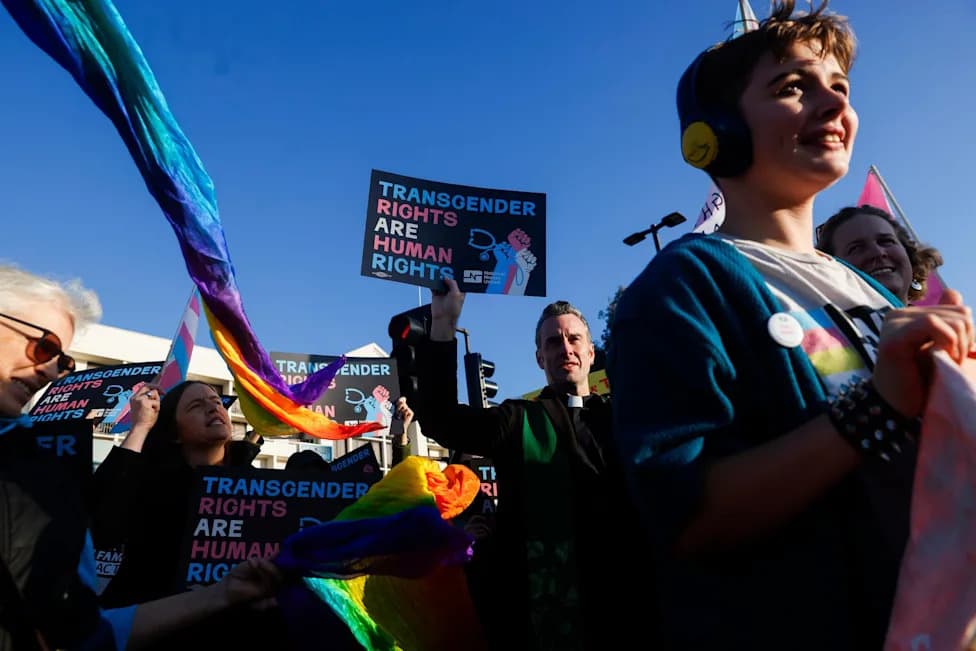
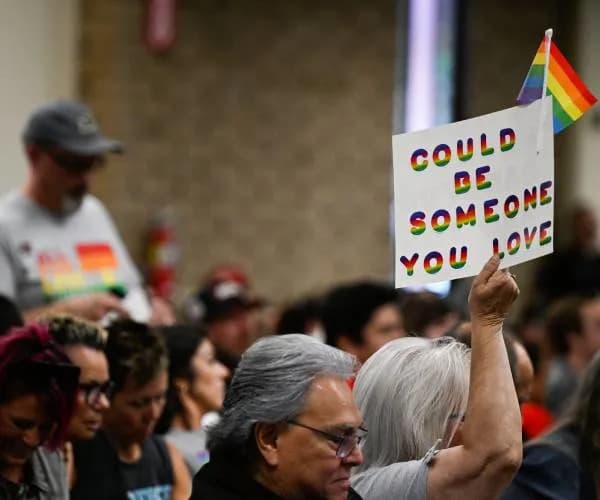
Supreme Court Rule Narrowly Upholds State Bans: On June 30 the Court held that Idaho and West Virginia laws barring transgender girls and women from female school sports do not violate Title IX, though justices split on 14th Amendment equal-protection questions. The decision allows existing state bans to remain but does not require nationwide prohibitions, leaving eligibility rules to states, school districts and private sports organizations. The ruling has sparked protests, prompted league responses and may influence future transgender-rights litigation beyond sports.
Supreme Court Lets State Bans On Transgender Girls In School Sports Stand — States And Leagues Now Set Rules

Former NBA player Enes Kanter Freedom got into a shouting match with Chicago Sky guard Natasha Cloud in the waning minutes of the third quarter and was subsequently ejected from a game against the Indiana Fever in Chicago on Sunday, Aug. 23.
Enes Kanter Freedom reacts as he is removed from the arena.(Patrick Gorski, IMAGN IMAGES via Reuters Connect)
On June 30, the U.S. Supreme Court ruled that state laws prohibiting transgender girls and women from competing on female school sports teams in Idaho and West Virginia do not violate federal Title IX provisions. The nine justices unanimously found those laws consistent with Title IX but were divided on whether the laws violate the Equal Protection Clause of the 14th Amendment.
The Ruling And Its Rationale
The cases, Little v. Hecox and West Virginia v. B.P.J., were brought by plaintiffs who argued the state bans unlawfully discriminate against transgender people. In the majority opinion, Justice Brett Kavanaugh wrote that Title IX expressly allows sex-segregated athletic teams, and that states may therefore limit participation based on sex assigned at birth.
"The Court concludes that separate sports teams for biological males and biological females are reasonable given the inherent physical differences between the sexes," Justice Kavanaugh wrote. "The Constitution and Title IX do not require an overhaul of women's and girl's sports throughout America."
What The Decision Means
- States May Keep Existing Bans: The ruling permits state-level bans that exclude transgender girls from girls' and women's school sports to remain in force.
- No Nationwide Mandate: The decision does not require all states to enact bans; states and school districts remain free to adopt inclusive policies allowing students to compete consistent with their gender identity.
- Private Leagues And Professional Teams: Most professional leagues and international federations are private entities and not governed by Title IX; they set their own eligibility rules.
- Eligibility Rules Left Open: The opinion did not define how to determine an athlete’s sex for eligibility, leaving room for states and organizations to adopt measures such as medical, genetic, or administrative criteria.
Where State Law Stands
According to a USA TODAY review, 27 U.S. states currently have laws or policies that bar transgender girls from competing on publicly funded K–12 and college girls' teams. Those states include Alabama, Arizona, Florida, Idaho, Indiana, North Carolina, Texas, West Virginia and others. These bans generally target participation on female teams and do not typically prevent transgender boys from playing on male teams.
Reaction, Real-World Impact And High-Profile Episodes
The ruling intensified national debate and sparked protests and responses across sports. After WNBA player Sophie Cunningham voiced support for banning transgender girls and women from female competition, demonstrators gathered at Indiana Fever games. The Seattle Storm temporarily suspended a team co-owner over an incident involving fans, and security confronted spectators wearing XX-XY Athletics shirts at an Atlanta Dream–Indiana Fever game.
In August, former NBA players Enes Kanter Freedom and Royce White said they would declare themselves eligible for the 2027 WNBA Draft and identified as women; the WNBA ruled both ineligible and Commissioner Cathy Engelbert criticized what she called attempts to "sow divisiveness" in the league. The league's collective bargaining agreement states that "only players who are women are eligible to play in the WNBA," but the WNBA does not have a separate, detailed public policy on gender identity eligibility.
Science And Evidence
Research on athletic differences and the effects of hormone therapy remains limited and offers mixed findings. A February 2026 study in the British Journal of Sports Medicine reported that transgender women who had undergone one year of hormone therapy retained higher lean mass than cisgender women but did not show clear advantages in measures of upper- or lower-body strength or maximal oxygen consumption. A 2024 U.K. study found lower lung function and cardiovascular performance among transgender women compared with cisgender female athletes, while grip strength was higher in the transgender group.
Legal Implications Beyond Sports
Although the ruling focused on school athletics, legal experts warn the Court’s reasoning—particularly its acceptance of sex-wide classifications without individualized comparisons—could influence other transgender-rights and sex-discrimination disputes. The majority’s approach to intermediate scrutiny in the sports context may be cited in future challenges involving bathrooms, health care, or other public accommodations.
How Common Are Transgender Athletes?
Transgender people are a small proportion of the U.S. population: a 2025 Williams Institute study estimated about 1% of people age 13 and older identify as transgender. Surveys and privacy protections make precise counts difficult, but available data suggest transgender youth participate in school sports at lower rates than cisgender peers. For example, a 2024 children's health survey found 58% of children ages 6–17 played sports; a 2023 Human Rights Campaign report estimated about 19% of transgender youth participated in sports, with fewer than 1,300 competing in school programs. The NCAA reported fewer than 10 known transgender student-athletes among roughly 510,000 college athletes as of 2024.
What Comes Next
Expect more divergent policies across the country: some states and school districts will preserve or enact bans, while others will maintain or adopt inclusive rules. Private leagues and international federations will continue to craft their own standards. Legal challenges and legislative efforts at the state and federal levels are likely to persist, and courts will continue to shape how anti-discrimination principles apply outside the specific athletics context.
Source: Adapted from reporting originally published by USA TODAY.
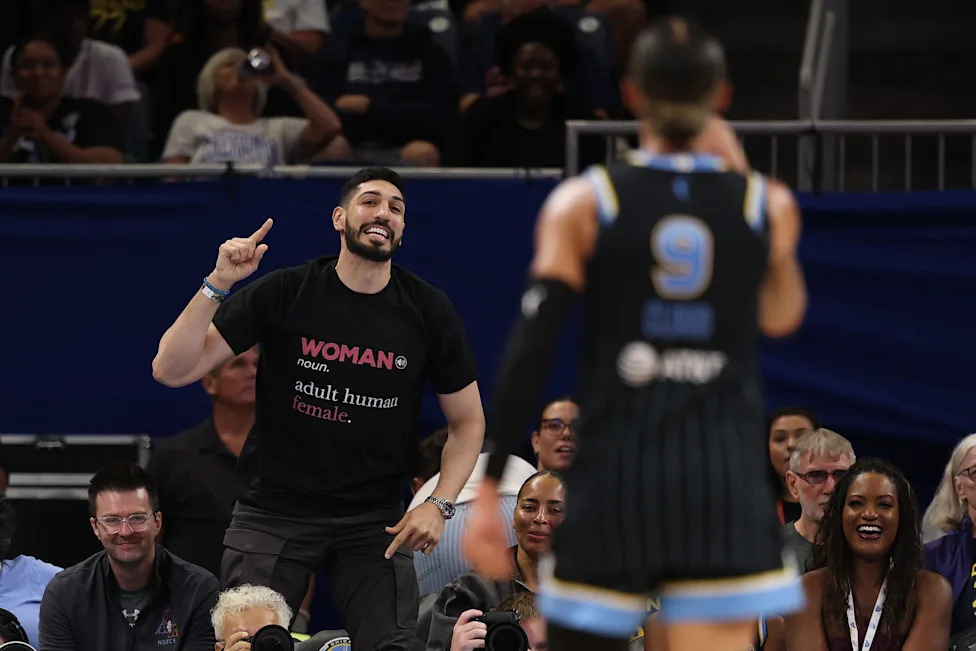
Former basketball player Enes Kanter Freedom and Natasha Cloud of the Chicago Sky yell at one another during the second half between the Chicago Sky and the Indiana Fever at Wintrust Arena on Aug. 23, 2026 in Chicago.
Kanter Freedom has been outspoken about the trans athlete debate surrounding the WNBA, declaring himself eligible for the 2027 league draft on social media on Aug. 7, saying he identifies as a woman. He was sitting courtside at Wintrust Arena in a t-shirt that said: "WOMAN noun. adult human female.(Michael Reaves, Getty Images)

Cloud approached Kanter Freedom when a timeout was called with 1:22 to go in the third quarter. He stood up, arms outstretched and approached the court.
Chicago Sky guard Natasha Cloud yells at Enes Kanter Freedom during the second half against the Indiana Fever at Wintrust Arena on Aug. 23, 2026 in Chicago.(Patrick Gorski, IMAGN IMAGES via Reuters Connect)
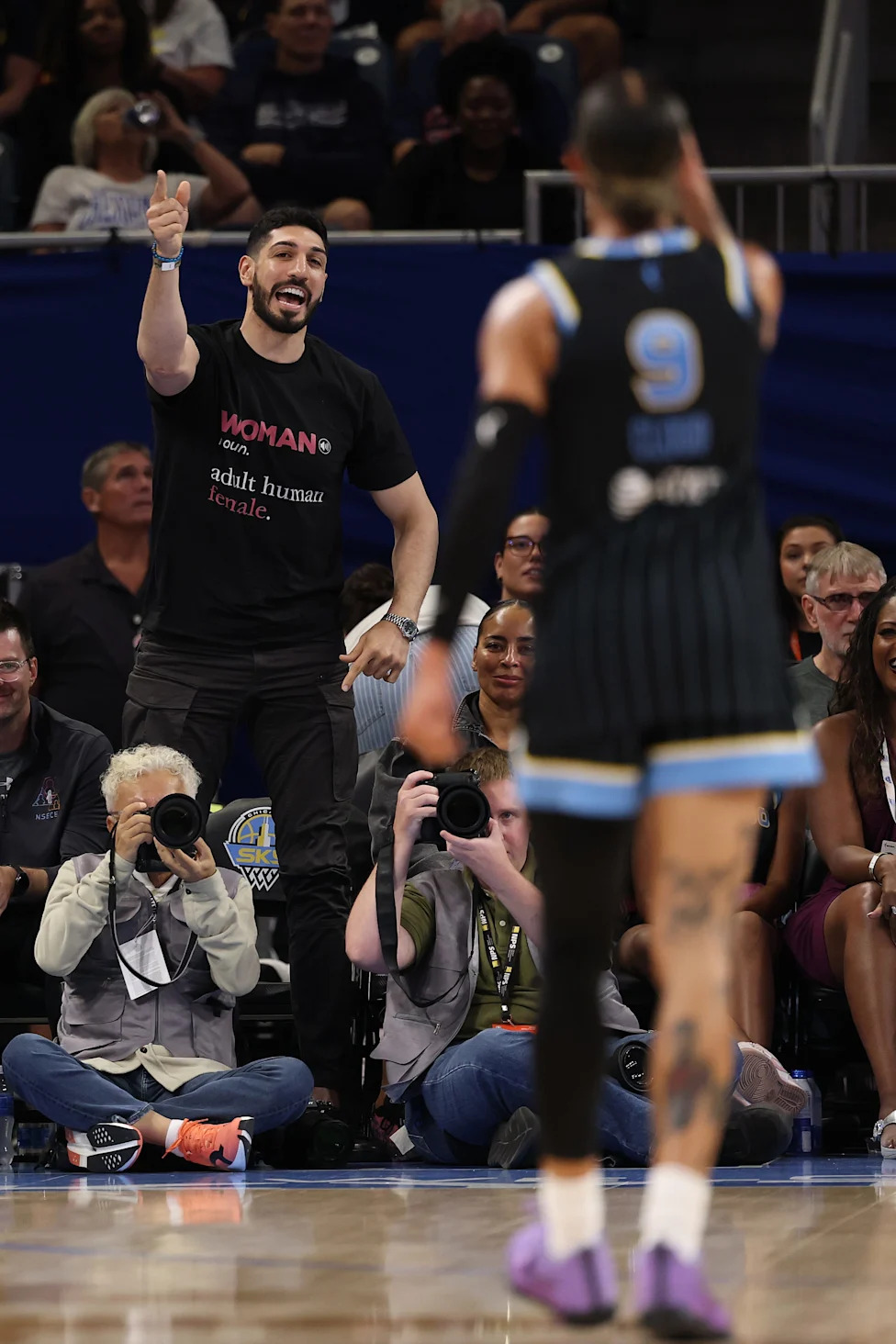
Kanter Freedom stood up, arms outstretched and approached the court after Cloud approached him when a timeout was called with 1:22 to go in the third quarter.
Former basketball player Enes Kanter Freedom and Natasha Cloud of the Chicago Sky yell at one another during the second half between the Chicago Sky and the Indiana Fever at Wintrust Arena on Aug. 23, 2026 in Chicago.(Michael Reaves, Getty Images)
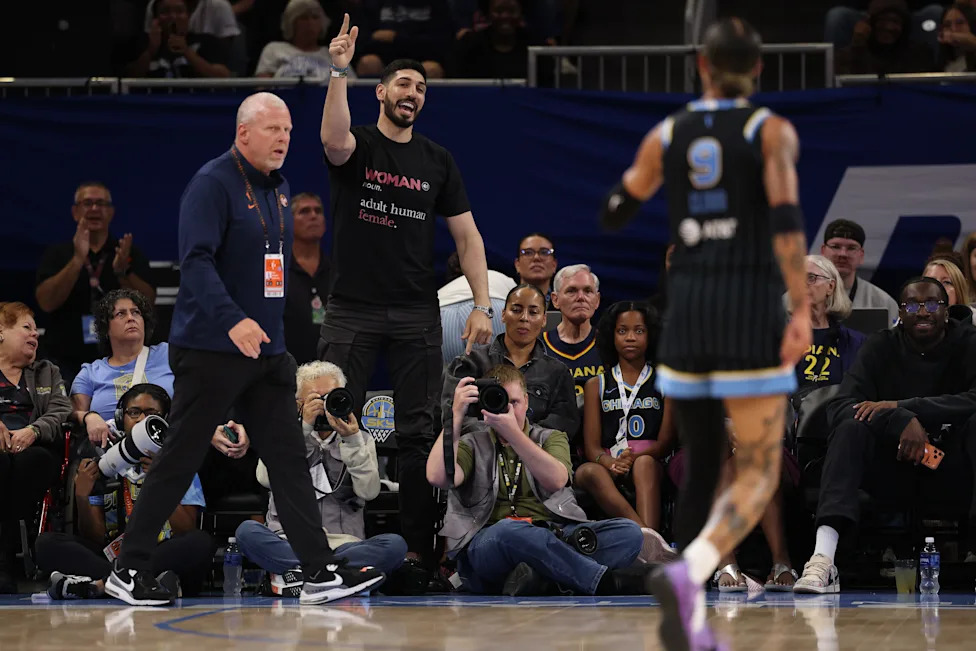
Former basketball player Enes Kanter Freedom and Natasha Cloud of the Chicago Sky yell at one another during the second half between the Chicago Sky and the Indiana Fever at Wintrust Arena on Aug. 23, 2026 in Chicago.(Michael Reaves, Getty Images)
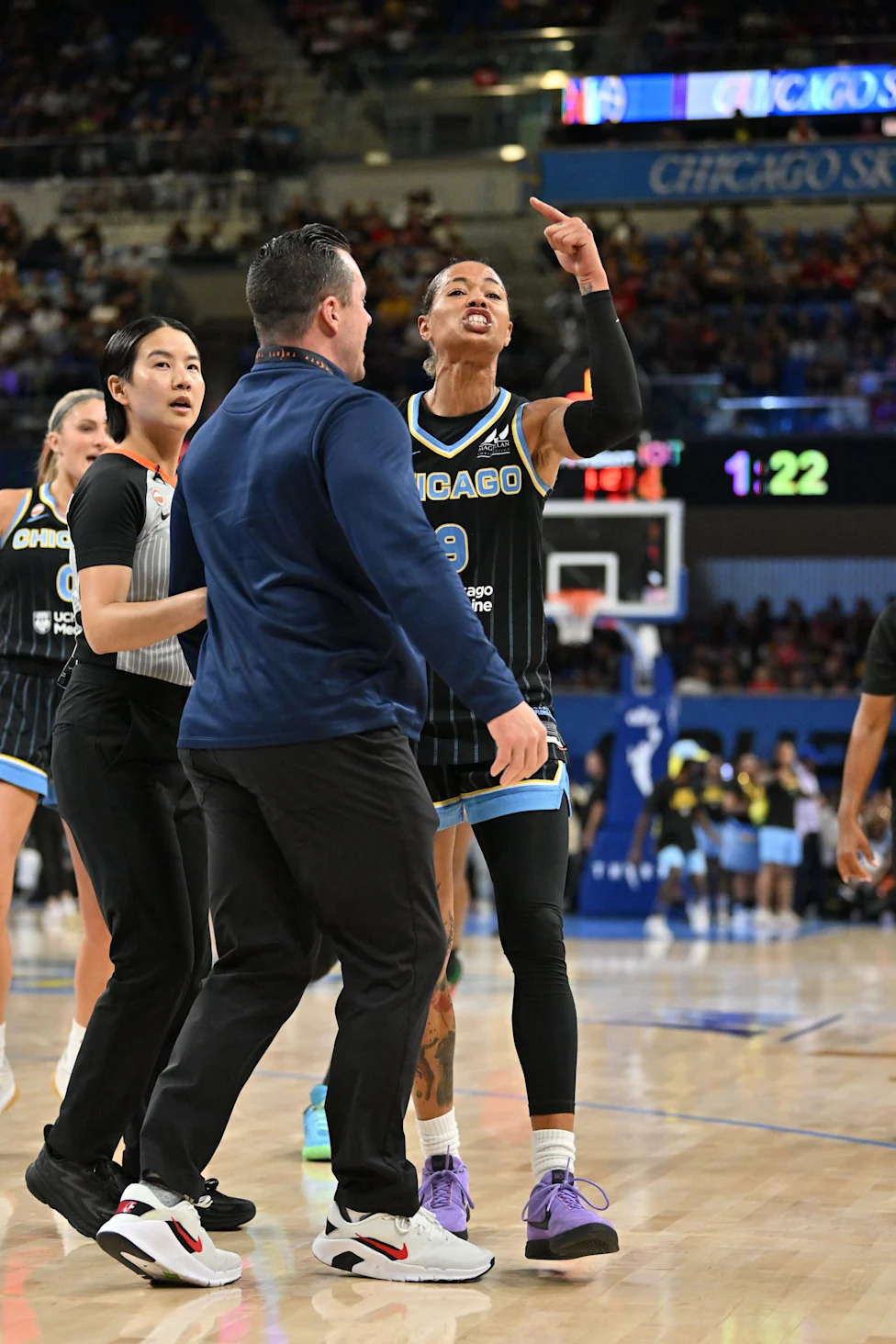
Chicago Sky guard Natasha Cloud yells at Enes Kanter Freedom during the second half against the Indiana Fever at Wintrust Arena on Aug. 23, 2026 in Chicago.(Patrick Gorski, IMAGN IMAGES via Reuters Connect)
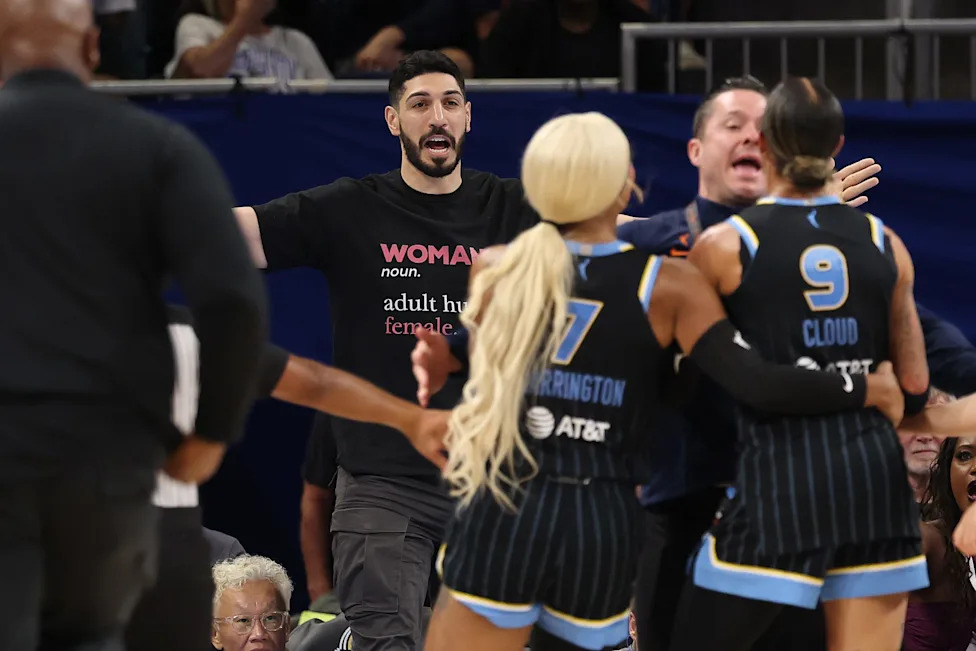
Enes Kanter Freedom and Natasha Cloud of the Chicago Sky yell at one another during the second half between the Chicago Sky and the Indiana Fever at Wintrust Arena on Aug. 23, 2026 in Chicago.(Michael Reaves, Getty Images)
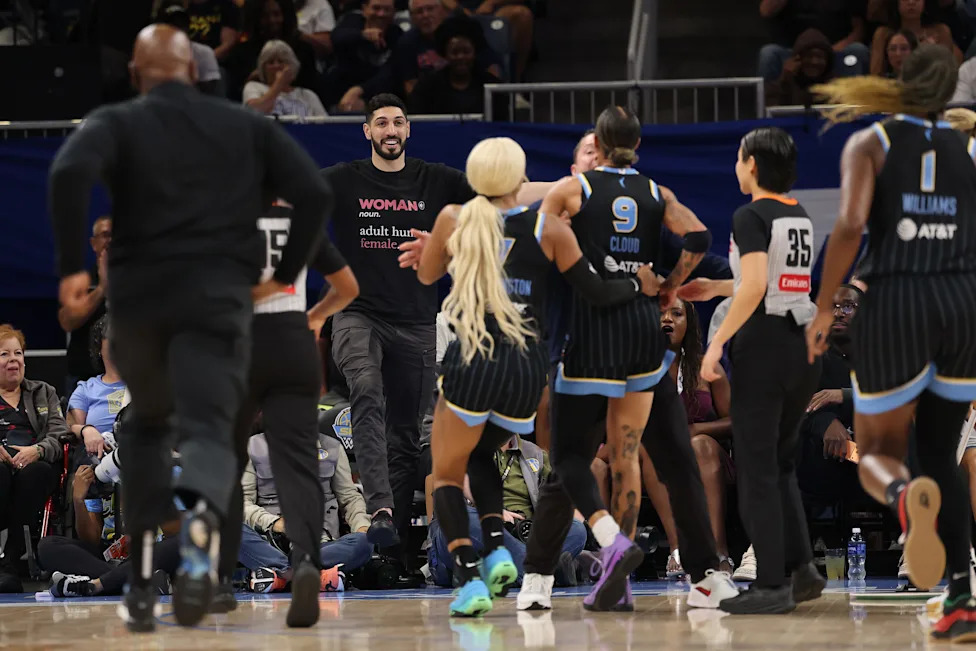
Enes Kanter Freedom and Natasha Cloud of the Chicago Sky yell at one another during the second half between the Chicago Sky and the Indiana Fever at Wintrust Arena on Aug. 23, 2026 in Chicago.(Michael Reaves, Getty Images)
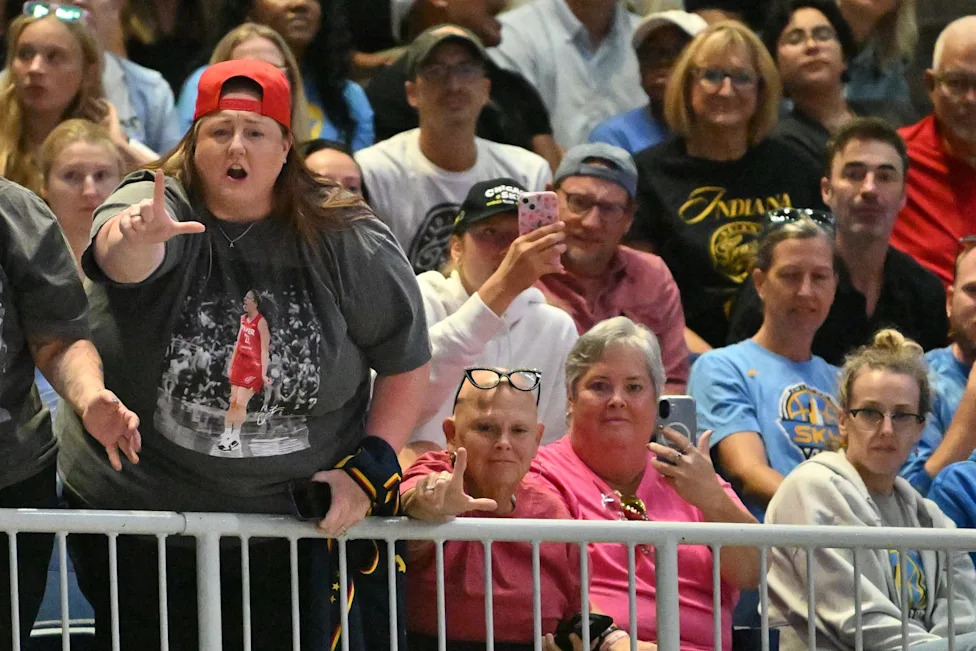
Fans react as Enes Kanter Freedom is removed from the arena during the second half of the WNBA Chicago Sky game against the Indiana Fever at Wintrust Arena on Aug. 23, 2026 in Chicago.(Patrick Gorski, IMAGN IMAGES via Reuters Connect)

Enes Kanter Freedom reacts as he is removed from the arena during the second half of the WNBA Chicago Sky game against the Indiana Fever at Wintrust Arena on Aug. 23, 2026 in Chicago.(Patrick Gorski, IMAGN IMAGES via Reuters Connect)

Renee Richards poses for a portrait on the front porch of her home in Carmel, New York, March 25, 2015. More than three decades after putting down her tennis racquet, Renee Richards, 80, told Reuters she is still astonished she possessed the moxie to join the women's professional tennis tour after living the first 34 years of her life as a man. For all the frenzy around Olympian Bruce Jenner's reported decision to transition to a woman, the transgender pioneer Richards, born Richard Raskind, believes nothing could be tougher than what she endured in the 1970s.(Mike Segar, REUTERS)

Tennis player, Renee Richards, on the tennis court, July 1977.(Getty Images, Getty Images)

Tennis player Renee Richards on the tennis court, July 1977.(Getty Images, Getty Images)

Tennis player Renee Richards (L) and journalist Katie Couric attend as National Geographic hosts the world premiere screening of "Gender Revolution: A Journey With Katie Couric" on Feb. 2, 2017 in New York City.(Brad Barket)

Tennis player Renee Richards attends as National Geographic hosts the world premiere screening of "Gender Revolution: A Journey With Katie Couric" on Feb. 2, 2017 in New York City.(Brad Barket, Getty Images for National Geographic)

Dr. Renee Richards visits the Tribeca Film Festival 2011 portrait studio on April 27, 2011 in New York City.(Larry Busacca, Getty Images for Tribeca Film Festival)

Dr. Renee Richards attends the premiere of "Renee" during the 2011 Tribeca Film Festival at Clearview Cinemas Chelsea on April 21, 2011 in New York City.(Jemal Countess, Getty Images)

(L to R) Director Eric Drath, Dr. Renee Richards, Virginia Wade, and Nathan Halpern attend the premiere of "Renee" during the 2011 Tribeca Film Festival at Clearview Cinemas Chelsea on April 21, 2011 in New York City.(Jemal Countess, Getty Images)
Help us improve.