Conservationist Farina Othman and her Seratu Aatai team collar and monitor wild Bornean elephants to reduce human-wildlife conflict and map movement corridors across fragmented rainforest in Sabah. About 1,000 Bornean elephants remain, and the IUCN listed the species as endangered in 2024 after more than 60% habitat loss in 40 years. Community outreach, trained "wildlife guardians" and engagement with plantations aim to increase coexistence while addressing economic barriers to creating corridors.
Borneo's "Elephant Whisperer": How Farina Othman Is Saving Sabah's Endangered Giants
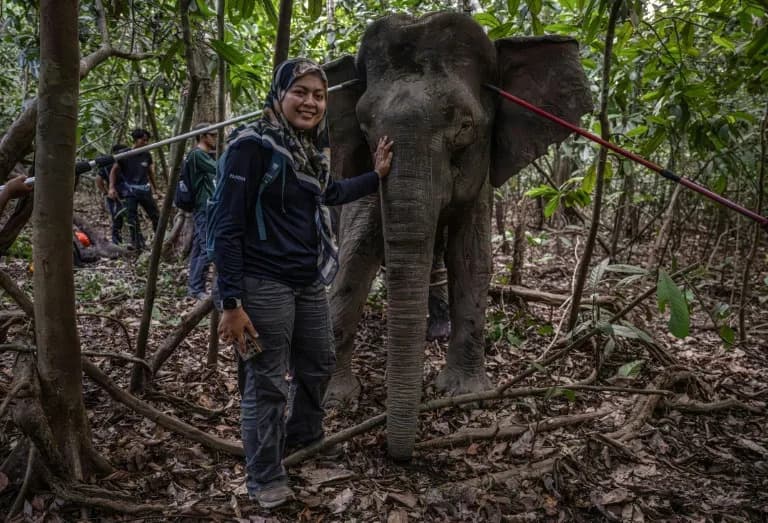
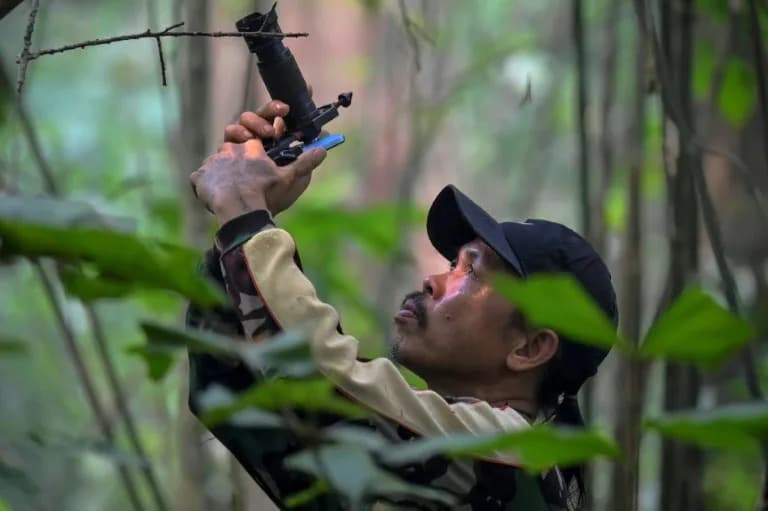
Farina Othman with a female Bornean elephant after a GPS collaring operation (Mohd Rasfan)
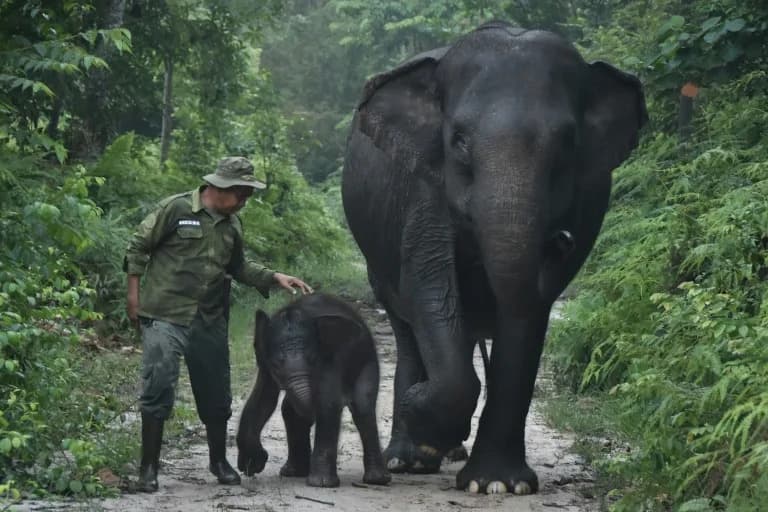
Deep inside Sabah's Bornean rainforest, urgent shouts pierce the humid air as conservationists sedate a female elephant known as "Pigtail" while her protective herd gathers nearby. The downed animal is one of roughly 1,000 Bornean elephants remaining in the wild — a population the IUCN designated endangered in 2024 after more than 60% of its habitat was lost in Sabah over the past 40 years.
Tracking, Alerts and Rapid Field Work
Conservationist Farina Othman and her Seratu Aatai team move quickly to fit a GPS tracking collar and collect blood samples. The dart's sedative lasts roughly 30 minutes, so speed is essential. The collar not only helps researchers monitor movements but also enables teams to alert nearby villages when an elephant approaches, reducing the risk of dangerous encounters.
Building Corridors Across a Fragmented Landscape
Farina is designing "elephant corridors" — deliberate pathways through oil palm plantations that reconnect isolated forest patches. These corridors aim to restore connectivity across a landscape hemmed in by plantations and villages, allowing elephants to move more safely between feeding and breeding areas.
Community Engagement and Coexistence
Based in Sukau on the Kinabatangan River, Seratu Aatai runs outreach programs in plantation schools, distributes information leaflets and trains a network of "community wildlife guardians" who help shepherd elephants away from homes without harming them. Their 17-person team focuses on increasing local tolerance and teaching safe, non-lethal deterrence techniques.
"Conflict is inevitable," Farina has warned, noting the shrinking range available to elephants in Lower Kinabatangan: about 160 animals live in the roughly 400 sq km floodplain, but Farina says only half that area remains usable.
Economic Barriers and the Need for Partnerships
Convincing plantation owners to set aside land for corridors is difficult. Tight profit margins and fierce competition discourage many producers from sacrificing acreage. Advocates say companies that cooperate often lack recognition and financial support from buyers. Industry groups argue progress is being made but acknowledge that sustainable change requires incentives and practical, "win-win" solutions for planters and wildlife.
Farina remains optimistic. Locals once used the Malay word "halau" (to chase away) when dealing with elephants; Seratu Aatai now encourages people to "escort" or "guide" elephants away — a linguistic shift that reflects a broader move toward coexistence and protection.
Why It Matters: Protecting Borneo's elephants preserves biodiversity, stabilizes ecosystems and reduces dangerous human-wildlife conflict. Practical measures — collars, corridors, community guardians and better cooperation with plantations — are central to any long-term solution.
Help us improve.