The Stanford Daily’s editor in chief describes how federal enforcement actions have chilled campus speech and forced student journalists into fraught choices. In March 2025, masked agents detained Rümeysa Öztürk after she co‑authored a pro‑Palestinian op‑ed, prompting a student to ask the paper to remove his byline for safety. The Daily and FIRE sued; U.S. District Judge Noël Wise issued a 90‑page ruling defending free speech, though the government could still appeal. The piece details how fear led reporters to withhold bylines and left important events unreported.
How a Federal Crackdown Silenced Student Journalists at Stanford

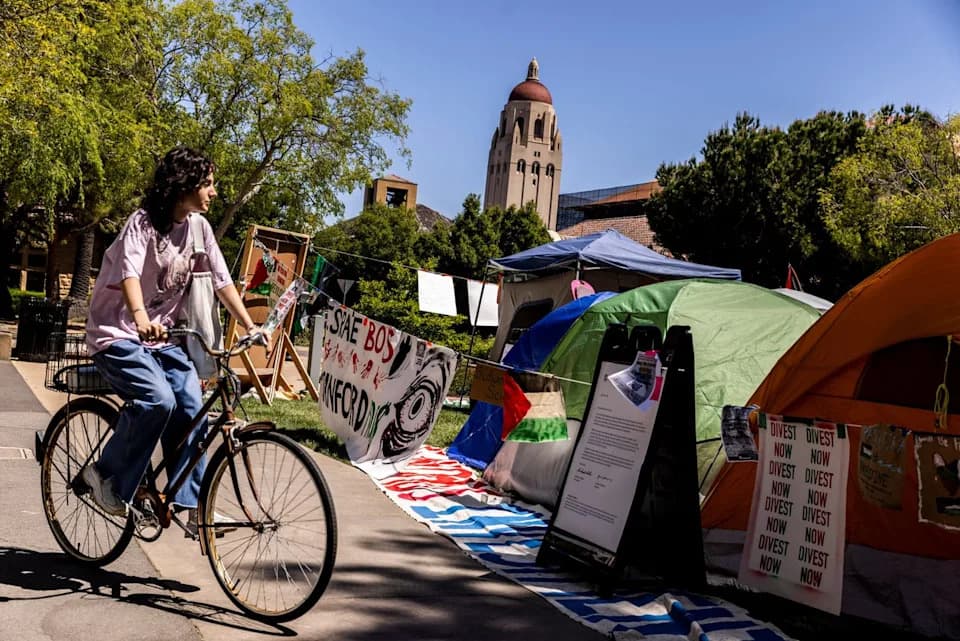
I serve as editor in chief and president of The Stanford Daily. Our newsroom has been profoundly affected by the federal government's campus-enforcement actions — an atmosphere of fear that led my colleagues and me to sue the government for trampling free‑speech protections.
A Moment of Real Fear
The most wrenching episode of my college journalism career came in March 2025, when masked federal agents in Massachusetts detained a young woman, Rümeysa Öztürk, on a sidewalk for co‑authoring a pro‑Palestinian op‑ed in a student newspaper. That event rippled across campuses and into our newsroom.
In the same month, a Palestinian undergraduate who had been quoted in earlier Daily reporting sent an e‑mail to our editors titled "Urgent Request." He wrote that, terrified by Öztürk’s detention, he wanted his byline removed from past pieces. "I do not have the luxury of being in a position where I take my safety for granted," he wrote. "Normally, I would be the loudest in talking about my home, but in this atmosphere, my literal safety is at [stake]."
The Legal Fight
My colleagues and I at The Stanford Daily filed suit against the federal government just over a year ago. Our attorneys at the Foundation for Individual Rights and Expression (FIRE) told the court that using immigration enforcement to punish or deport noncitizens for their speech undermines the First Amendment.
Last month, a federal judge sided with our argument. In a detailed 90‑page opinion, U.S. District Judge Noël Wise wrote:
"In the United States, freedom of speech belongs to the people. It is not the government's to take."
The ruling brought relief and a measure of vindication for campus journalism — but it may not be the end of the story. The government could still appeal, reviving legal uncertainty for student newsrooms.
The Chilling Effect on Campus
The consequences of enforcement actions were immediate. A few weeks after ICE transported Öztürk and another student, Mahmoud Khalil, to detention facilities in Louisiana, we received a tip about an important campus event: a joint appeal for peace at Memorial Church by a Palestinian woman whose son was killed by Israeli tear gas and an Israeli woman who lost parents on October 7. We assigned a reporter, who gathered quotes and careful notes that night — but when it came time to publish, she refused to attach her name because she was an international student and feared repercussions.
With staff stretched thin, the event went unreported by the Daily. That silence was not accidental: it reflected the chilling effect enforcement actions have on those most vulnerable. Afterward, more requests arrived. Noncitizen alumni asked us to remove or delist years‑old articles; current international students sought deletion of quotes that were unrelated to Palestine but could nonetheless expose them to risk.
Why It Matters
Targeting students for political expression betrays the openness that, at its best, makes the United States an attractive place to study. When journalists — especially those who are noncitizens — must choose between telling the truth and protecting their safety, reporting suffers and the public loses important perspectives.
Our lawsuit and the recent court decision are victories for press freedom, but the path forward remains uncertain. Until there is clear legal protection for campus speech regardless of immigration status, student journalists and their sources will continue to face difficult, sometimes impossible, choices.
Help us improve.