Janfada is a state-led mobilisation drive to recruit and train volunteers under the Basij, the IRGC’s militia arm. Authorities have claimed tens of millions registered, but independent checks of the registration site suggest far fewer entries and exposed weaknesses in the verification process. The campaign involves women and teenagers, spans military and civilian roles, and takes place against a backdrop of energy shortages, economic strain and international tension; analysts say it may be intended to rehabilitate the Basij’s image and deter unrest.
Inside Iran’s 'Janfada' Mobilisation: Why Authorities Are Training and Arming Civilians
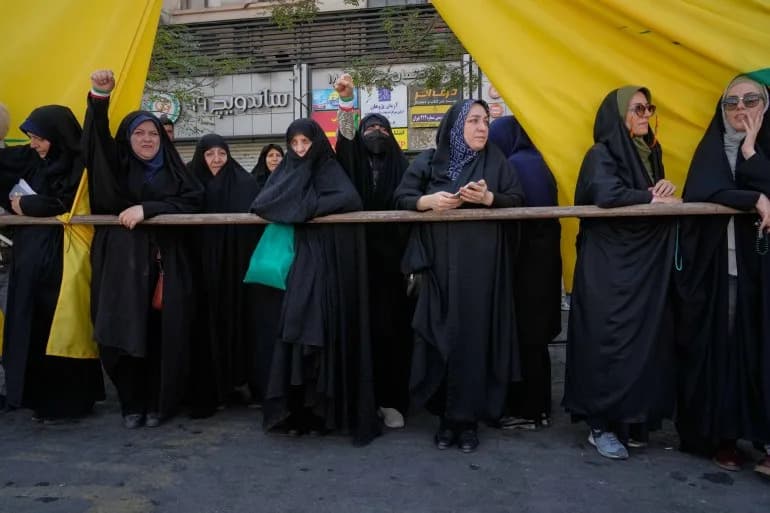
Women watch the state-organised 'Janfada' military-style parade in Tehran, Iran, on Septermber18, 2026 [Vahid Salemi/AP]
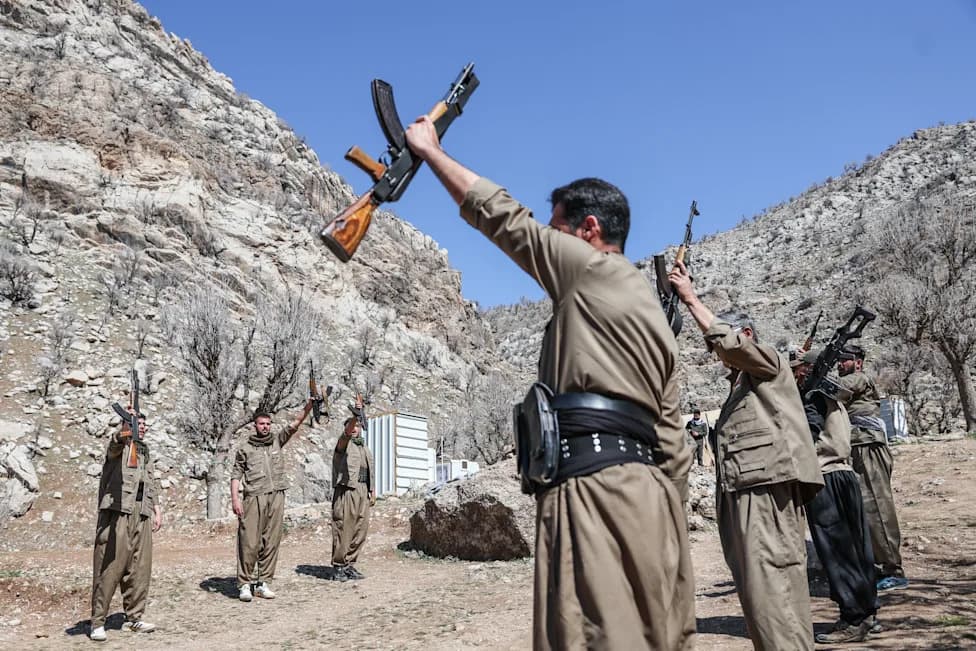
Banners across Tehran asking "Do you know how to work with this?" — paired with images of rocket-propelled grenades, sniper and assault rifles, and communications gear — advertise a state campaign to train and arm volunteer civilians as part of Iran’s security apparatus.
Officials say the campaign is tied to a drive to recruit volunteers under the Basij militia, the volunteer arm of the Islamic Revolutionary Guard Corps (IRGC). Branded "Janfada" — roughly translated as "those who sacrifice their life" — the mobilisation was launched in late March amid heightened tensions with the United States and Israel.
Public Demonstrations and Disputed Numbers
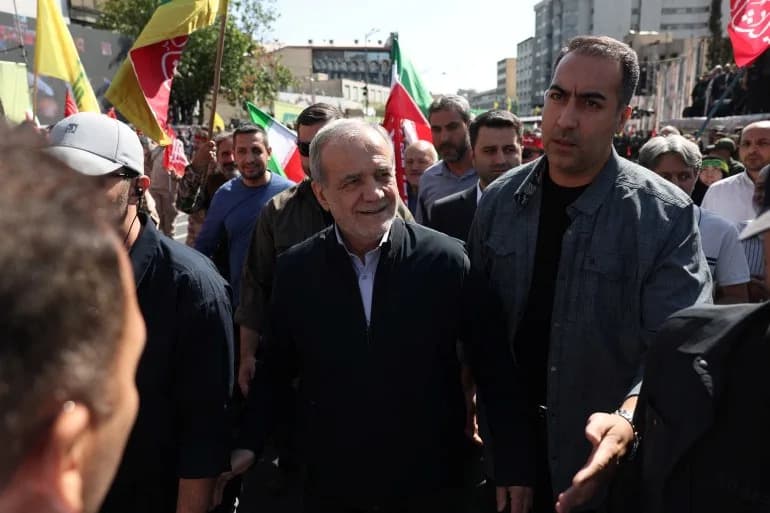
Janfada held a public military-style exercise in Tehran on Friday, where thousands of children, women and men — many wearing masks or sunglasses — marched through central streets. Authorities beforehand said the event would draw 313,000 people, a number that state footage did not convincingly support; in Twelver Shia belief, 313 is symbolically associated with the Mahdi’s closest companions.
Hassan Hassanzadeh, head of the IRGC in Tehran, told state broadcaster IRIB that more than 600,000 people had registered that week for the active mobilisation phase via the campaign website. Officials have said they expect over one million sign-ups and that they have formed roughly 1,000 initial units described as "battalions." (A photo from the Tehran event showed women watching the state-organised Janfada parade; photo credit: Vahid Salemi/AP.)
The campaign’s registration figures have been controversial. One month after launch, authorities claimed more than 31 million people — just over a third of Iran’s population — had registered. Foreign-based activists who inspected the website’s source code reported seeing fewer than four million registrations; the online form required only a phone number, not a national identification number. After those discrepancies surfaced, the visible counter on the site slowed, but officials later asserted 33 million people were registered. No documentary evidence has been provided to substantiate those totals.
Not Just Combat Roles
Organisers emphasise Janfada is not purely military. They say 26 percent of registrants chose military or security roles, while others indicated interest in rescue operations, social services, media or financial support. President Masoud Pezeshkian used the parade to urge volunteers to reduce consumption of fuel, electricity and other resources as the country deals with energy imbalances and economic strain.
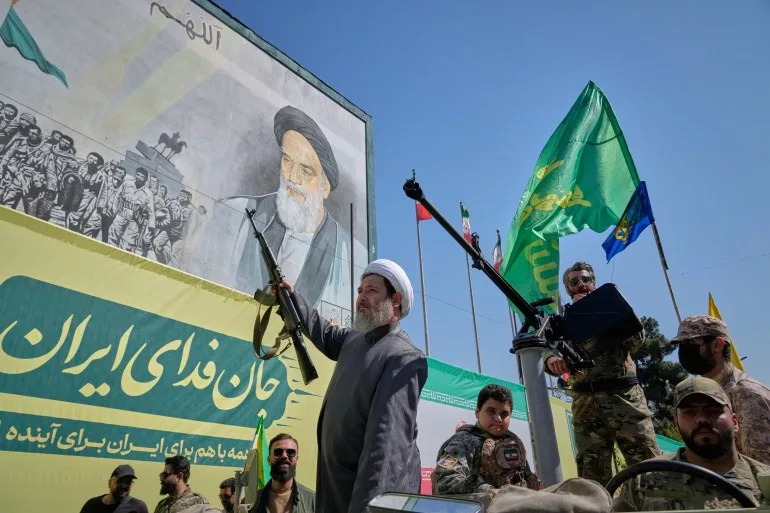
An armed Shia cleric rides aboard a military vehicle past a billboard depicting Ayatollah Ruhollah Khomeini, the founder of the Islamic Republic, during the state-organised 'Janfada', or 'Sacrifice for Iran', military-style parade in Tehran, Iran, September 18, 2026. [Vahid Salemi/AP]
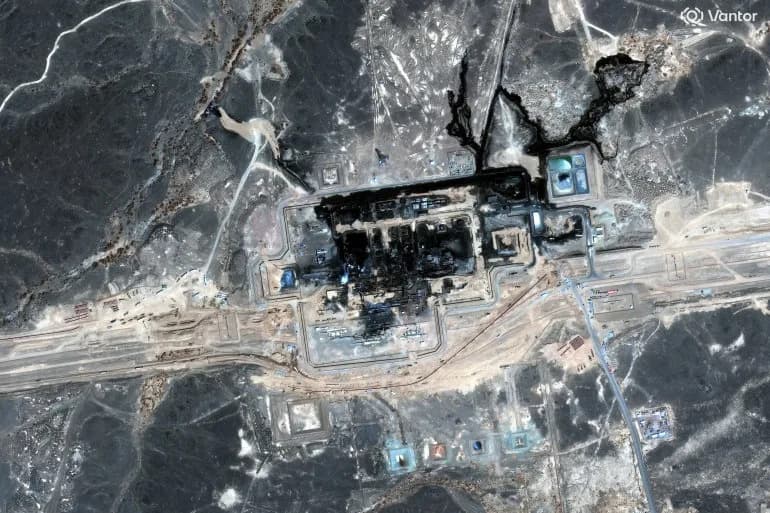
Earlier this month the government raised fuel prices and imposed petrol quotas for private vehicles as it confronts a budget shortfall and fuel production problems tied to the war. Households and industry have faced intermittent power cuts through the summer, and officials warn the coming cold months could bring further natural gas shortages despite Iran’s energy resources.
Children, Teenagers and Women in the Campaign
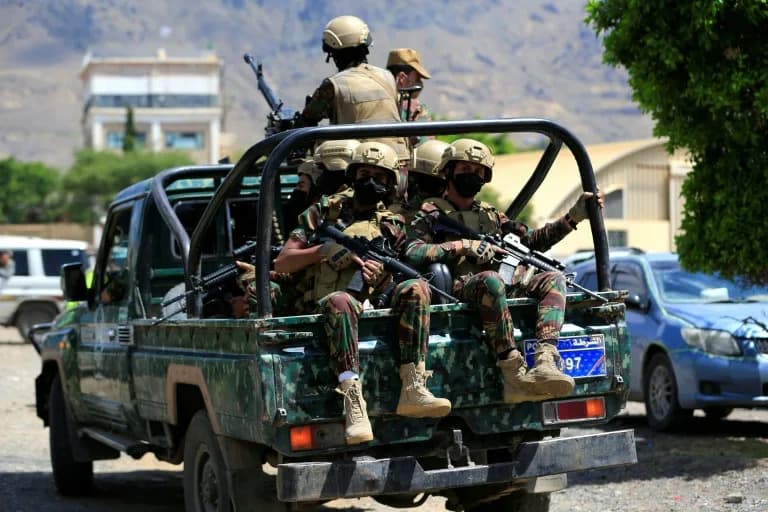
The Tehran display placed particular emphasis on youth. Some teenagers were filmed carrying assault rifles and other weapons during the exercise, while others marched unarmed. Armed teenagers have been observed manning checkpoints and roadblocks in Tehran and other cities in recent months.
“Our effort concerning children and teenagers, first and foremost, is to introduce them to the culture of sacrifice and resistance,” Sasan Zare, Janfada spokesman, told the state-linked Iranian Labour News Agency. “The stronger their value system is formed from childhood, and the more they become familiar with concepts like patriotism and self-sacrifice, the more significant the impact can be on their future.”
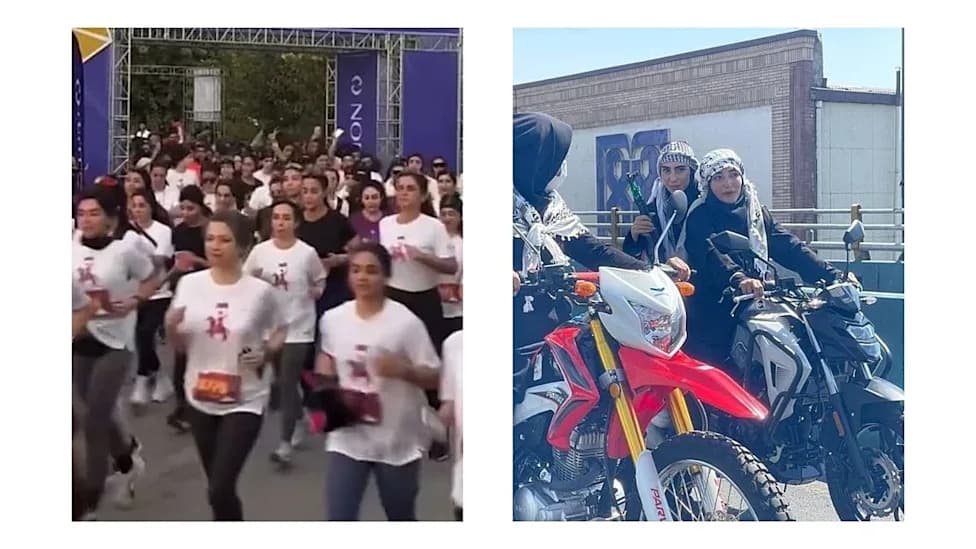
Zare said boys older than 15 are allowed to register and that officials are considering enrolling those under 15. Women were prominent in the parade—many wearing chador and seen carrying weapons publicly—and some were filmed riding motorcycles, an activity officially banned for women in civilian life.
Strategic Context and International Reactions
Military hardware that Iran says has been used in confrontations with the US and Israel was put on public display. The mobilisation coincides with tensions over the Strait of Hormuz, a US naval blockade of Iran’s southern ports and expanded sanctions on Tehran. Iran’s security chief Mohsen Rezaei told Al Jazeera that seven negotiating conditions had been communicated to Washington, but added that commanders were prepared to resume hostilities if needed.
Observers note authorities have not explained why hundreds of thousands of civilians would be needed for security or combat roles when a US ground invasion appears unlikely in the short term. The campaign also follows months after nationwide protests in January that left many dead; Iranian authorities called those events a "coup" allegedly aided by the United States and Israel. A United Nations fact-finding mission concluded that Iranian forces committed crimes against humanity during the protests, and Amnesty International has published a report naming senior officials it says were responsible for abuses during the 2022–23 protests.
Analysts' View
Analysts argue Janfada may aim to rehabilitate the Basij’s public image, which has been tarnished by its role in repressing dissent, and to prepare the state for a range of contingencies—from regional conflict scenarios to large-scale domestic unrest driven by economic pressures.
As the campaign evolves, key questions remain about the accuracy of recruitment claims, the involvement of minors, and the broader domestic and regional implications of arming civilians under a paramilitary banner.
Help us improve.