Enforcement of Iran's mandatory hijab and modesty rules has loosened in recent years, especially in Tehran, with social media showing women publicly exposing hair, arms and legs. The shift accelerated after the 2022 protests following Mahsa Amini's death, and authorities have largely avoided aggressive policing to prevent renewed unrest amid wartime and economic strain. Hard-liners are pushing for a crackdown, but senior leaders and security commanders caution that strict measures could spark public backlash.
Iran Reluctant to Reimpose Strict Hijab Rules Amid War, Sanctions and Growing Public Defiance
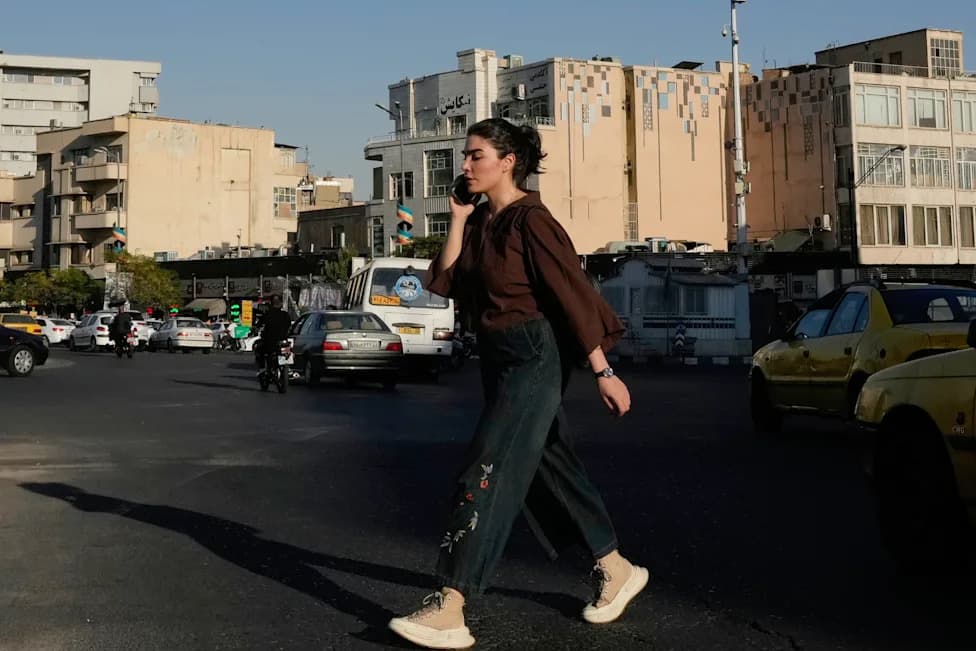
A woman talks on her cellphone as she walks across the Islamic Revolution square in downtown Tehran, Tuesday, Sept. 15, 2026. (AP Photo/Vahid Salemi)(AP Photo/Vahid Salemi)
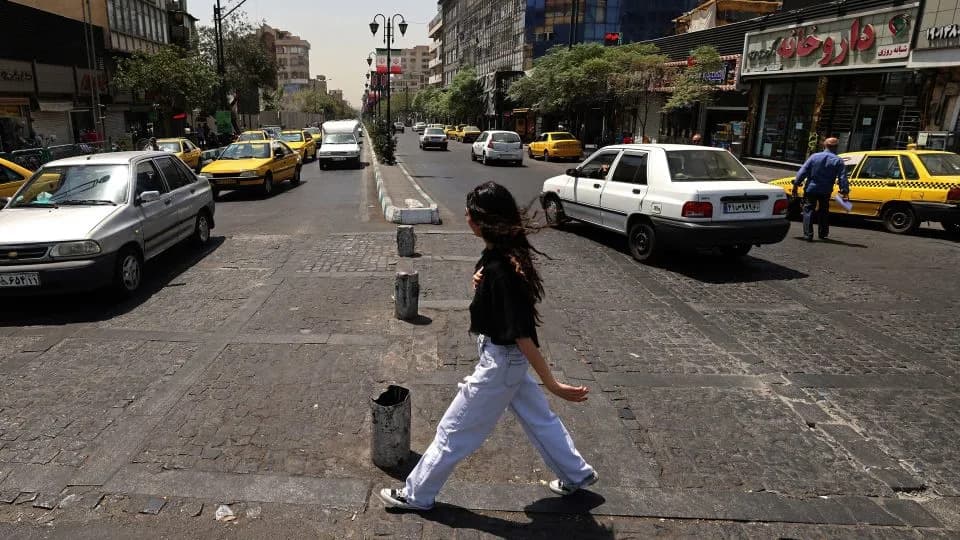
Scenes shared widely on social media from Tehran show women sitting in outdoor cafés without headscarves and wearing crop tops, men in shorts and women in leggings exercising side-by-side in parks, and passersby dancing at sidewalk concerts with hair exposed. These everyday images underscore how enforcement of Iran's dress and behavior codes has eased in recent years.
Background
The easing of enforcement is tied in part to the mass unrest that followed the Sept. 16, 2022, death of 22-year-old Mahsa Amini after she was detained by morality police for an alleged hijab violation. Security forces crushed those protests with a brutal crackdown that killed many and led to thousands of arrests. In the aftermath, authorities have largely stepped back from aggressively policing the hijab and other modesty rules in an apparent effort to avoid rekindling nationwide unrest.
Push For A Crackdown — And Restraint
Hard-line factions within Iran's ruling establishment are increasingly demanding renewed enforcement of dress codes. At the same time, senior leaders and security commanders have warned that a fresh, heavy-handed campaign could provoke protests during a period of wartime mobilization and mounting economic pressure from sanctions and other external measures.
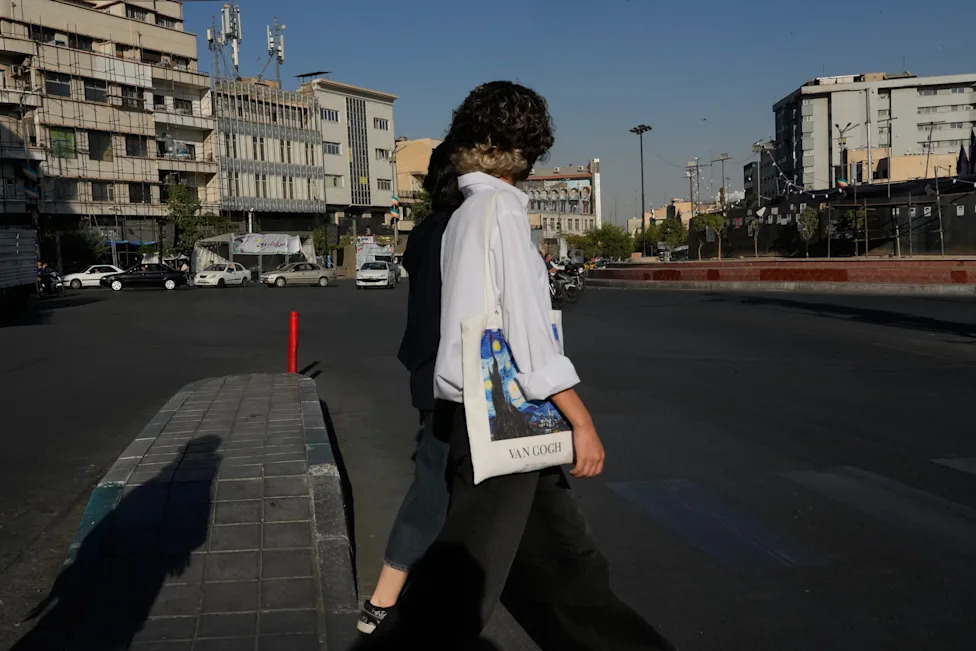
Women walk at the Islamic Revolution square in downtown Tehran, Tuesday, Sept. 15, 2026. (AP Photo/Vahid Salemi)(AP Photo/Vahid Salemi)
“We can't enter into that front as we ought to because of wartime conditions,” said politician Gholam Ali Haddad Adel in recent public remarks about hijab enforcement.
Activists and former political prisoners say debates over the hijab have intensified since the outbreak of the war. “They are afraid of protests,” said Pouran Nazemi, an activist who has been jailed in the past.
A university student in her early 20s from a well-off northern neighborhood of Tehran said she no longer wears a headscarf but prefers clothing that covers most of her arms and legs. “I feel like I am wearing too much,” she said, adding that friends now dress in exposed-shoulder tops and knee-length shorts. She spoke on condition of anonymity because of security concerns.
How Enforcement Has Changed
At its strictest, Iran's clerical system requires women to cover their hair and wear loose garments that conceal the body's shape. Morality police have historically fined, harassed or arrested women deemed in violation. Over the past decade many women deliberately adjusted how they wore the scarf and adopted more fitted clothing. Since 2022, numerous women have abandoned the headscarf entirely, and in parts of Tehran some now expose arms, legs or midriffs in public.
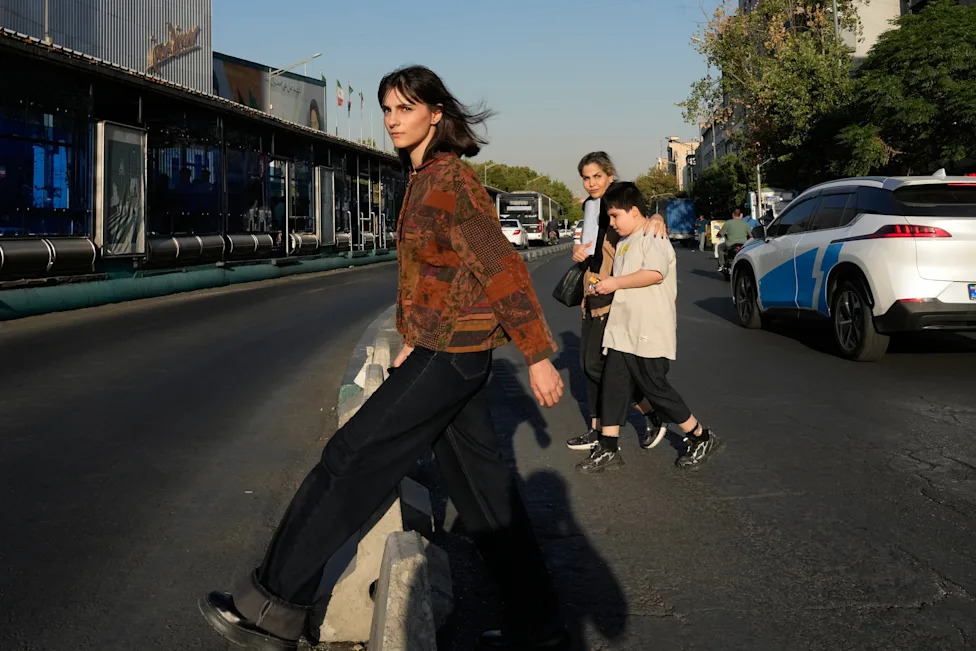
Pedestrians cross the Islamic Revolution street in downtown Tehran, Tuesday, Sept. 15, 2026. (AP Photo/Vahid Salemi)(AP Photo/Vahid Salemi)
Hard-line outlets and officials have condemned the trend. A recent commentary in Kayhan, a conservative newspaper overseen by elements close to the leadership, characterized the abandonment of the headscarf as “promoting nudity and permissiveness” and a “security threat.” Kayhan reported that judiciary officials had called for “prudent and urgent action.”
Hard-line groups continue to hold nightly rallies across the country attended by women in conservative black chadors and full head coverings — though even at some of those gatherings a small number of women without headscarves have been visible.
Security Forces Signal Caution
Figures linked to the Basij volunteer force and other security bodies have urged caution. The new head of the Basij, cleric Hossein Taeb, reportedly told commanders the issue should be handled so as not to damage “internal cohesion.” That stance echoes broader statements from senior leaders that prioritize wartime unity over domestic crackdowns.
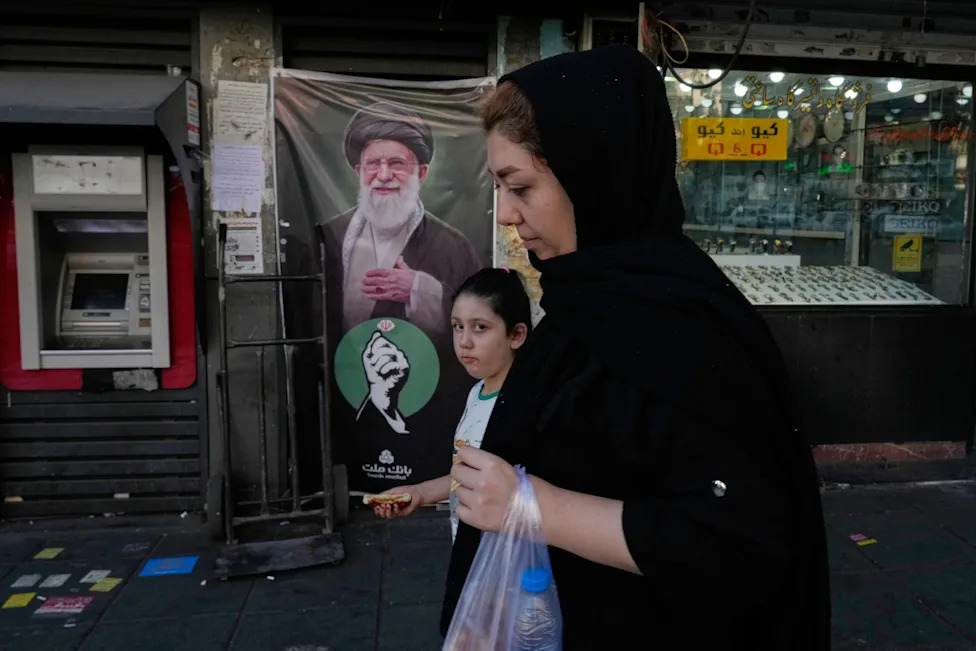
People pass a portrait of the late Iranian Supreme Leader Ayatollah Ali Khamenei, who was killed in the U.S and Israel strike on Feb. 28, at the Islamic Revolution square in Tehran, Tuesday, Sept. 15, 2026. (AP Photo/Vahid Salemi)(AP Photo/Vahid Salemi)
Authorities have intermittently closed a handful of cafés and public venues in Tehran for hijab violations, and some women still face prosecutions on morals-related charges. For example, singer Hiwa Seyfizade posted on social media that she received a multi-year prison sentence after a public concert in the capital.
Historical Context And Outlook
The hijab has been a flashpoint in Iran's modern history: the monarchy once forced women to remove headscarves during a drive to Westernize in the 1930s, while the 1979 revolution made compulsory veiling a central element of clerical rule. Today, the issue divides pragmatists, who warn against provoking unrest, and hard-liners, who press for stricter enforcement.
Many activists and former detainees say they doubt the state can fully restore pre-2022 levels of social control. “People aren't going to go back to how it was,” Nazemi said. “They aren't capable of doing it.”
Help us improve.