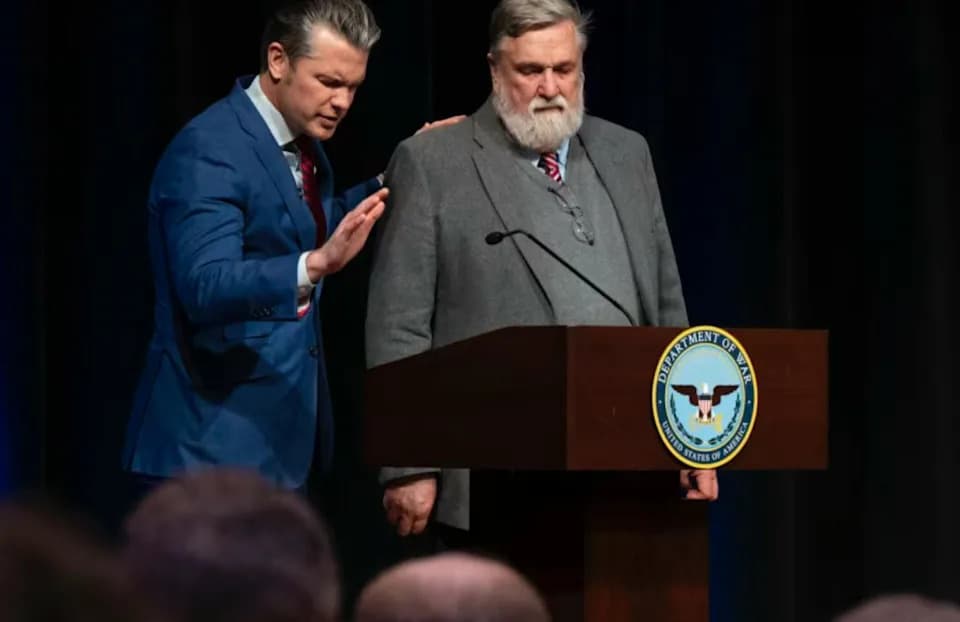
On July 4, 2026, at the Intercessors for America (IFA) "Rededicate America" conference in Washington, D.C.'s Museum of the Bible, Cindy Jacobs paced the stage and prayed for regime change in Iran and for particular U.S. officials to be removed. Her invocation—framed as spiritual warfare against the "Prince of Persia" and other territorial spirits—drew cheers and shouts of "Amen!" from hundreds in the auditorium. The event made plain that for many at the conference, political goals are pursued not only through lobbying but through prophetic decrees and intercession.
What the New Apostolic Reformation Believes
The speakers at IFA are affiliated with the New Apostolic Reformation (NAR), an apocalyptic charismatic movement that mixes prophetic claims with a political program often described as Christian dominionism. The NAR rejects the usual millennial debates—premillennial, postmillennial, and amillennial—and instead promotes a pragmatic, action-oriented theology: Christians must take dominion across society to prepare the world for the Second Coming.
Authority flows through apostles and prophets who claim direct revelation and often operate above internal accountability. Movement founder C. Peter Wagner framed the approach as "panmillennial": whether Christ returns before or after a thousand-year reign, Christians must build Christian rule now. That fusion of urgency and conquest produces a movement that combines persecution narratives with aggressive institution-building.
How This Theology Enters Politics
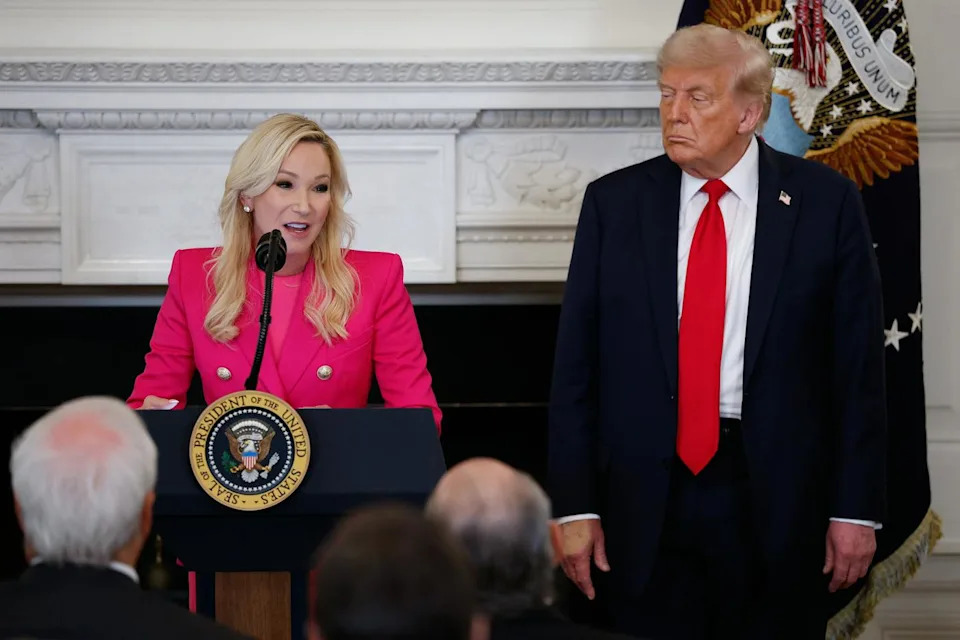
The NAR advances a strategy called the Seven Mountain Mandate, targeting education, family, religion, government, business, media, and entertainment. Its leaders and networks have access to power: Paula White-Cain, a prominent spiritual adviser and White House Faith Office official, has helped connect evangelical networks to the White House; other NAR-affiliated figures and allied organizations have developed links to senior administration officials and policy initiatives.
Trump with his spiritual adviser, Paula White-Cain, who delivered remarks at a White House Faith Office luncheon in 2025.
Independent research and reporting show this worldview has moved from pulpit to policy. A Public Religion Research Institute (PRRI) survey found roughly one-third of Americans at least partially agree with Christian nationalist statements such as "The U.S. government should declare America a Christian nation" and "God has called Christians to exercise dominion over all areas of American society." The same research finds these attitudes are particularly strong among white evangelical Protestants and substantial among Hispanic Protestants, and that adherents are more likely to express support for political violence and score higher on measures of right-wing authoritarianism.
Concrete Policy Effects
Through personnel, influence, and aligned policy platforms, elements of the dominionist agenda have helped shape administration priorities. Observers point to actions that align with NAR goals: restrictions and investigations that limit abortion access and contraception funding; rollbacks of federal LGBTQ+ programs and services; administrative pressure on gender-affirming care; and efforts to reshape education and media by threatening funding, bringing suits, and creating parallel outlets.
Donor networks and policy shops have also reinforced these shifts. Analysts note ties between foundations that funded Project 2025 and organizations with links to NAR-affiliated groups, while some former employees of advocacy organizations promoting a Christianized civic vision have moved into government roles.
Foreign Policy And Prophecy
NAR theology affects foreign policy priorities as well. Leaders repeatedly frame strong support for Israel as prophetic necessity, sometimes coupled with active proselytizing of Jewish communities on theological grounds that envision Israel's role in end-times scenarios. The movement also treats Iran as a locus of demonic influence—the "Prince of Persia"—and some leaders have publicly prayed for regime change rather than negotiated settlement, influencing public debate about U.S. strategy in the Middle East.
The Appeal to Heaven flag, once associated primarily with libertarian causes and now identified with Christian nationalism, was spotted at the January 6 insurrection.
Spiritual Warfare, Mobilization, And Risk
Intercession and spiritual warfare are central organizing tools: prayer walks, prophetic decrees, and symbolic acts (from congressional oaths to large public Revival events) create cohesion and motivate action. That cohesion can mobilize intense commitment—what leaders call "battle buddies"—but it can also push toward radicalization when opponents are framed not as political rivals but as instruments of demonic evil.
Critics warn this rhetoric dehumanizes political opponents and corrodes democratic norms. After the 2020 election, a series of mass prayer events, Jericho marches, and high-profile meetings between apostles and White House officials preceded and helped shape the atmosphere that culminated in January 6, 2021. Movement symbols and participants appeared in and around the Capitol that day, and scholars argue the movement played an outsized role in the build-up even if it did not alone cause the insurrection.
Law Enforcement, Surveillance, And The Expansion Of State Power
Beyond rhetoric, the expansion of national-security tools against domestic groups categorized as "anti-fascist" or extremist raises alarms. National Security Presidential Memoranda and prosecutorial priorities have been used to pursue protest-related prosecutions; reporting also documents increased social-media monitoring by enforcement agencies. Observers caution that when political dissidents are framed as morally illegitimate or demon-possessed, state powers can be used to intimidate and silence dissent.
Why This Matters For Democracy
The central danger is not metaphysical—it is political. If a substantial number of people in power believe their opponents are agents of cosmic evil, the foundations of pluralist democracy—compromise, debate, and peaceful transfer of authority—are undermined. Treating secular institutions and civic pluralism as obstacles to a providential national destiny makes democratic contestation far more fraught and sets the stage for exclusionary policy and repression.
What To Do: The antidote lies in clear civic storytelling and democratic defense. Retellings of America that emphasize constitutional pluralism, Enlightenment principles, and an inclusive civic identity matter. So do legal and institutional safeguards that protect the separation of church and state, defend civil liberties, and ensure that public offices serve all citizens, not a sectarian agenda.
Whether one believes in demons or not, the political consequences of these theological commitments are real. The rise of organized Christian dominionism is a significant political development that requires public attention and democratic response.