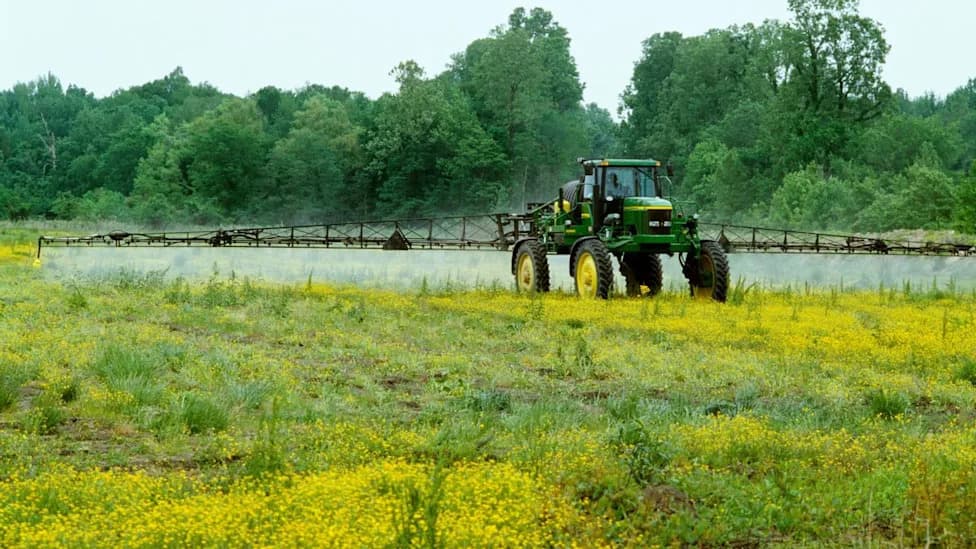
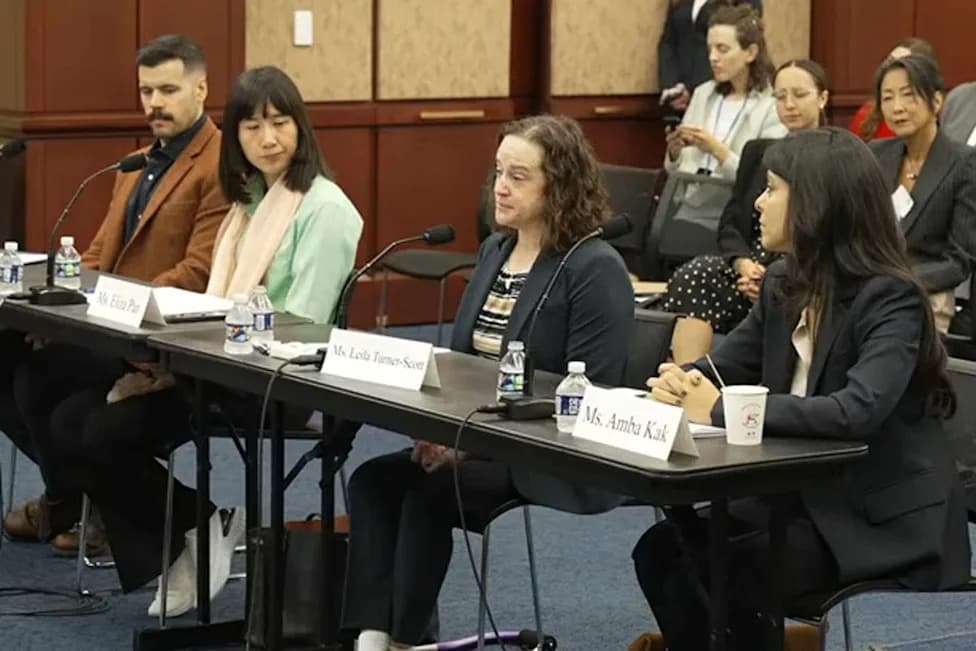
Internal EPA documents reveal the agency asked Bayer to choose among mitigation options for the drift‑prone herbicide dicamba and then reflected the company’s preferences in a proposed rule. Dicamba has been linked to serious health risks and has damaged millions of acres of crops and natural vegetation; courts have twice voided prior approvals because of drift harms. Critics say allowing a registrant to select mitigations risks regulatory capture; the EPA says it independently develops and reviews protections.
Documents Reveal EPA Let Bayer Pick Rules for Drift‑Prone Herbicide Dicamba
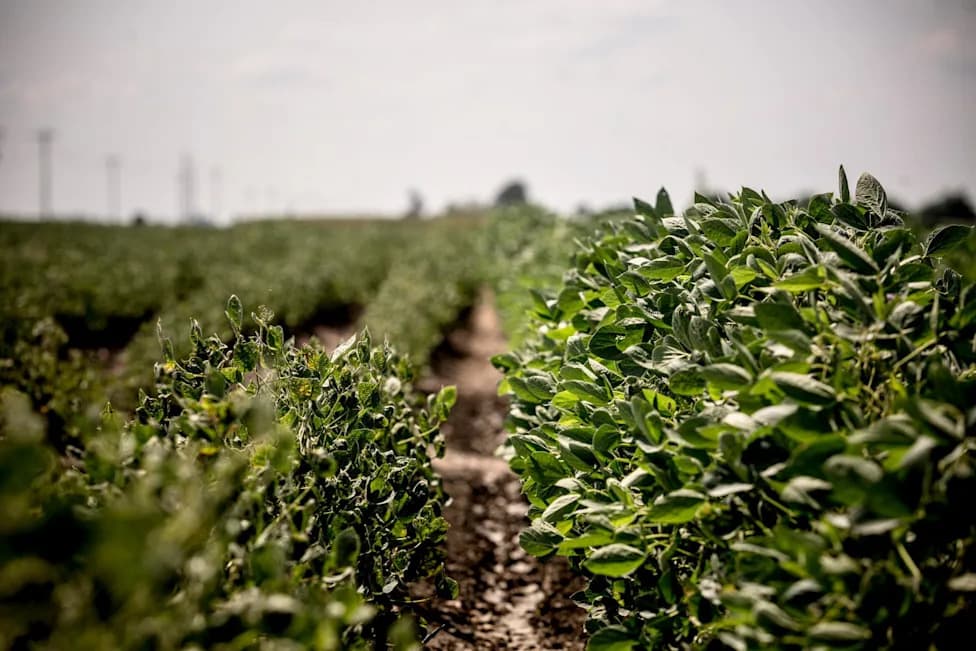
Soybean plants on the left show signs of being affected by Dicamba (stunted growth, curled up leaves, low bean yield.) Soybean plants on the right were planted later in the season and stand taller, on 9 August 2017.Photograph: The Washington Post/Getty Images
Newly released internal EPA records show the agency presented pesticide manufacturer Bayer with a menu of mitigation options for dicamba — a herbicide notorious for drifting off target and damaging nearby crops, native plants and landscapes — and asked the company to indicate which measures it preferred. The documents suggest the company’s selections were incorporated into a subsequent proposed federal rule.
What the Records Show
The materials, released in ongoing litigation, include slides and email exchanges that lay out a range of mitigation options for limiting dicamba volatility and runoff. One slide was labeled Registrant response needed and explicitly asked which mitigation option the registrant wanted to move forward with. According to the records, Bayer picked the least protective volatility option offered and a preferred runoff approach; it also requested a separate tweak that the EPA later included in the proposal.
Why Dicamba Is Controversial
Dicamba is highly prone to volatilization and drift: when sprayed it can travel miles from the treated field, killing or injuring crops, gardens, orchards and wild plants. Researchers have linked dicamba exposure to serious health concerns including liver cancer and non‑Hodgkin lymphoma, and courts have twice ordered prior approvals removed because of drift harms. Despite this, the EPA has reapproved dicamba with new conditions.
Specific Choices and Consequences
At a May 2025 meeting, EPA staff presented Bayer two volatility mitigation options: a stricter ban on applications above 85°F and a looser option allowing use up to 95°F if treated acreage were reduced. For runoff, the agency offered three options. Bayer selected the 95°F/acreage‑reduction option and asked for an additional modification allowing full‑field applications at higher temperatures if dicamba was not tank‑mixed; the records show the EPA granted those requests and included them in the proposed rule.
"The EPA is allowing Bayer to choose its preferred measures to limit dicamba's damage as if it were ordering from a menu," said Nathan Donley of the Center for Biological Diversity. "It becomes troublesome when the agency allows the registrant to effectively regulate itself by selecting mitigations."
Regulatory Context and Reaction
Industry input in regulatory rulemaking is common; registrants often propose mitigations and engage with agencies. But critics say the level of deference shown here crosses a line and reflects regulatory capture, pointing to recent senior EPA appointments of former industry lobbyists and executives. The Center for Biological Diversity and the Center for Food Safety have sued over the approvals, arguing current protections are weaker than past ones and insufficient to prevent widespread damage.
An EPA spokesperson told the Guardian that the process is not a compliance failure but the regulatory system working as intended, saying agencies notify registrants, consider their proposals and independently develop protections. The spokesperson emphasized that the registrant does not dictate terms.
What Comes Next
The litigation will test whether the EPA’s process and the resulting approvals satisfy legal and scientific standards for protecting farms, ecosystems and public health. Meanwhile, farmers, conservationists and advocacy groups continue to report dicamba damage across millions of acres since its initial 2016 approval.
Help us improve.